The recent collapse of the Animal Bridge has shocked the engineering community. Beyond the tragedy, this event becomes a perfect case study for 3D catastrophe simulation. Using a digital model of the previous structure, we can recreate the load conditions, material fatigue, and impact that triggered the failure. This virtual forensic analysis aims not only to determine the cause but also to educate and prevent future accidents.
Numerical Simulation of Structural Failure 🏗️
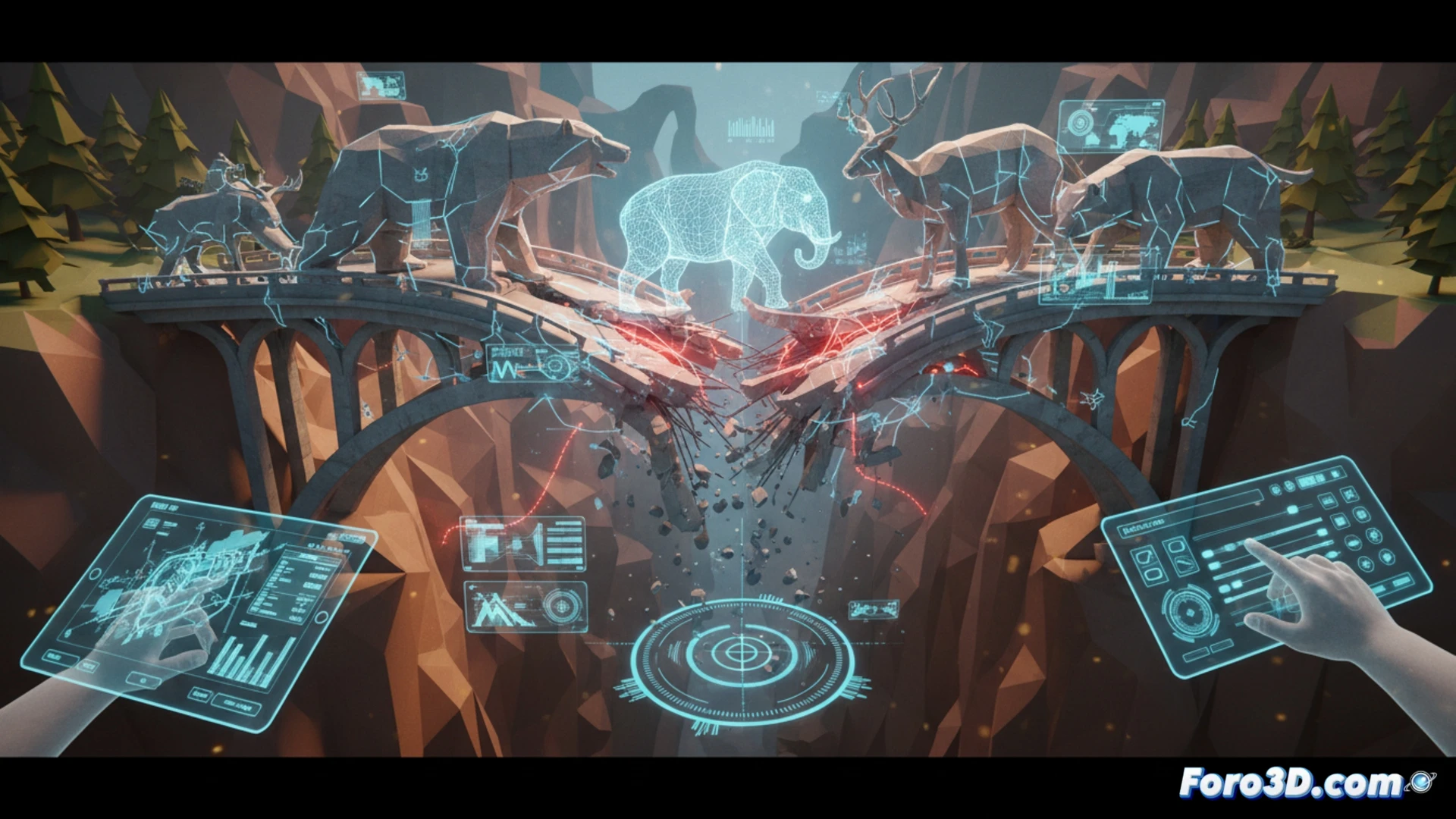
The simulation process begins with the reconstruction of the bridge's digital twin. Original blueprints are imported, and key elements are modeled: beams, tie rods, and the deck. Finite element software allows us to apply service loads and environmental variables. In the case of the Animal Bridge, the simulation reveals a critical stress point in the lateral anchors. By applying a cyclic fatigue factor, the model shows a microcrack that propagates exponentially. The resulting animation visualizes the collapse in real time, matching witness testimonies. We compare this failure pattern with that of the Tacoma Narrows Bridge, where torsion was the dominant factor, and with the Genoa highway, where corrosion of the tie rods played a similar role. This 3D comparison allows engineers to identify common risk patterns.
Virtual Lessons for a Real World 🛠️
The 3D simulation of the Animal Bridge forces us to reflect on the fragility of infrastructure. It is not enough to build; we must anticipate wear and tear. This model allows for stress tests that would be impossible in reality without putting lives at risk. We can simulate an increased load, a storm, or an earthquake to see how the structure responds. Visualizing the failure is a powerful educational tool for future engineers and maintenance authorities. At Foro3D, we believe that analyzing the disaster from a monitor is the first step to ensuring it never happens again in the field.
How could 3D modeling of the Animal Bridge collapse optimize seismic inspection protocols to prevent future catastrophes in high-risk infrastructure?
(PS: Simulating catastrophes is fun until the computer crashes and you are the catastrophe.)