We analyze in depth the phenomenon of the Spectacular Aquatic Collapse, a catastrophic event where hydraulic infrastructure succumbs to water pressure. Using 3D modeling and simulation tools, we will reconstruct the sequence of structural failure, flow dynamics, and the devastating impact on the environment. This technical analysis aims to identify root causes and extract crucial lessons for prevention engineering.
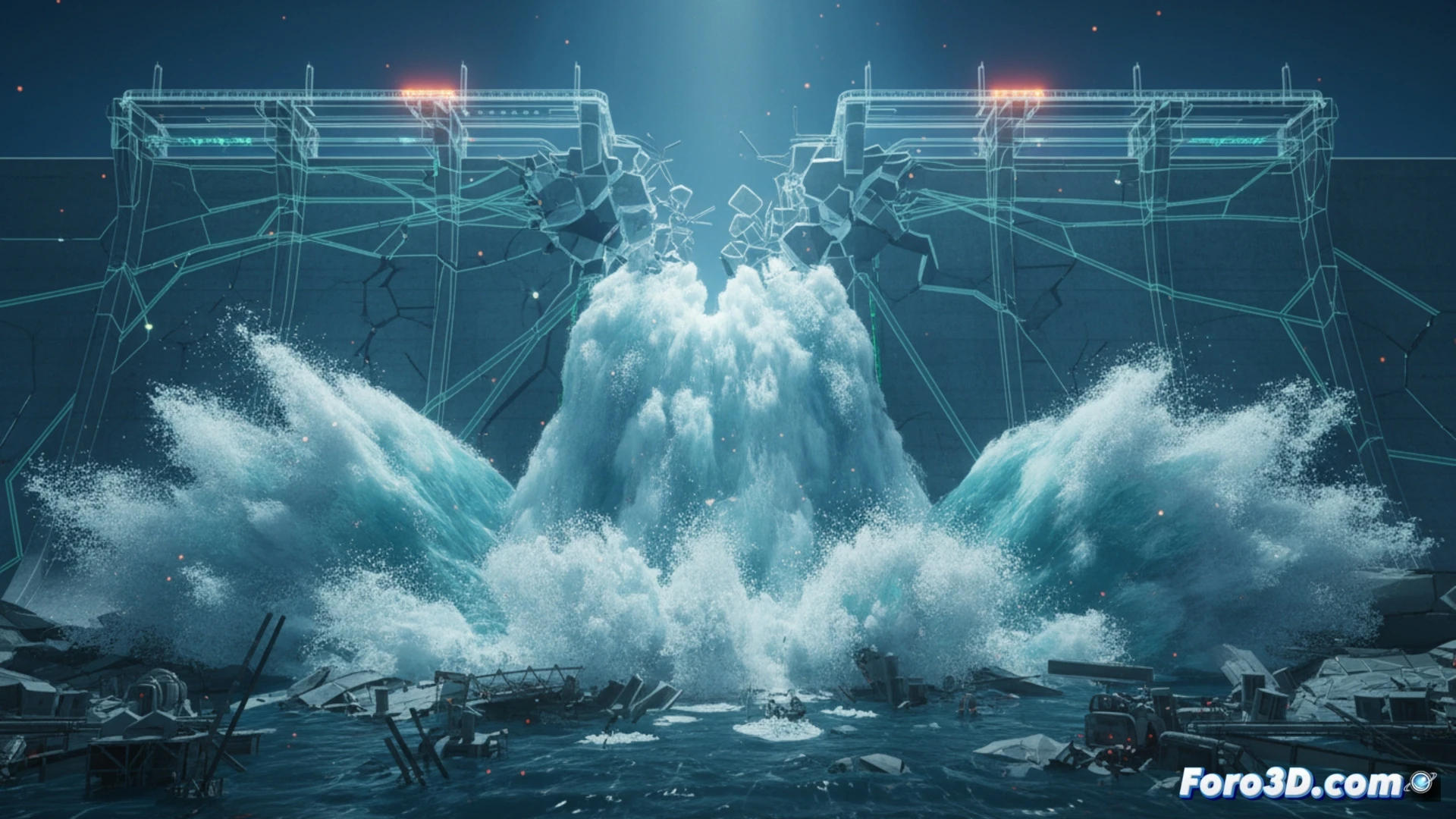
Fluid Dynamics and Structural Failure in the Simulation 🌊
The 3D reconstruction focuses on two critical phases: the breaking point and the propagation of the flood wave. Through detailed meshing of the dam or dike, we identify the points of maximum stress that led to the collapse. The water flow simulation, based on Navier-Stokes equations, allows visualizing the velocity and volume released in seconds. Flood depth maps and digital elevation models show how water advances over the terrain, sweeping away structures and modifying the landscape. We compare the previous state of the infrastructure with the moment of rupture to highlight deficiencies in materials or design.
Lessons for Disaster Prevention 🛠️
Beyond the visual spectacle, this simulation exercise has a critical purpose: awareness. By visualizing the before and after of the collapse, we can understand the fragility of our works against natural forces or maintenance failures. The 3D model serves as a teaching tool for engineers and planners, allowing them to test evacuation scenarios and redesign pressure relief systems. Preventing an aquatic collapse not only saves lives but also protects entire ecosystems from a preventable catastrophe.
As a 3D modeler, what technical and physical simulation aspects do you consider most critical for realistically recreating the progression of a massive hydraulic collapse, from the first crack to the catastrophic flood?
(PS: Simulating catastrophes is fun until the computer crashes and you are the catastrophe.)