A team of researchers has successfully inserted an extra chromosome from a frozen rat into mouse cells, creating viable animals. This experiment opens the door to reviving extinct species such as the mammoth. Although the process is experimental, the technique could be applied to frozen elephant tissue in the near future.
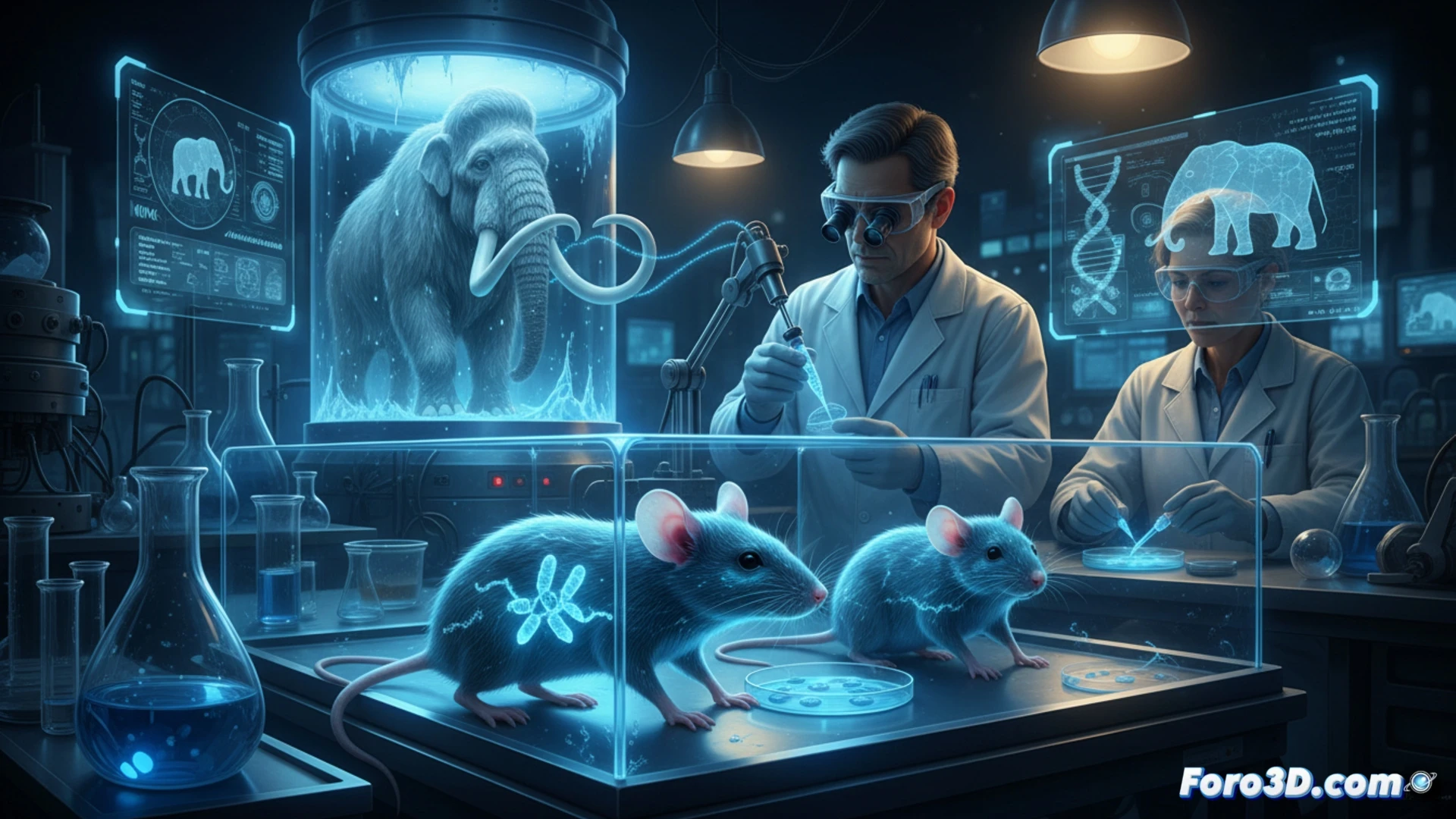
The technical step toward genetic resurrection 🧬
The method used involves extracting genetic material from frozen tissue and transferring it to embryonic cells of a recipient species. In this case, the resulting mice showed rat characteristics in their DNA. The next step will be to test with frozen elephant cells. If it works, an attempt will be made with mammoths, whose genome is almost complete. The technique still has limitations: not all cells survive the process, and long-term viability is uncertain.
From mice to mammoths: the return of the woolly grandpa 🦣
So it turns out that to resurrect a mammoth, you first have to make mice with rat genes. Something like building a car with bicycle parts to see if it works. The plan sounds like Jurassic Park but with fewer dinosaurs and more fur. If everything goes well, in a few years we could see mammoths roaming Siberia. Or maybe just furry mice with tusks. Science advances, but so does humor.