A team of scientists in China has identified a biological mechanism in the stomachs of cows that acts as a switch for hydrogen and methane production. This finding, called the hydrogen body, could be deactivated through additives in livestock feed. If applied, livestock farming would reduce its carbon footprint, a key step in combating climate change and making meat and milk production more sustainable.
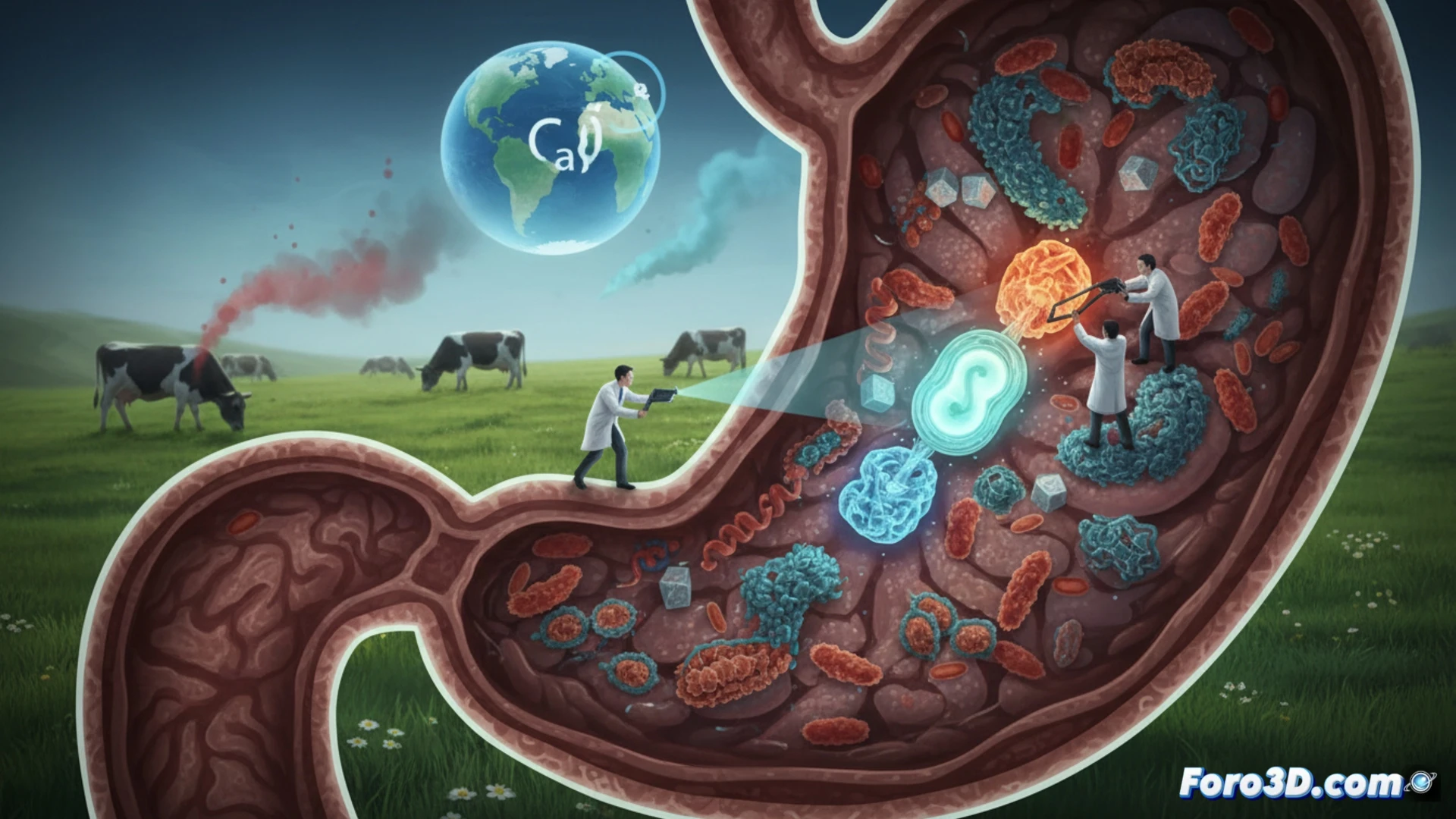
The hydrogen body: a target for reducing emissions 🌱
The discovery focuses on a microbial structure within the rumen that regulates hydrogen production, which feeds methanogenic archaea. By adding specific compounds to the feed, the researchers managed to inhibit this process, reducing methane emissions without affecting the animal's digestion. This approach offers a more precise alternative to current methods, such as generic methane inhibitors, by targeting the very origin of the problem.
Goodbye farts, hello science: the new cow gossip 🐄
It seems that cows will finally have to stop being the culprits of all our climate woes. Turns out it wasn't their fault, but that of a misplaced biological switch. Now, with a simple additive, we could turn their flatulence into something as harmless as a sigh. Of course, we'll have to see if cows miss the drama of being the center of attention in environmental news.