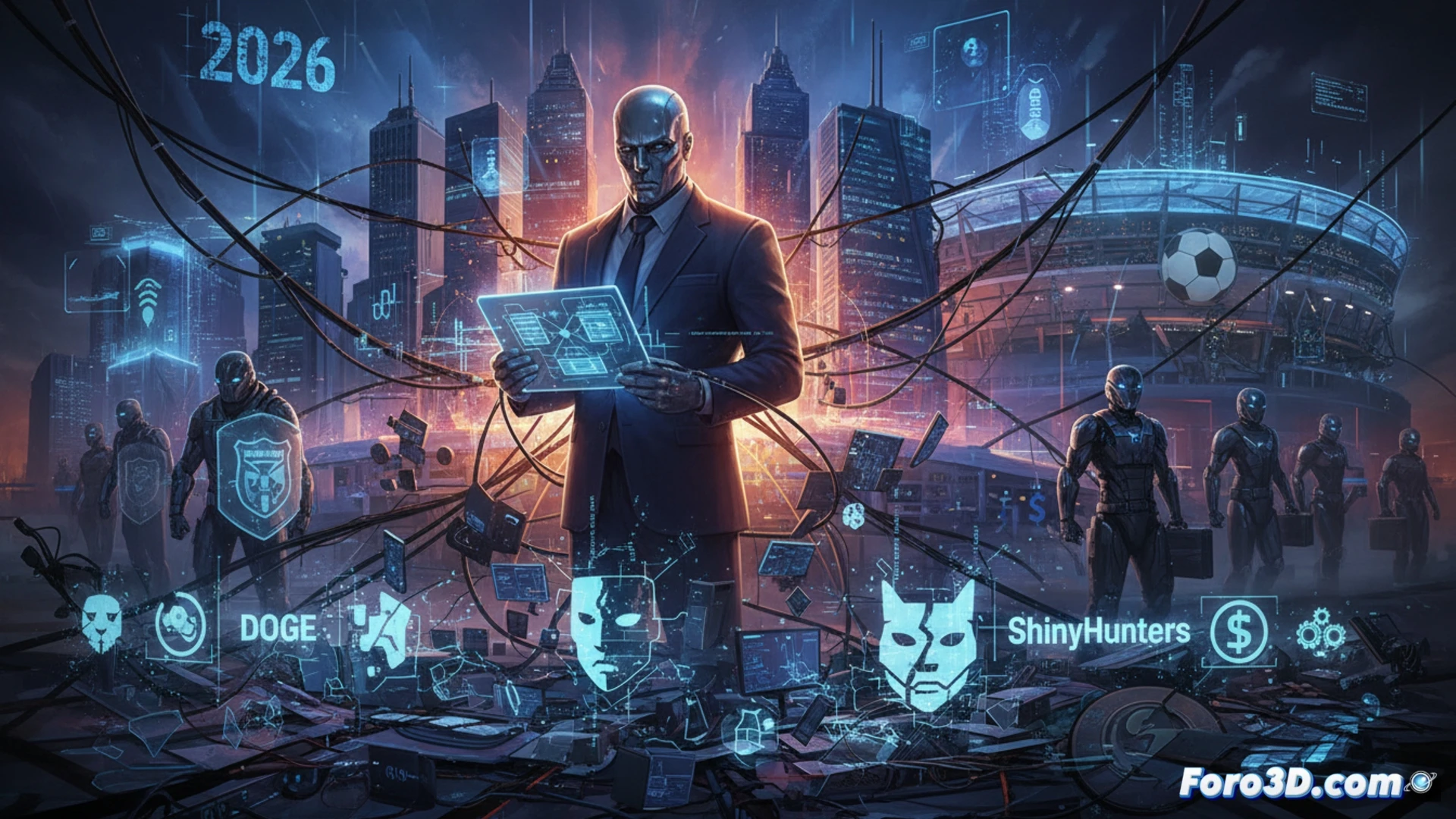
During 2026, millions of citizens suffered massive data leaks: DOGE exposed Social Security data, ShinyHunters blocked exams for 30 million students, and the FBI went down during the World Cup. The official narrative speaks of brilliant hackers, but the reality is murkier: groups sponsored by states or cybersecurity corporations seeking new contracts. The real problem is not technical, but political and economic.
The broken architecture of government security 🔐
The attack on DOGE occurred because the government outsourced its systems to private companies without real oversight. The student data stolen by ShinyHunters will be sold to banks and insurance companies to design financial products. The FBI has been using outdated systems since 2015; Congress blocked funds to modernize them for years. No one responsible will be captured, and those affected will not receive compensation: data protection laws lack teeth. Changing passwords is the only option.
Change your password and pray, because the business continues 💸
Meanwhile, cybersecurity companies sign million-dollar contracts with the attacked governments. It is the perfect cycle: they hack you, they sell you the solution, and then they hack you again to prove you need it. The average citizen can only change their password for the 47th time and wait. Digital chaos is not a mistake: it is the most profitable business model of the century. And no one is going to catch anyone.