China has launched specific university degree programs in rare earths, the essential minerals for manufacturing everything from electric cars to missiles. Eleven universities in the country train more than 500 students each year, who carry out internships in companies within the sector. Outside of China, there are no similar degrees, which gives Beijing a strategic advantage that will be difficult to match in the next decade.
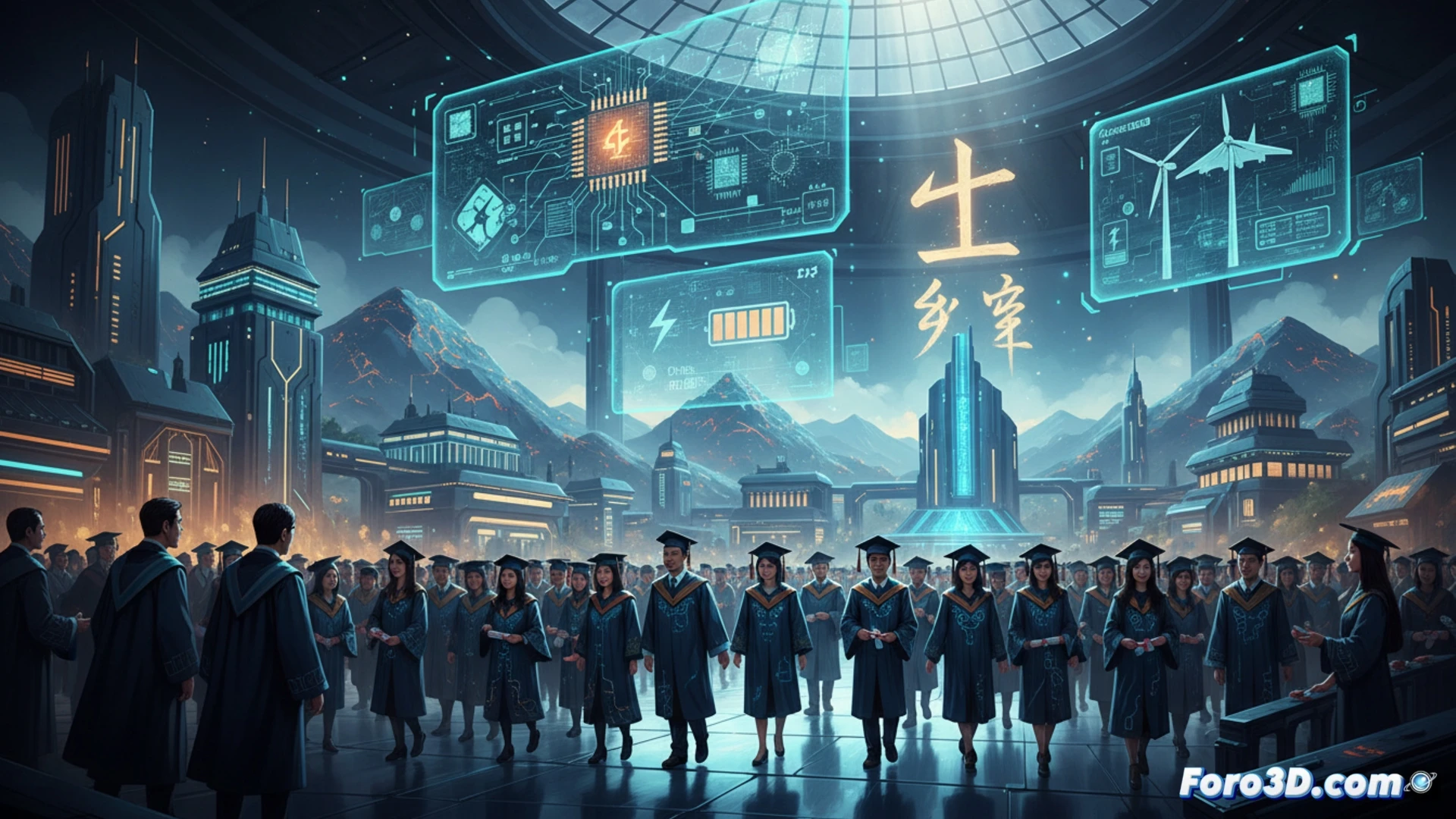
The supply chain starts in the classrooms, not in the mines 🏭
While in the West training in critical materials is often a generic postgraduate degree, China has designed comprehensive curricula covering geology, separation chemistry, metallurgy, and rare earth recycling. Students work with neodymium magnets, cerium catalysts, and lanthanum batteries from their first year. The result is a generation of technicians who master the entire process, from extraction to the final product, without relying on external knowledge.
Europe and the U.S. search for rare earths on YouTube 🎓
While Chinese students separate dysprosium in well-equipped laboratories, in Silicon Valley some engineers discover that the magnet in their hard drive contains rare earths and wonder if they can recycle it using a tutorial. The race to dominate these materials is won not only with mines, but with classrooms. And in that, China has such a lead that the West is still looking for the enrollment link.