Tillie Walden rescues in her graphic novel Charity & Sylvia the true story of two women who formed a stable couple in Vermont in 1807. The book shows how, despite the rumors and criticism of the time, they managed to build a full life. It is a reminder that LGBTQIA+ relationships are not a modern invention, but a historical reality that deserves to be told. 📖
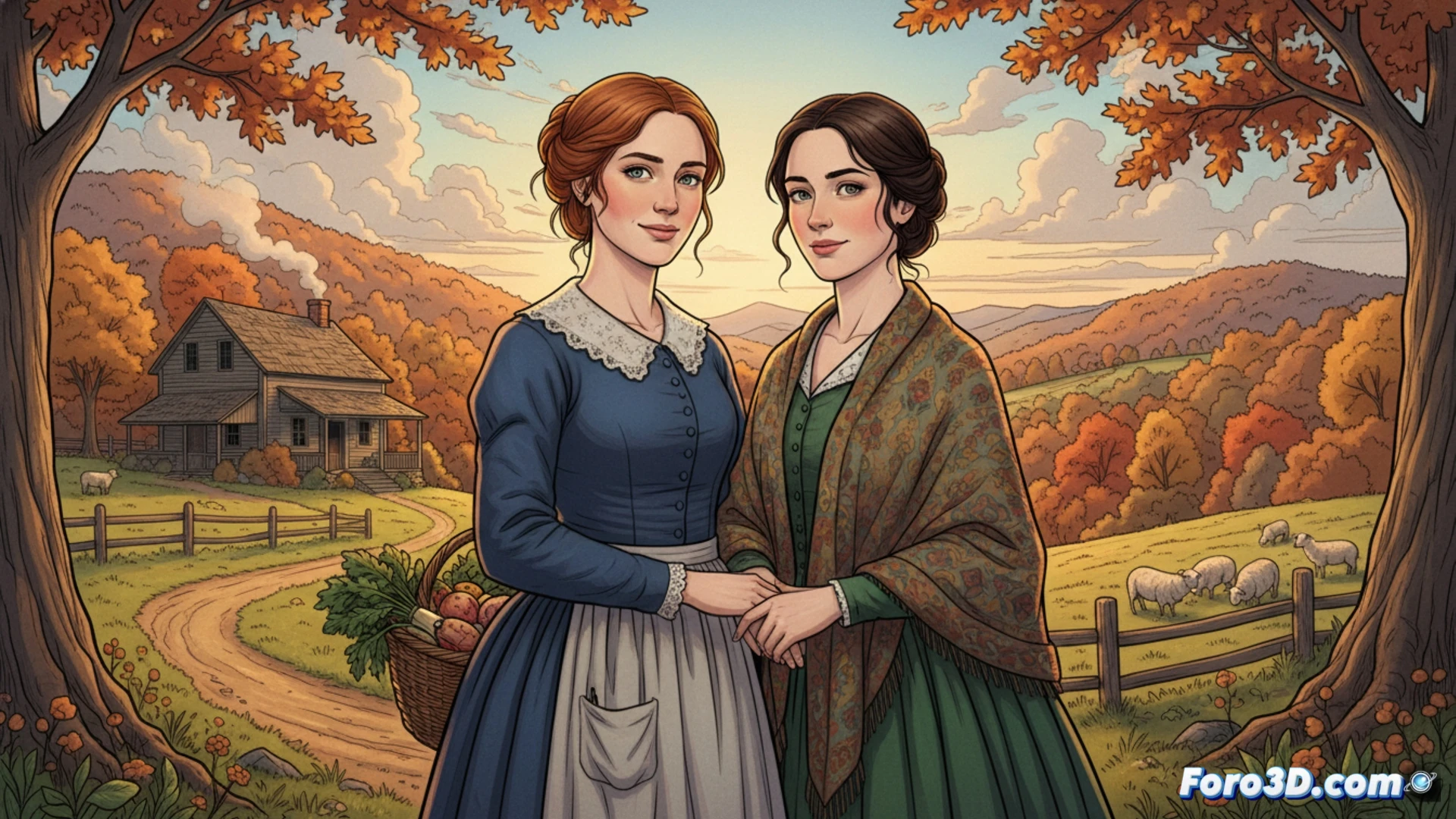
Tillie Walden's narrative engine: drawing and documentation ✍️
Walden uses a graphic style of clean lines and wide panels to convey the couple's everyday life. The historical documentation is precise: it is based on personal diaries and local records to reconstruct their home and routines. The author avoids exaggerated drama, opting for a visual narrative that prioritizes gestures and silences. It is a technical work that balances biographical fiction with archival rigor.
The neighborhood: between gossip and rural hypocrisy 🏘️
The funny thing is that the neighbors in 1807 used the same tactics as today: sidelong glances, whispers in the tavern, and phrases like how close those two are. But while they were scandalized, Charity and Sylvia had been sharing a bed and harvest for 40 years. In the end, the town fell silent and they carried on. The story shows that love always finds a way to outwit the gossips.