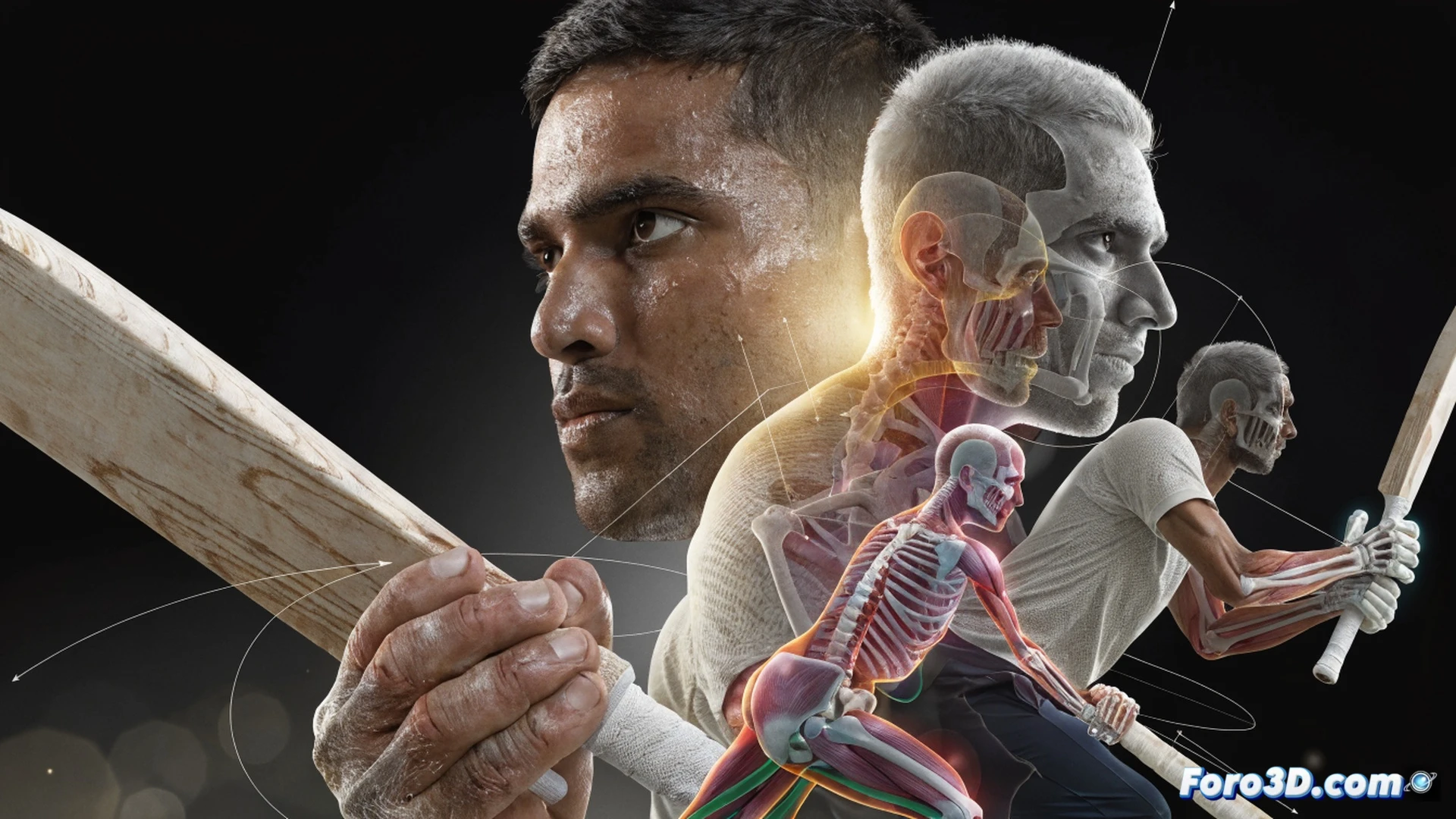
In modern cricket, few batsmen generate as much anticipation as Charith Asalanka. His ability to read the length of the delivery and adjust his footwork in milliseconds sets him apart. This 3D analysis breaks down the biomechanical variables that explain his effectiveness against spinners and pacers, examining everything from grip angle to weight transfer.
Applied Biomechanics: The Role of the Center of Gravity 🏏
The 3D model reveals that Asalanka maintains a low and stable center of gravity during the backlift, which reduces reaction time. His hip rotation reaches 45 degrees before impact, allowing him to generate power without sacrificing control. Additionally, the alignment of his non-dominant shoulder corrects the bat plane, minimizing timing errors on deliveries that deviate late. These data were obtained through motion capture using 12 infrared cameras.
What 3D Doesn't Capture: The Luck Factor 🎲
Of course, all this technical precision falls apart when Asalanka decides to dance down the pitch against a second-rate spinner. The 3D model predicts a perfect drive, but reality gifts him an edge to the wicketkeeper. There's no sensor that measures human stubbornness there. Fortunately, the analysis does quantify his ability to survive his own crazy decisions. Science, at least, doesn't sweat.