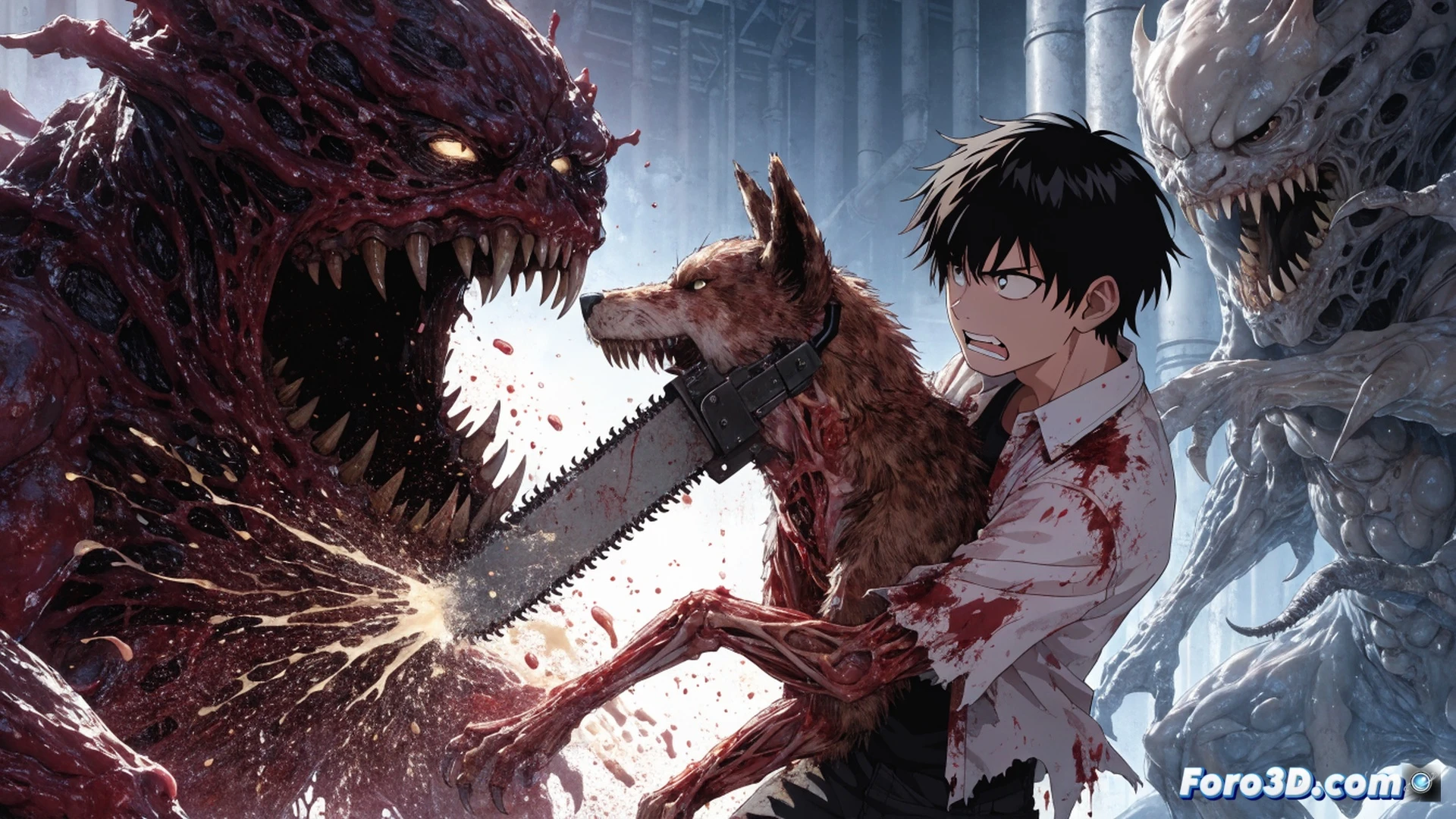
Tatsuki Fujimoto immerses us in a universe where fears materialize into demons. Denji, a teenager overwhelmed by his father's debts, becomes a hired hunter after merging with Pochita, his chainsaw-dog. The series explores survival and violence with a narrative style that offers no respite.
The narrative engine: rhythm and character design in Fujimoto's work 🌀
Fujimoto employs a fast-paced script that avoids filler arcs. Each chapter advances with its own logic, where characters evolve through drastic decisions. The design of the demons directly reflects their associated fears, such as the Knife Demon or the Darkness Demon. The visual narrative uses dynamic framing and close-ups to convey the rawness of the fights, without relying on lengthy explanations. The plot prioritizes emotional impact over traditional narrative coherence.
When your dog is a chainsaw and your boss a girl with horns ⛓️
Denji has two clear goals: touch boobs and eat bread with jam. No saving the world or seeking universal peace. The poor guy just wants a normal life, but the universe conspires to leave him bathed in demon blood while his chainsaw-dog roars. It's as if Fujimoto thought: what if we mix John Wick, Tom and Jerry, and a workplace survival manual? The result is a glorious chaos where even love hurts.