In the heart of the Sahel, farmers in Chad wage a daily battle against the advancing desert using palm leaves as shields. Meanwhile, industrialized nations, historically responsible for climate change, debate toothless agreements. Desertification advances, and entire communities watch their oases turn to sand, paying the price for an energy model that does not belong to them.
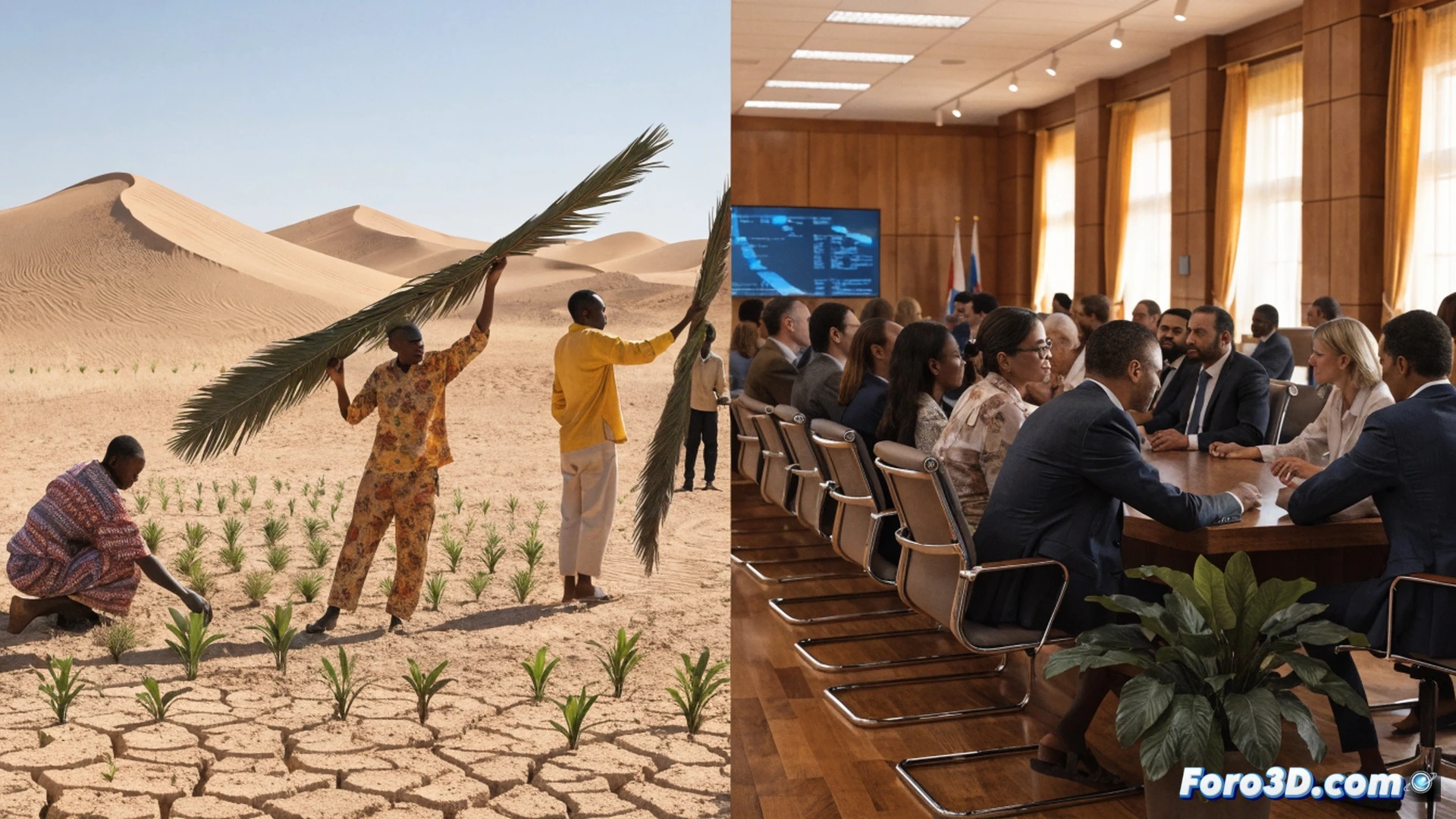
Green barriers and irrigation: technology against the sand 🌿
The technical solution exists: natural windbreaks with native vegetation, drip irrigation systems powered by solar panels, and stone barriers or geotextile meshes. These infrastructures halt dunes and retain moisture. But they require constant investment. Without binding external funding, local farmers remain trapped in a cycle of poverty and erosion. Technology is not lacking; what is lacking is political will and real budgets.
Toast with sand: the climate plan that doesn't move dunes 🍷
While Chadian farmers pile up palm leaves, the great powers toast at summits with promises of zero emissions by 2050. Perhaps they think the desert only advances in documentary photos. Or that planting a virtual tree on social media stops the dunes. The funny thing —if it weren't tragic— is that while they deliberate, fertile land disappears. The only winner is the Sahara. And it doesn't pay taxes.