A scientific team has located a vast underwater cemetery thousands of meters deep, containing hundreds of whale fossils. These remains not only reveal ancient ecosystems but also mark nutrient-rich zones where rare metals of industrial interest accumulate. The discovery opens a window into the oceanic past and potential resources.
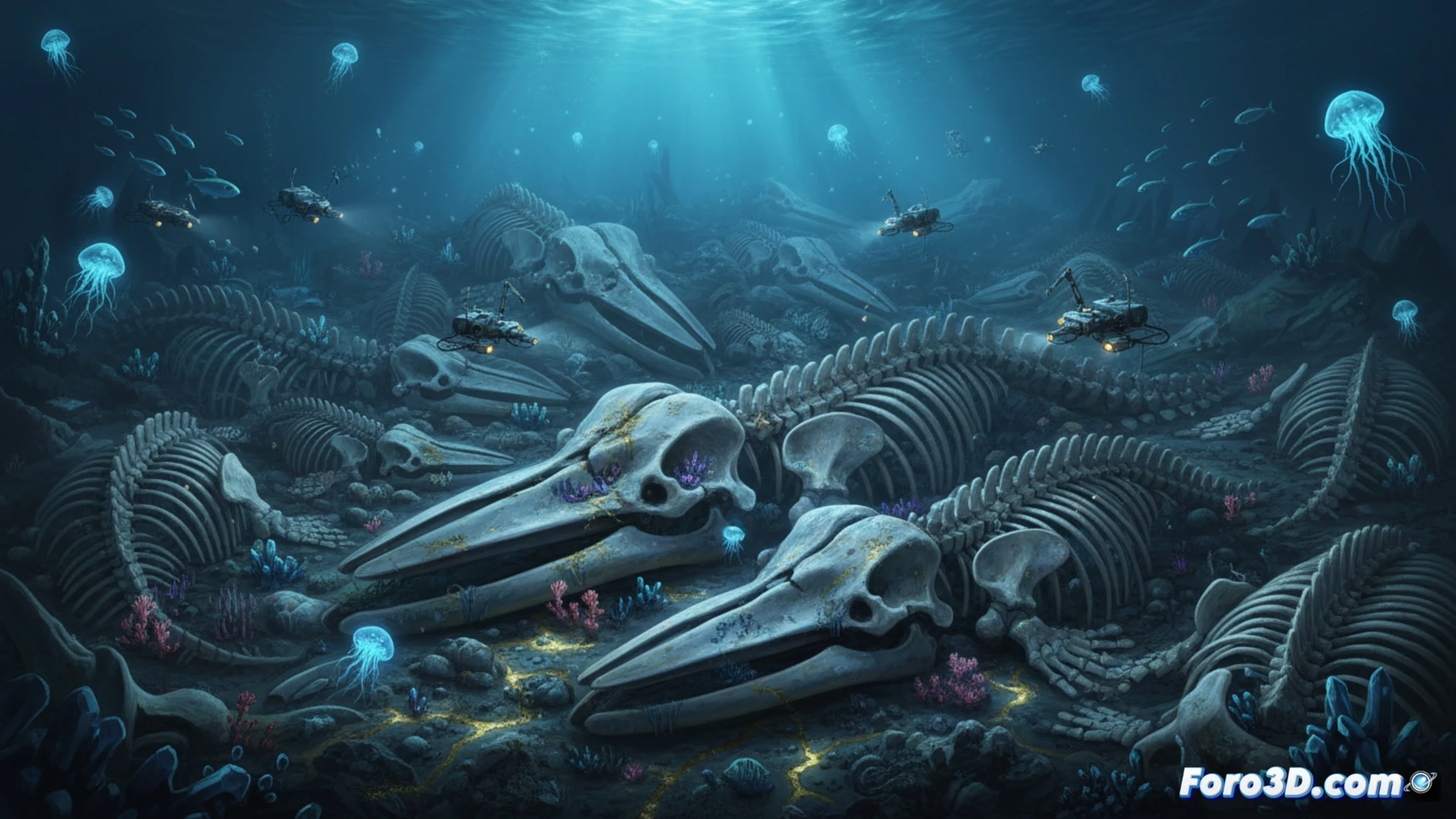
Mapping technology reveals the secrets of the seabed 🌊
The researchers used side-scan sonars and remotely operated vehicles (ROVs) to map the seafloor. High-resolution images detected accumulations of bones scattered across abyssal plains. Chemical analysis confirmed the presence of polymetallic nodules near the skeletons, formed by the slow decomposition of organic matter. This natural process concentrates elements such as cobalt and platinum, offering a model for understanding the formation of mineral deposits in areas of high biological productivity.
Dead whales, the new trendy deposit 🐋
It seems whales not only left us live whales to watch, but also a posthumous business. It turns out their bones, after centuries on the bottom, attract nutrients and metals like magnets. Now scientists debate whether it is more profitable to exploit the cemetery or let the crabs continue enjoying their luxury buffet. At least, the whales finally found a quiet place to rest... until a dredge arrives.