Insulin cavitation is a physicochemical phenomenon that occurs when the pressure inside a syringe or infusion pump drops below the vapor pressure of the liquid, generating microbubbles. These bubbles not only alter the exact dosage of the drug but can also denature insulin proteins, reducing their biological efficacy. Understanding this process is vital for biomedical engineering.
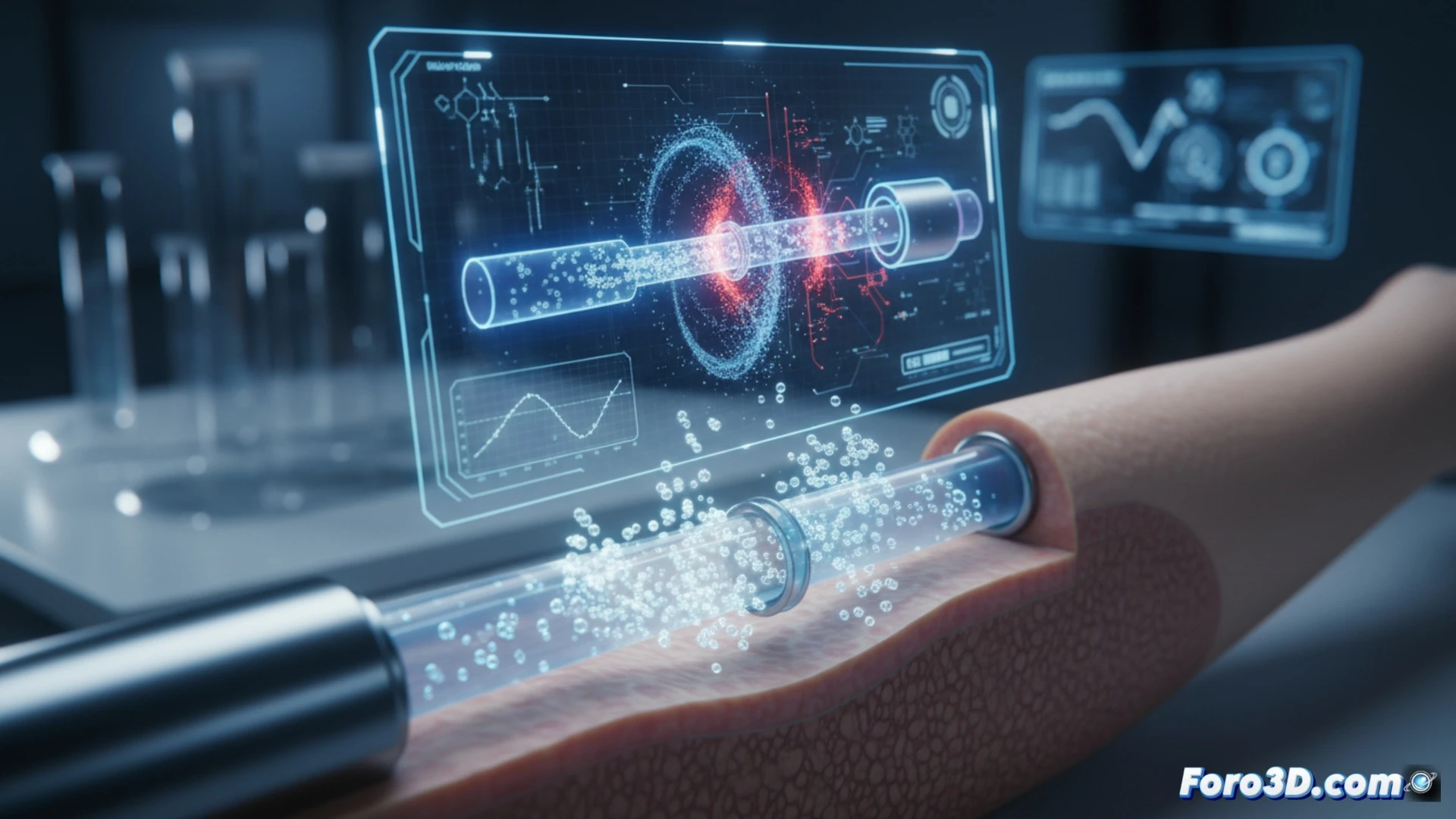
Fluid mechanics and protein denaturation in infusion devices 💧
In the context of insulin pumps and microinjection systems, cavitation typically appears in areas of constriction, valves, or abrupt changes in cross-section. When a bubble collapses, it generates shock waves and high-speed microjets that can break the peptide bonds of insulin. This molecular damage causes aggregation and loss of hypoglycemic activity. 3D finite element modeling allows visualizing pressure and velocity maps in complex geometries, identifying critical points where cavitation initiates. Tools like CFD (Computational Fluid Dynamics) help redesign cannulas and connectors to avoid dangerous pressure gradients.
Towards an intelligent design of administration devices 🔬
Three-dimensional simulation not only predicts where and when bubbles form but also allows virtual testing of new materials and hydrophobic coatings that minimize nucleation. Integrating these models into the design cycle of an insulin pump reduces prototyping costs and improves patient safety. Insulin cavitation is a reminder that, in 3D biomedicine, fluid physics is as critical as drug biochemistry.
As a researcher in 3D fluid simulation, what critical design parameters should I adjust in the computational model to accurately predict the formation of cavitation bubbles inside an insulin infusion microsyringe and thus mitigate hormone degradation?
(PS: If you 3D print a heart, make sure it beats... or at least that it doesn't cause copyright issues.)