A massive genetic study has identified nearly 50 genes never before linked to Alzheimer's, along with critical changes in key cells that disappear with dementia. This massive finding allows scientists to focus on new biological targets to develop more effective drugs, opening a concrete path to slow or mitigate the effects of this disease that affects millions of people worldwide.
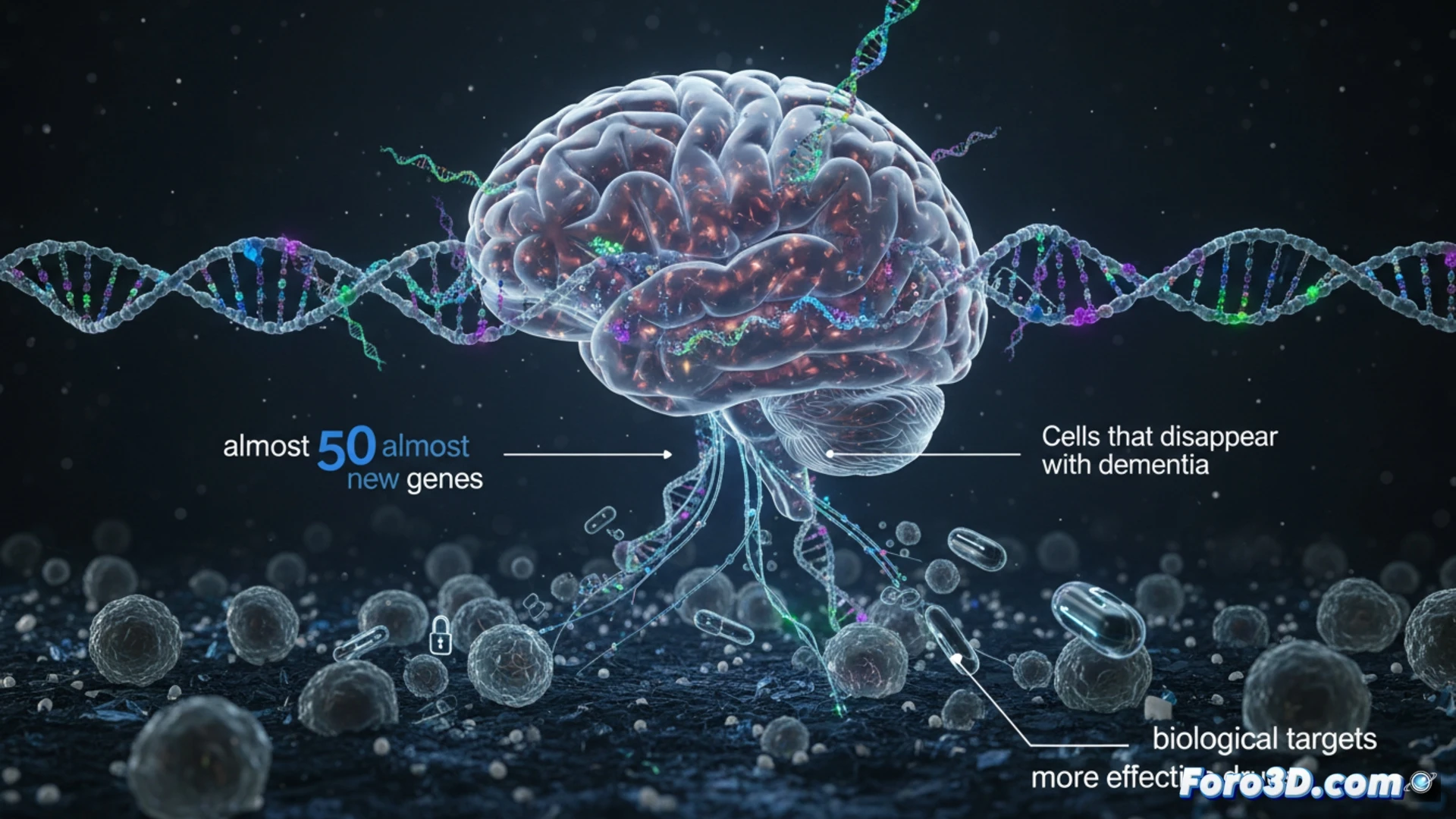
The genetic map revealing hidden targets 🧬
Researchers analyzed data from tens of thousands of patients, comparing the DNA of healthy individuals with that of those who developed Alzheimer's. The key was identifying genetic variants that alter the function of glial and neuronal cells, especially those that degrade before symptoms appear. These cells, which keep the brain healthy, progressively disappear. The finding allows for designing drugs that protect these cell populations or block the harmful pathways identified in the study.
Your brain: that neighborhood where neighbors move out without warning 🧠
It turns out that certain brain cells, the ones that clean up and maintain order, decide to go on permanent vacation just when you need them most. The study reveals that these cells disappear before you notice you've lost your keys or your neighbor's name. If only there were an app to locate them, but for now, we have to wait for science to convince them to stay. Meanwhile, at least we know where to look.