A group of scientists has managed to transform kitchen waste such as fruit and vegetable peels into filament for 3D printers. This breakthrough reduces dependence on plastic and lowers the cost of manufacturing everyday objects. In the near future, we could print everything from toys to spare parts using organic household waste, saving money and reducing environmental impact.
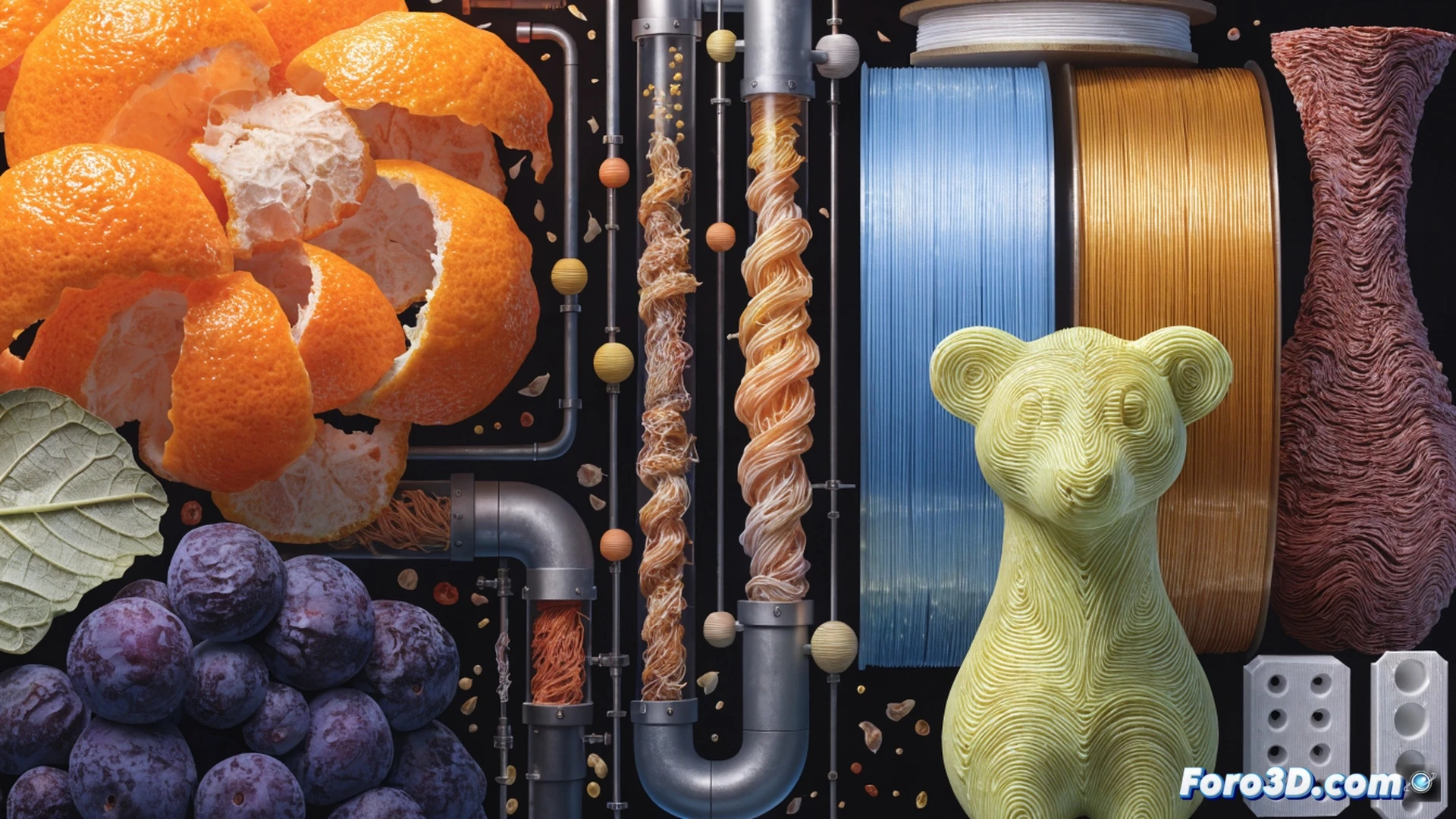
The technical process behind organic filament 🛠️
The method involves drying and grinding the waste into a fine powder, which is then mixed with biodegradable binders to form a stable filament. Printing is done at lower temperatures than with conventional plastics, saving energy. Although the strength is lower than that of PLA, it is sufficient for everyday objects such as pots, coat racks, or decorative pieces. The team is now researching how to improve durability without adding synthetic chemicals.
Goodbye to the trash can, hello to the printer spool ♻️
Soon, when your neighbor gives you a strange look for storing banana peels in the freezer, you can explain that you're accumulating ink for your printer. The downside is that if you print a spare part for the washing machine with potato skin, you might end up with an accessory that smells like a French omelette. But hey, at least nature won't reclaim the plastic you didn't use.