Researchers have developed a three-dimensional camera that replicates the visual system of the jumping spider. The device uses tiny lenses to capture 3D images with lower power consumption than a common light bulb. For the public, this promises cell phones and drones with longer-lasting batteries and lower costs, without sacrificing depth of field.
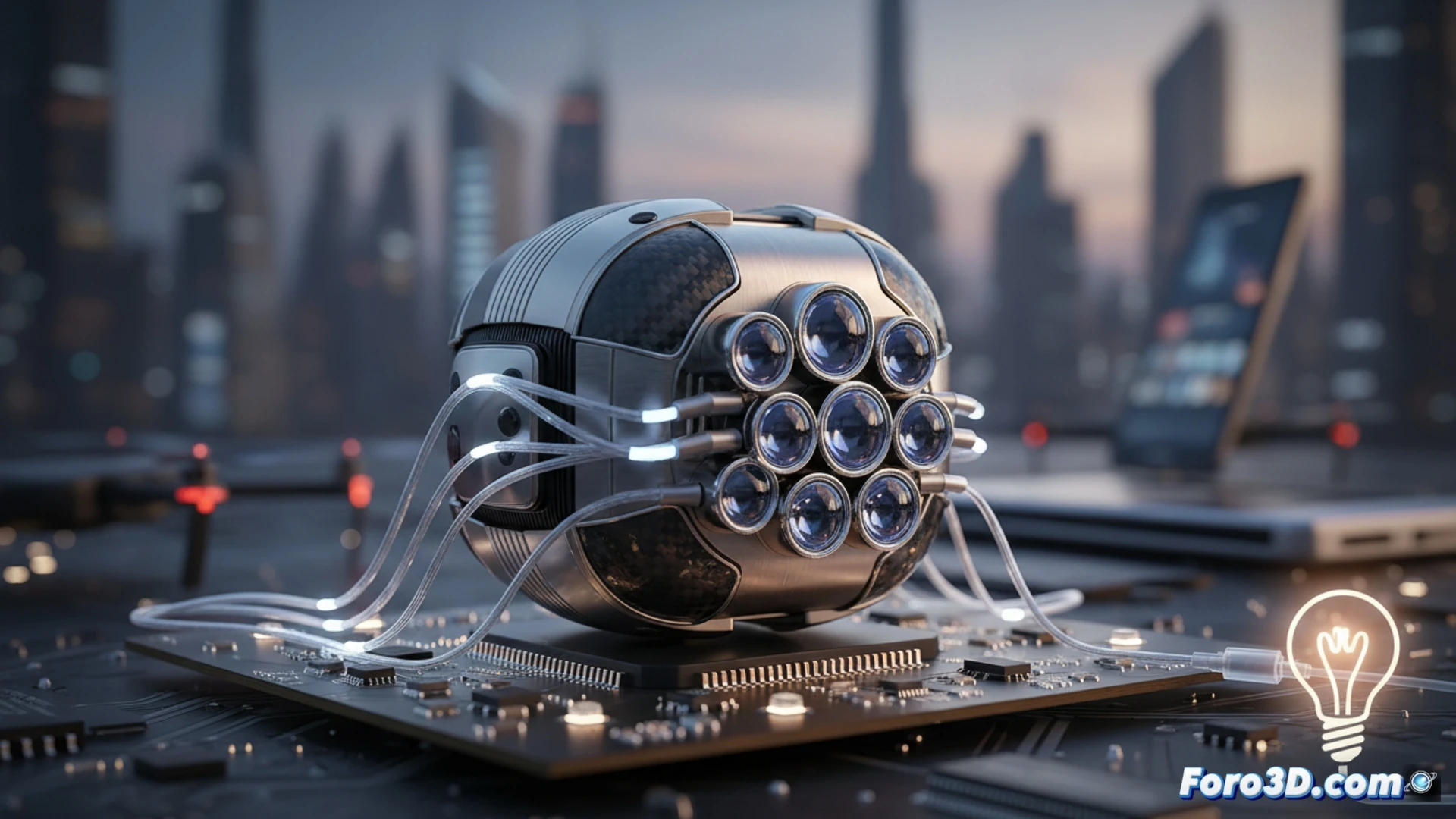
Miniature lenses and low voltage: how the artificial eye works 🕷️
The design is inspired by the retina of the jumping spider, which uses multiple layers of photoreceptors to calculate distances without moving. The camera replicates this process with an array of microlenses that focus light onto low-power sensors. The result is a system that processes depth with few milliwatts, avoiding the heavy algorithms of current 3D cameras. This allows it to be integrated into portable devices without sacrificing battery life.
The spider that saves more than your boss on the electricity bill 💡
While jumping spiders use this trick to hunt flies without getting tired, humans will use it so our phones don't die mid-afternoon. Soon we'll see drones with arachnid eyes flying around the house, using less power than a Christmas LED. Sure, if your neighbor spies on you with one, at least you'll know they're not wasting electricity.