Brydon Carse is not an ordinary cricket player. His biomechanical profile reveals a combination of raw power and endurance that sets him apart in the limited-overs format. This 3D analysis breaks down the characteristics that make this South African-English bowler an atypical asset, capable of exceeding 145 km/h with a stride that seems straight out of a heavy engineering manual.
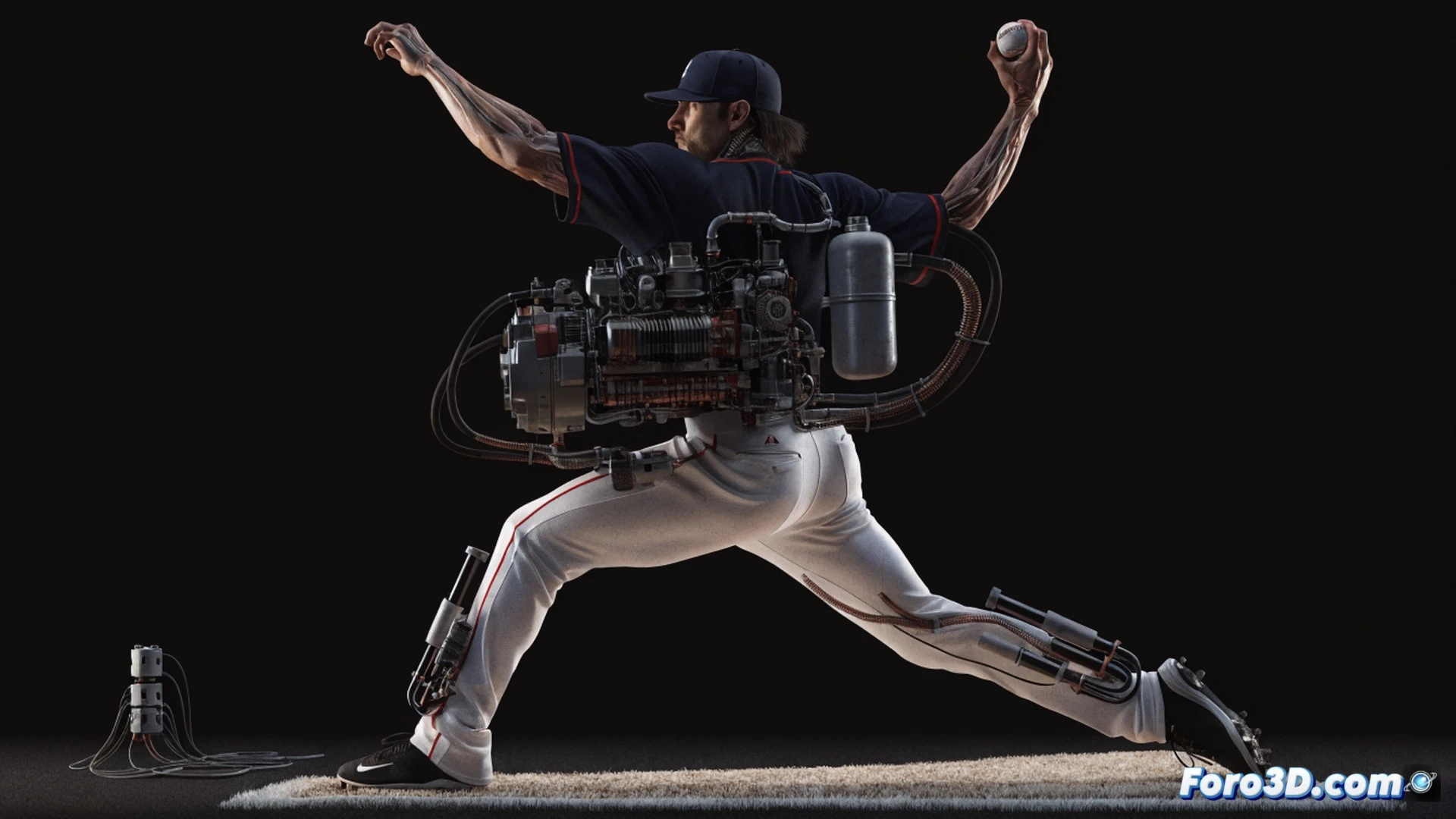
Bowling Biomechanics: The Role of the Kinetic Chain 🏏
In the 3D reconstruction, the takeoff phase shows a 45-degree knee flexion, generating elastic load on the patellar tendon. Hip rotation reaches 120 degrees before front-foot contact, while the bowling arm accelerates from a 90-degree abduction position. The trunk angle remains stable at 25 degrees, avoiding energy loss. This pattern reduces shoulder strain and maximizes force transfer from the ground to the wrist.
The Mystery of the Cap That Never Falls Off 🧢
In the 3D model, there is a detail that baffles engineers: Carse's cap remains impeccable throughout the entire delivery. While his teammates lose theirs on the second stride, his defies physics. Sensors indicate that the friction coefficient between his cap and hair is abnormally high. Some suggest he uses glue; others, that his sweat acts as a natural Velcro. Science has no answer.