A team from the Universitat Politècnica de València and the University of Alicante has developed a buoy that repels jellyfish using electromagnetic fields. The device creates an invisible barrier that diverts these animals without harming them or releasing chemical substances. For swimmers, this means less risk of stings during high season, without nets that trap turtles or plastics in the sea. Its low maintenance cost makes it a viable option for coastal municipalities.
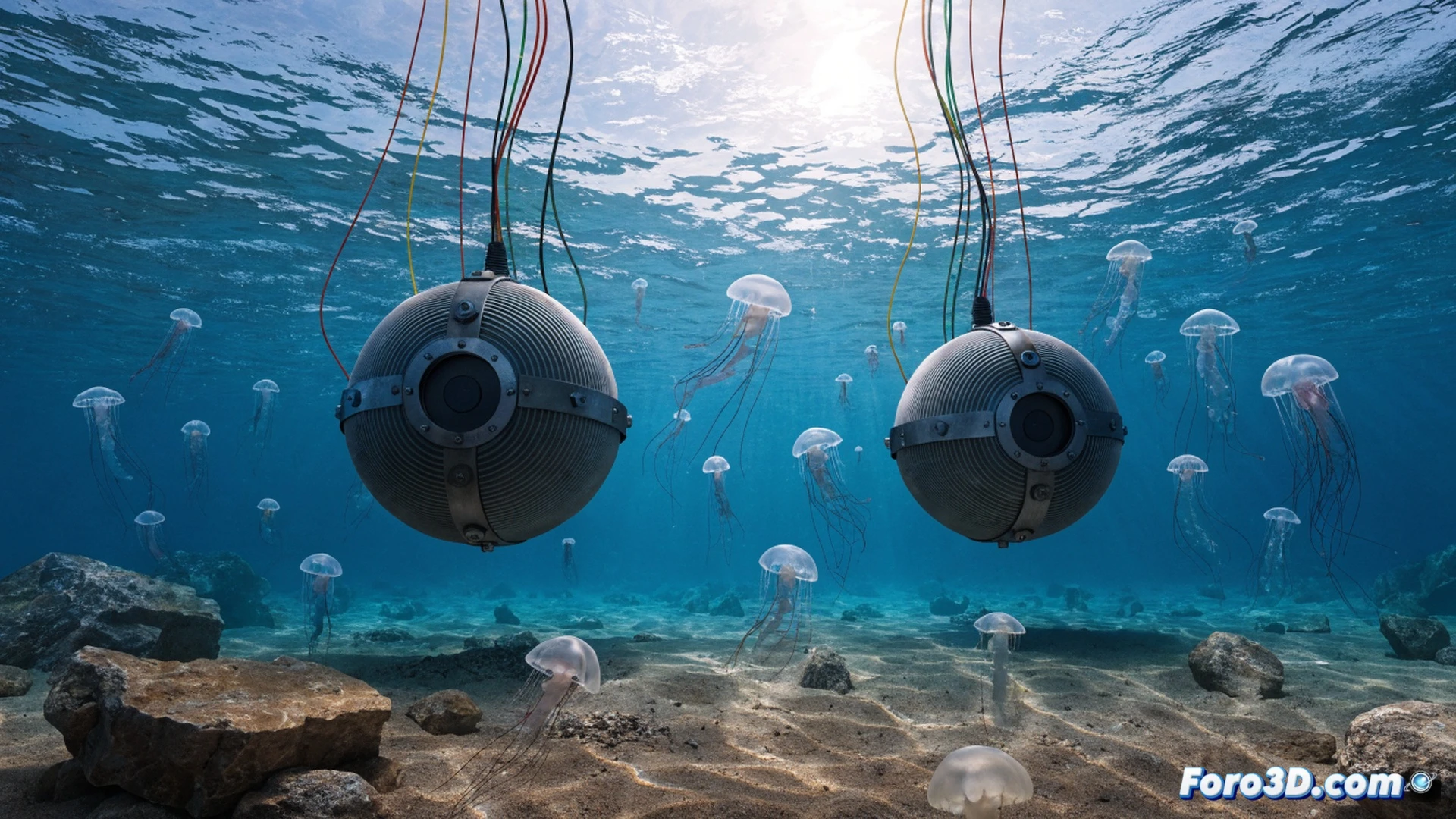
How the invisible barrier works 🧲
The buoy generates a low-frequency electromagnetic field that interferes with the sensory receptors of jellyfish, altering their orientation and causing them to change course. The system is powered by solar panels and can be installed at strategic points on the beach. Researchers have tested the prototype in simulation tanks, successfully diverting up to 90% of the specimens. It does not affect fish or marine mammals, as their physiology responds differently to these frequencies. The next step is to test it in the open sea during the summer. SECOND TITLE: (This field is left empty, but is filled with the third title)
The beach bar will no longer sell vinegar as a souvenir 🏖️
With this buoy, lifeguards will lose their best excuse to show off while running with the first aid kit. Jellyfish, for their part, will go bother another beach, perhaps the neighboring town's. And tourists, who until now paid five euros for a bottle of ammonia, will have to find another tacky souvenir to take home. Of course, if the magnetic field fails, we'll always have the trick of peeing in the water. But don't tell anyone.