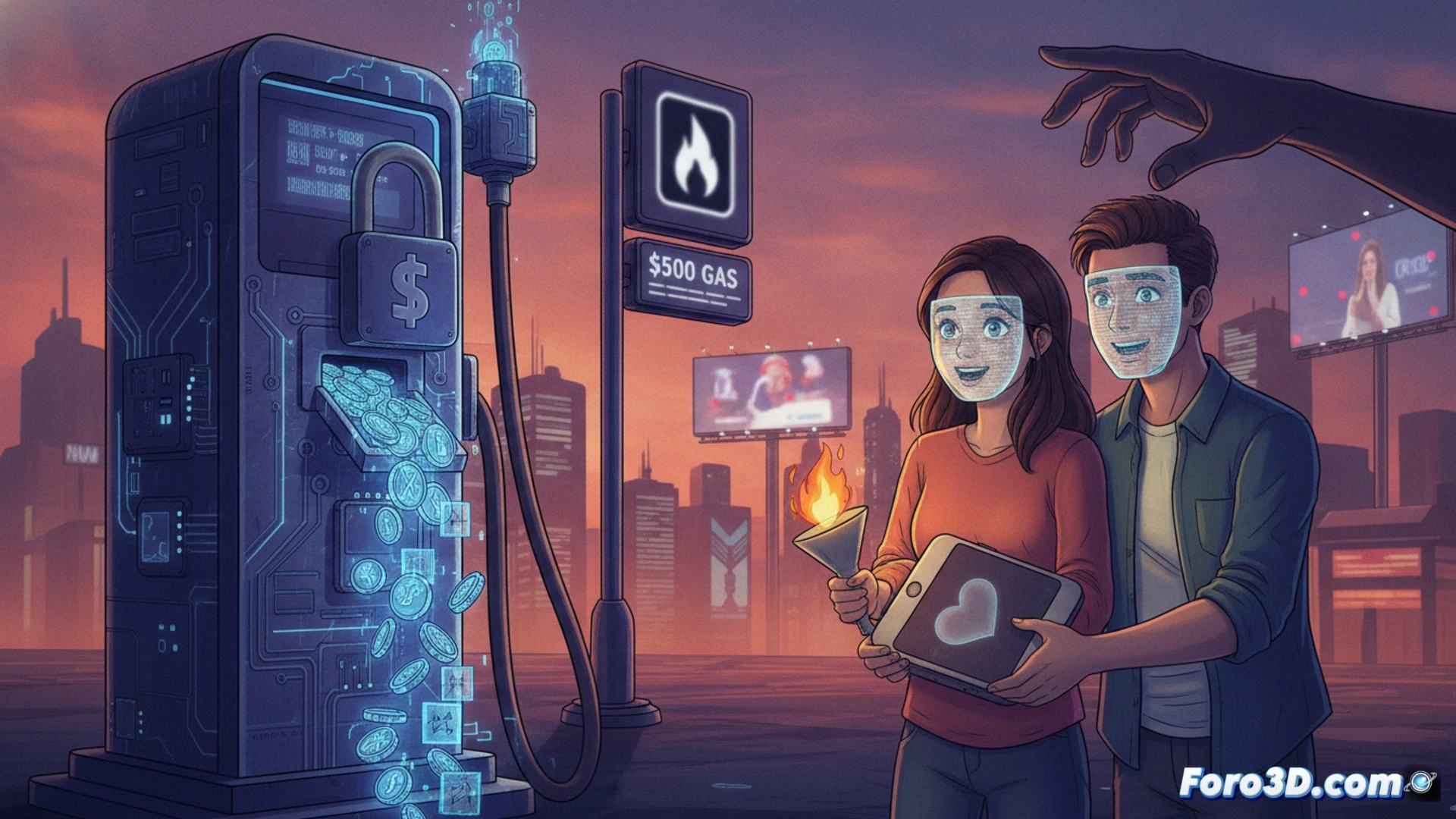
The dating app BLK is launching a giveaway of $500 gas cards to encourage in-person meetings, capitalizing on the high cost of dating in the U.S. Behind this offer lies a mechanism that prioritizes user retention and the mass collection of location data and consumption habits, information that is then sold to advertisers. The prize is for a few; the cost of data, for everyone.
The hidden architecture: location data as currency 🗺️
Technically, BLK integrates tracking SDKs that record GPS coordinates and movement patterns every time a user opens the app or participates in the giveaway. This data is combined with consumption metadata (times, visited gas stations) and sent to third-party servers. The giveaway acts as a behavioral hook: it activates constant geolocation and normalizes the sending of personal information, creating a detailed profile of each user that is auctioned on programmatic advertising platforms.
Free gas: the trick that leaves your privacy tank empty ⛽
So, while you calculate whether those $500 are enough to fill the tank of your 2005 Honda, BLK has already filled its servers with your coordinates at the gas station, your route to work, and even your 10-minute stop at Starbucks. The prize is for one in a thousand; the business, for the app owners. In the end, the only one refueling for free is the algorithm, and you pay with data worth more than the gas.