The fifth issue of Bleeding Hearts, within the Vertigo line, abandons the bond between a zombie and a human mother to explore undead society. The plot now centers on the orphaned daughter's drama and how a marginalized community organizes its life. This shift promises a more complex and profound narrative, leaving behind the initial focus to delve into social and emotional conflicts that captivate the reader.
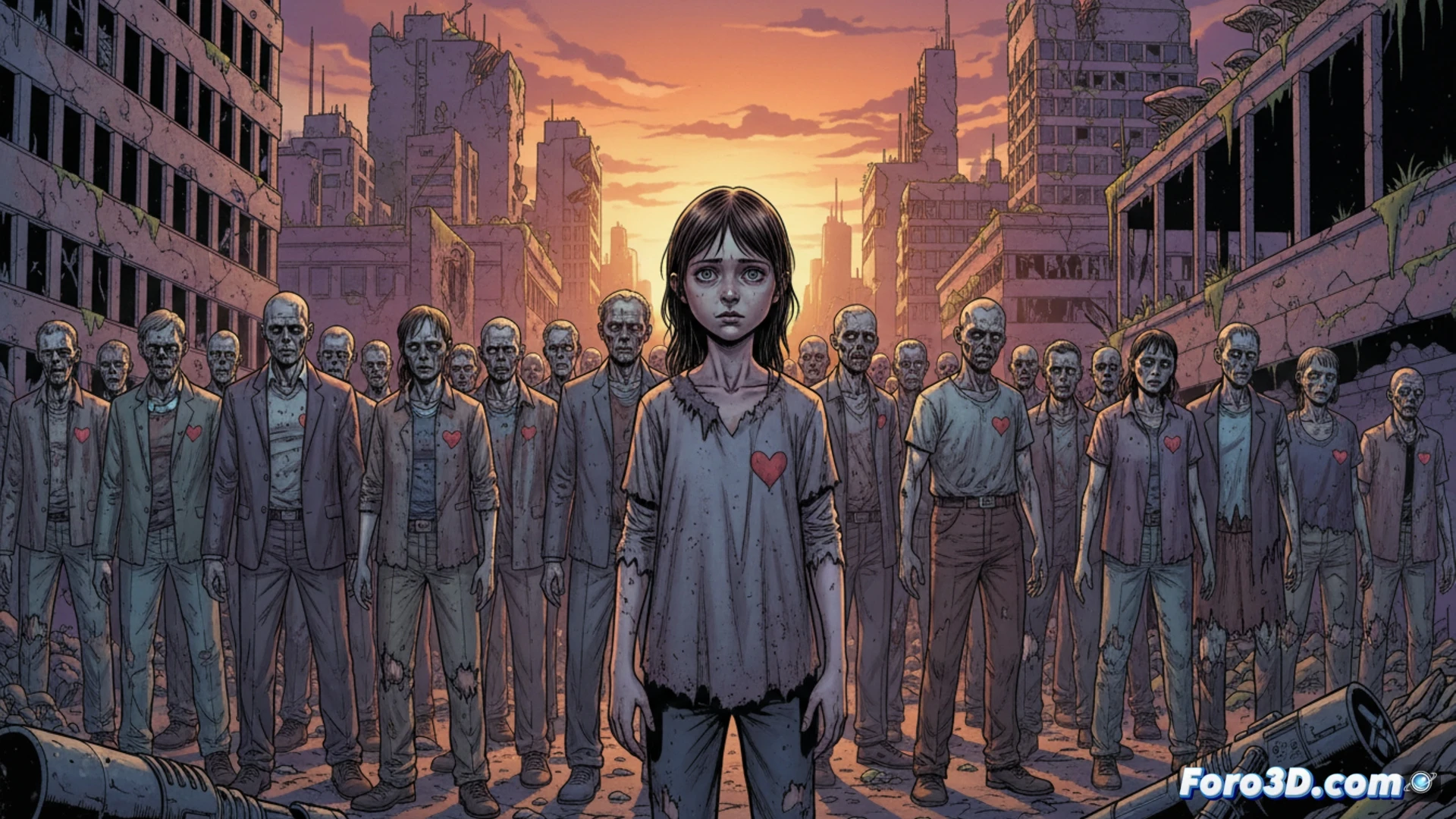
How the Undead Community Structures Its Society in Panels 🧟
From a technical standpoint, the comic develops a zombie social system with its own rules. The visual narrative uses color contrasts to differentiate the world of the living from that of the dead, while the dialogues reflect a hierarchy based on time since resurrection. The writers build a political structure where the undead manage scarce resources and resolve internal conflicts. This approach recalls other Vertigo series that explore alternative societies, but here it is applied with a slow pace that allows for deeper exploration of relationships between secondary characters, elevating the complexity of the plot.
When Being a Zombie Is Easier Than Raising a Daughter 😅
Because yes, it turns out that organizing an undead society is less complicated than dealing with a teenager. While the zombies discuss meat recycling policies and shifts for wandering the streets, the orphaned daughter just wants to know why her mother became friends with a walking corpse. At least the dead don't have to worry about curfew: they're already dead, and that, in this context, almost sounds like a privilege.