The so-called stem cell explosion is not an explosive event in the literal sense, but rather an exponential growth in their application capacity thanks to convergence with 3D technology. This phenomenon is redefining regenerative medicine, where bioprinting allows stem cells to be assembled into precise three-dimensional scaffolds. The result is the creation of living tissues for transplants and disease models, overcoming the limitations of flat plate cultures.
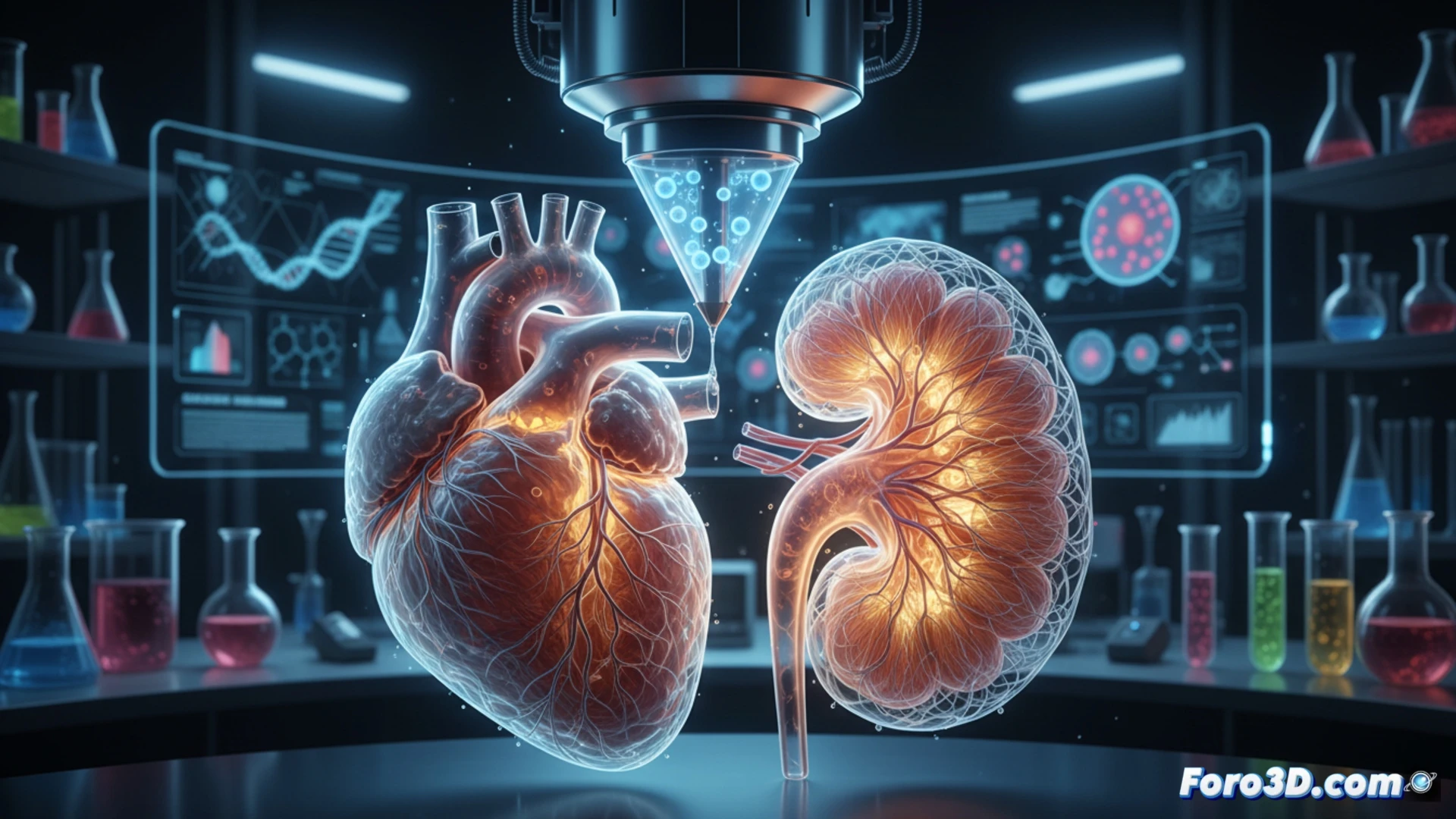
3D modeling and directed cell differentiation 🧬
Current laboratories use microfluidic systems and 3D-printed hydrogel matrices to recreate the cellular microenvironment, known as the niche. This three-dimensional environment is crucial for directing the differentiation of pluripotent stem cells into specific lineages, such as cardiomyocytes or neurons. 3D visualization via optical coherence tomography allows real-time monitoring of how cells migrate, divide, and organize within the scaffold. Companies like Organovo have already printed functional liver tissue for pharmacological testing, reducing reliance on animal models.
The future of personalized transplants 🚀
The combination of autologous stem cells and 3D bioprinting points to a horizon where replacement organs are custom-made, eliminating waiting lists and immune rejection. Although challenges remain in vascularizing large structures, advances in multi-head printing and vascular bioinks are accelerating the process. The stem cell explosion is, in reality, the spark that ignites the era of 4D medicine, where time and three-dimensional structure synchronize to repair the human body.
How 3D bioprinting is solving the main challenge of stem cell therapy, which is ensuring their viability and functionality after implantation in complex tissues
(PS: If you 3D print a heart, make sure it beats... or at least doesn't cause copyright issues.)