A newborn was found alive after being buried for 32 hours by an earthquake. Emergency teams managed to extract him safe and sound, restoring faith in the capacity to respond to disaster. For the public, this rescue demonstrates that the speed and coordination of rescuers can make a difference even in the most adverse conditions.
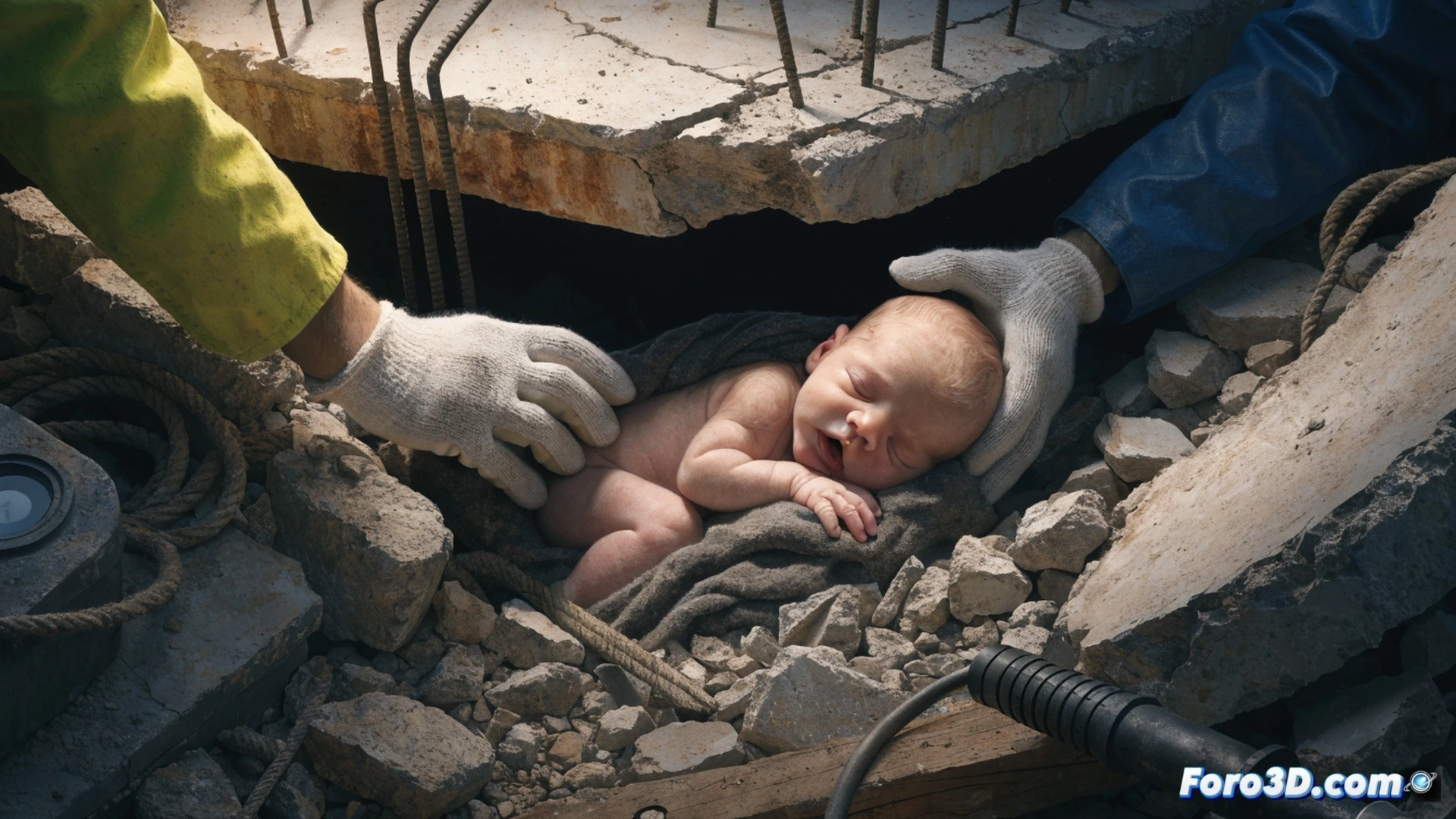
Seismic technology: sensors and drones that locate life amid the chaos 🛰️
The rescue was made possible thanks to the use of geophones and thermal cameras mounted on drones, tools that allow detecting heartbeats and body heat among the rubble. Search teams also used trained dogs and acoustic scanners to map air pockets. These devices, combined with rapid shoring protocols, optimize every minute. The technical lesson is clear: investing in early detection technology is not a luxury, but an operational necessity in seismic risk zones.
The baby who survived the earthquake and 32 hours without wifi 🍼
While the entire country held its breath, the rescued little one was probably only concerned about his next feeding. No missed calls or low battery: he had more urgent matters. Ironically, in the midst of chaos, a newborn without social media reminded us of the essentials: life clings on tooth and nail, even without teeth yet. The adults, meanwhile, kept debating whether their phones had signal.