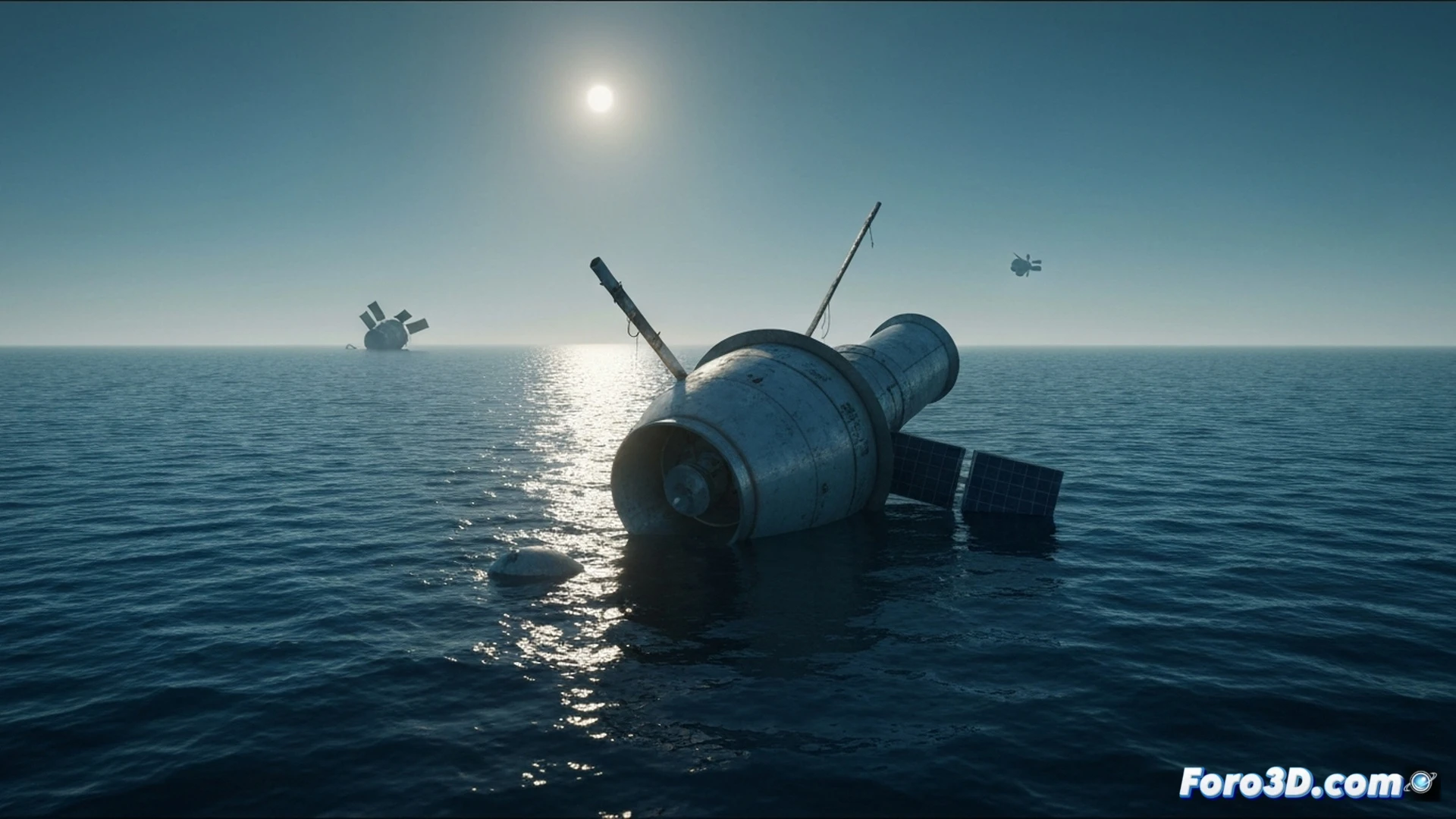
The fall of satellite and rocket debris into the oceans seems like a clean solution, but it hides a problem. The waste, laden with hydraulic fluids, fuels, and radioactive components, would sink into abyssal zones. There, corrosion could release hazardous substances, turning the seabed into a silent, difficult-to-access and control landfill.
The Engineering of Orbital Waste and Its Risks 🛰️
Decommissioned satellites often contain hydrazine, a highly toxic fuel, and lithium batteries that can explode upon impact. In the sea, containers corrode over time. Deep currents would spread heavy metals and persistent organic compounds. Current engineering does not design for safe oceanic burial, turning each controlled reentry into an environmental gamble.
The Perfect Plan: Throwing Trash in the Backyard 🐙
Sure, what could go wrong? Now fish will have to deal not only with microplastics but also with remnants of Soviet rockets. Perhaps in a few years we'll see mutant octopuses claiming property rights over their new titanium homes. At least, if a satellite falls on your house, you can complain. At the bottom of the ocean, no one hears your screams.