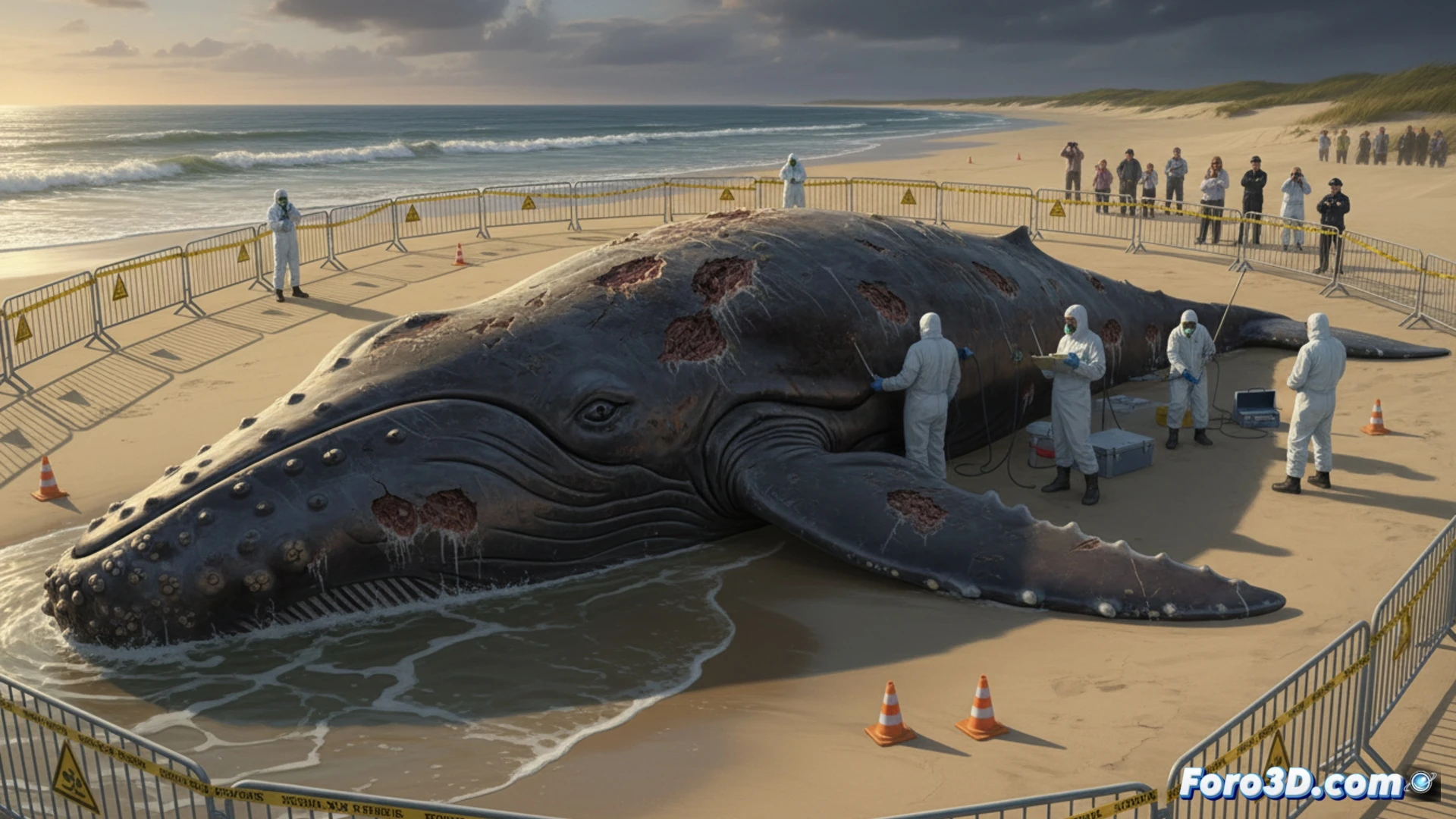
A humpback whale specimen named Timmy arrived dead on the coast of the Danish island of Anholt. The carcass floated for over two weeks before stranding, forcing authorities to take action. Scientists are seeking to determine the cause of death and avoid health risks. The public was ordered to not approach the animal. The investigation prioritizes protecting public health and clarifying why the cetacean died in shallow waters.
Marine forensic technology for carcass analysis 🧬
Teams of biologists apply necropsy protocols using tools such as drones to document the external condition and gas sensors to measure decomposition. Tissue and stomach content samples are taken for laboratory analysis. The use of tracking buoys helps understand the currents that dragged the animal. This technical approach aims to determine if the death was due to collision, disease, or plastic ingestion. The information gathered will serve future conservation strategies.
Timmy had a beach vacation plan 🏖️
It seems Timmy decided to ignore the no-entry signs and took an unsolicited vacation in Anholt. The authorities, far from appreciating his visit, put up a fence and a biohazard sign. Scientists, meanwhile, are rubbing their hands together: a patient who doesn't complain and doesn't ask for a second opinion. At least Timmy won't have to worry about the vet bill or the TripAdvisor reviews.