Visitor numbers in the Balearic Islands exceed any reasonable limit. While hotels and tourist apartments multiply, residents see access to decent housing become a pipe dream. No one regulates flights or licenses. The model grows without direction and without asking those who already live there.
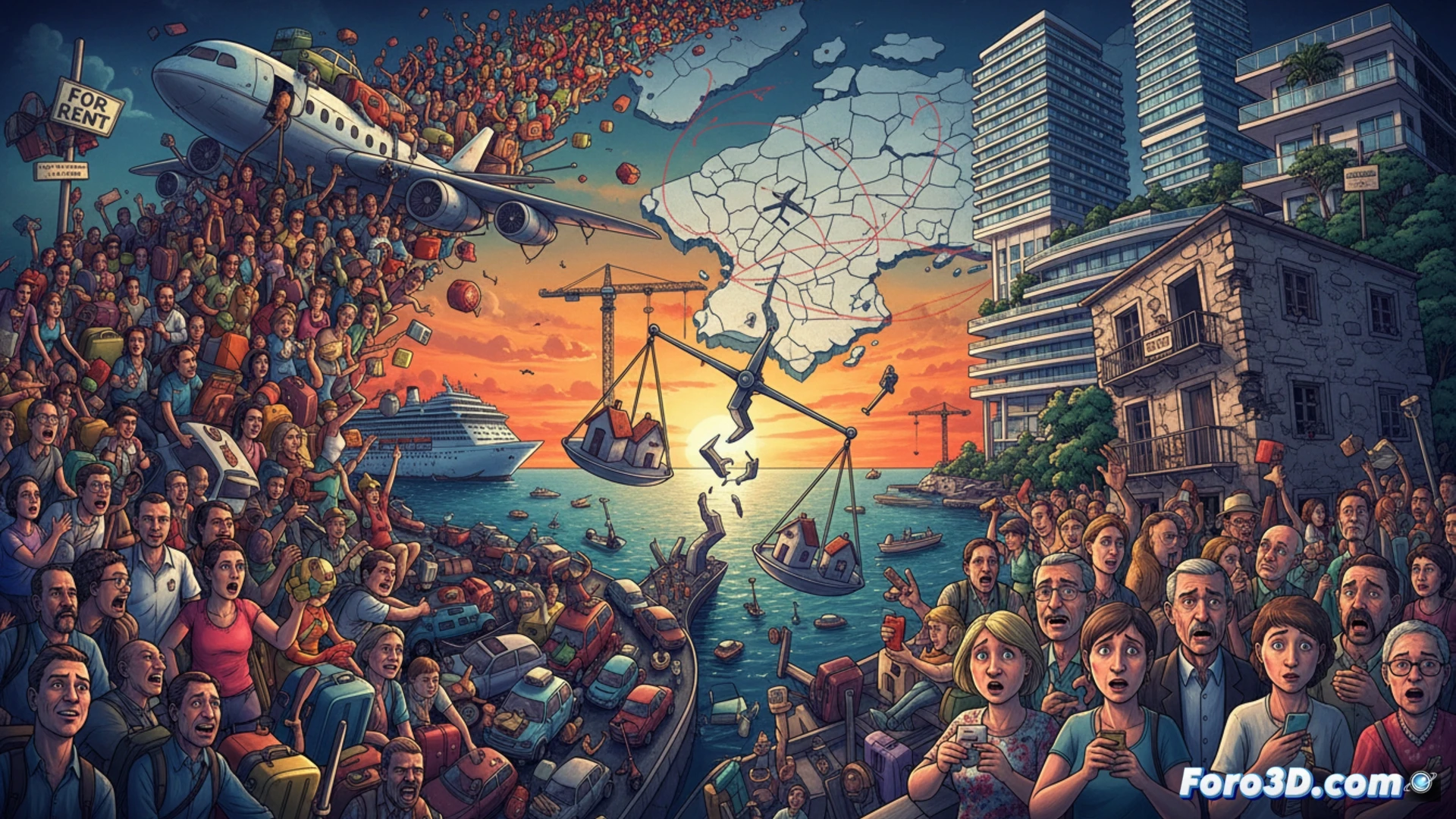
Saturation algorithms: when big data confirms what the streets are shouting 🏖️
Tourist monitoring systems based on artificial intelligence process hotel occupancy, air traffic, and rental prices in real time. The data shows a direct correlation between the increase in low-cost flights and the expulsion of residents from the center of Palma. Without regulatory intervention, technology only serves to quantify the disaster, not to solve it.
Solution: a drone that hands out apartment keys to tourists with champagne 🍾
Since no one sets limits, I propose an express service: the tourist lands, a drone hands them the keys to an apartment previously occupied by a local family, and also serves them a glass of cava. Fully automated, without bothering politicians. Then, the algorithm of the day calculates how many residents fit in a shelter while the visitor enjoys the sea. Ironies of a system that prefers to measure the collapse rather than stop it.