The high-end wine industry faces a growing challenge: the counterfeiting of bottles through the reuse of original packaging. A new forensic technique based on the cellular structure of cork promises to revolutionize traceability. Instead of analyzing the liquid, experts focus on the cap, whose three-dimensional morphology acts as a unique and irreproducible fingerprint.
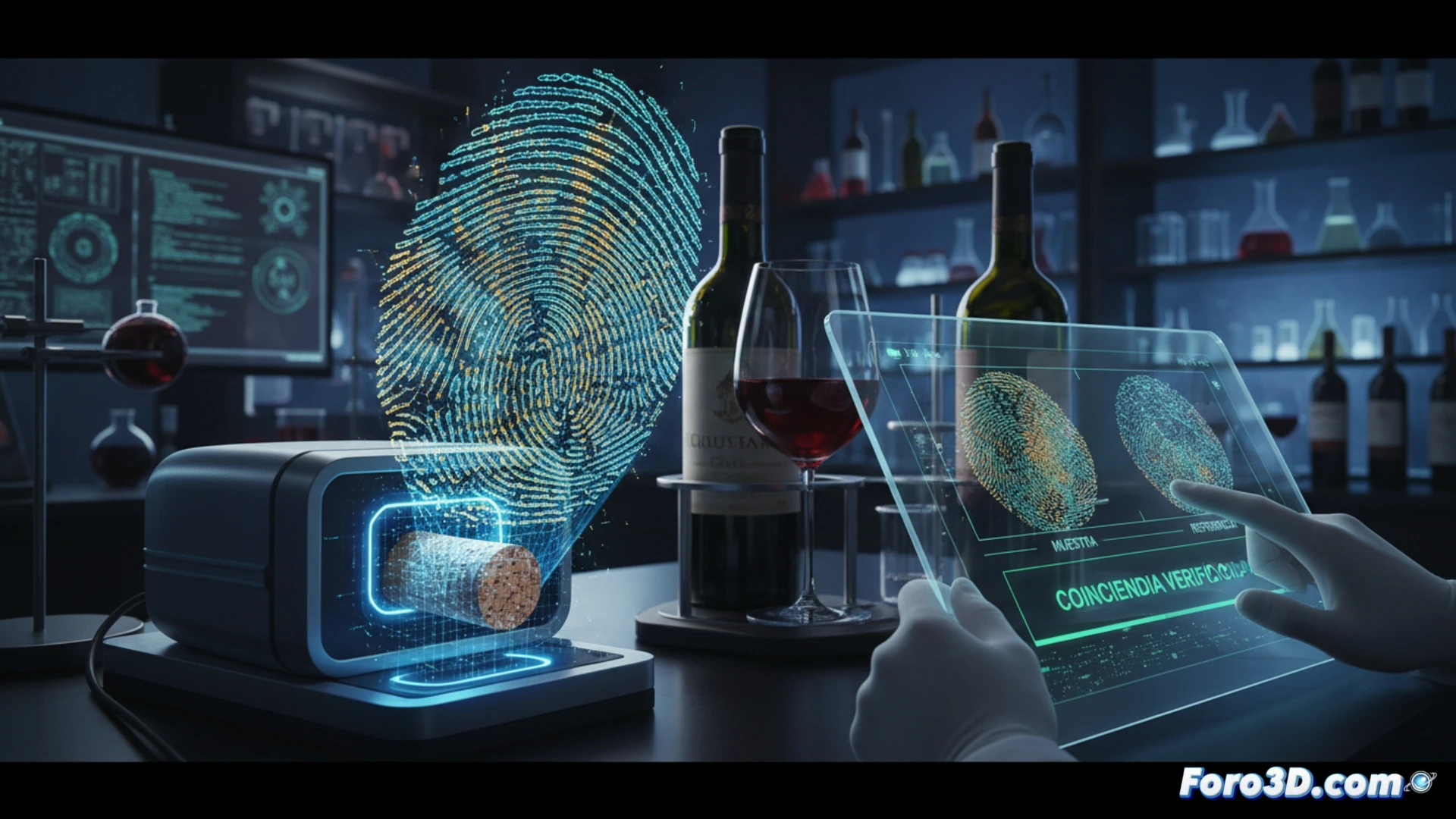
Forensic Workflow: From Microscopy to Expert Report 🔬
The process begins with a high-resolution three-dimensional scan of the cork surface using extreme focus photogrammetry. Microcavities and lignin patterns are captured, generating a point cloud with micrometric precision. This 3D model is fed into a pattern recognition algorithm that compares it against a database of certified authentic corks. The system identifies anomalies such as silicone filling, surgical cuts, or unnatural textures. Finally, an expert report is generated documenting the discrepancies, associating each irregularity with a statistical probability of counterfeiting.
Science as the Guarantor of Tradition 🍷
This forensic pipeline demonstrates that 3D technology serves not only to create, but also to protect. By converting the organic nature of cork into a verifiable digital file, the circle of authenticity is closed. For the collector or sommelier, cellular analysis becomes the silent witness certifying that each bottle is exactly what its label promises, thus preserving the cultural and economic value of great wines.
What technical limitations does the application of 3D cellular analysis of cork present for distinguishing between an original bottle and one reused with a lower-quality wine in a production line environment?
(PS: In the forensic pipeline, the most important thing is not to mix the evidence with the reference models... or you'll end up with a ghost at the scene.)