The rise of digital commerce has skyrocketed the circulation of counterfeit sports equipment, from tennis rackets to bicycle helmets. Traditional authentication, based on seals or labels, proves insufficient against high-quality replicas. This is where 3D technology becomes a key forensic ally for intellectual property, allowing the verification of an object's legitimacy through its geometric digital fingerprint.
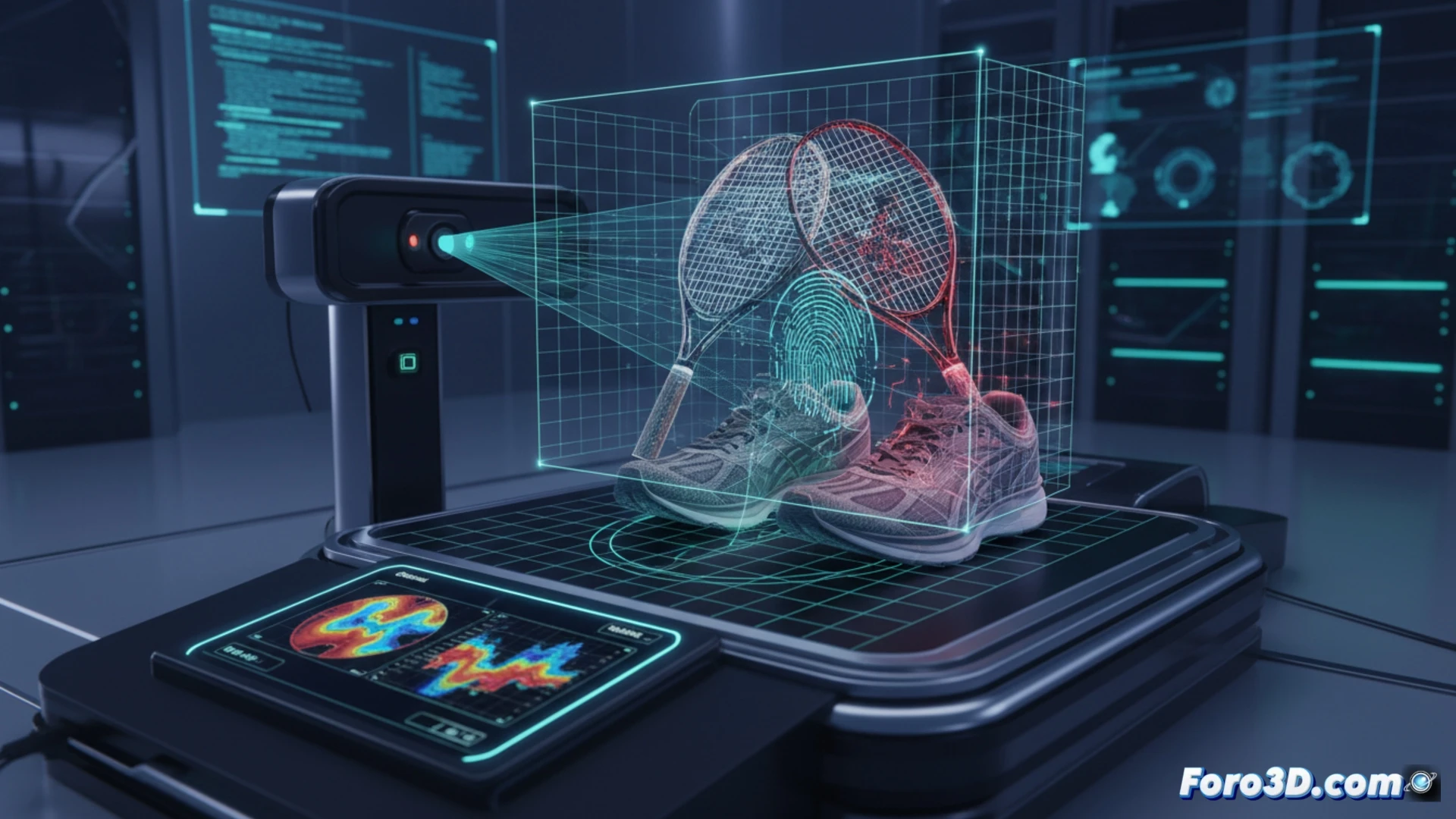
Digitization and morphological comparison 🏸
The process begins with the three-dimensional scanning of the suspected utensil, capturing every micron of its surface. This model is then compared against the database of registered patents and industrial designs. A 3D metrology software compares critical variables such as the aerodynamic profile, weight distribution, or manufacturing tolerances. If the deviations exceed a predefined threshold, the object is classified as illegal, demonstrating a violation of industrial design rights or utility patents.
Legal implications of the digital twin ⚖️
This methodology not only detects counterfeiting but also provides irrefutable expert evidence in litigation. A judge can visualize in 3D the overlap between the original and the illegal copy, understanding the infringement without needing to be an engineering expert. For 3D content creators, this underscores the importance of registering their models in secure repositories, as digital authentication is the only real frontier against industrial piracy.
Can a 3D authentication system based on volumetric scanning detect structural differences in the core of a counterfeit tennis racket without destroying the product?
(PS: at Foro3D we know that the only things that don't need copyright are STL files that don't print well)