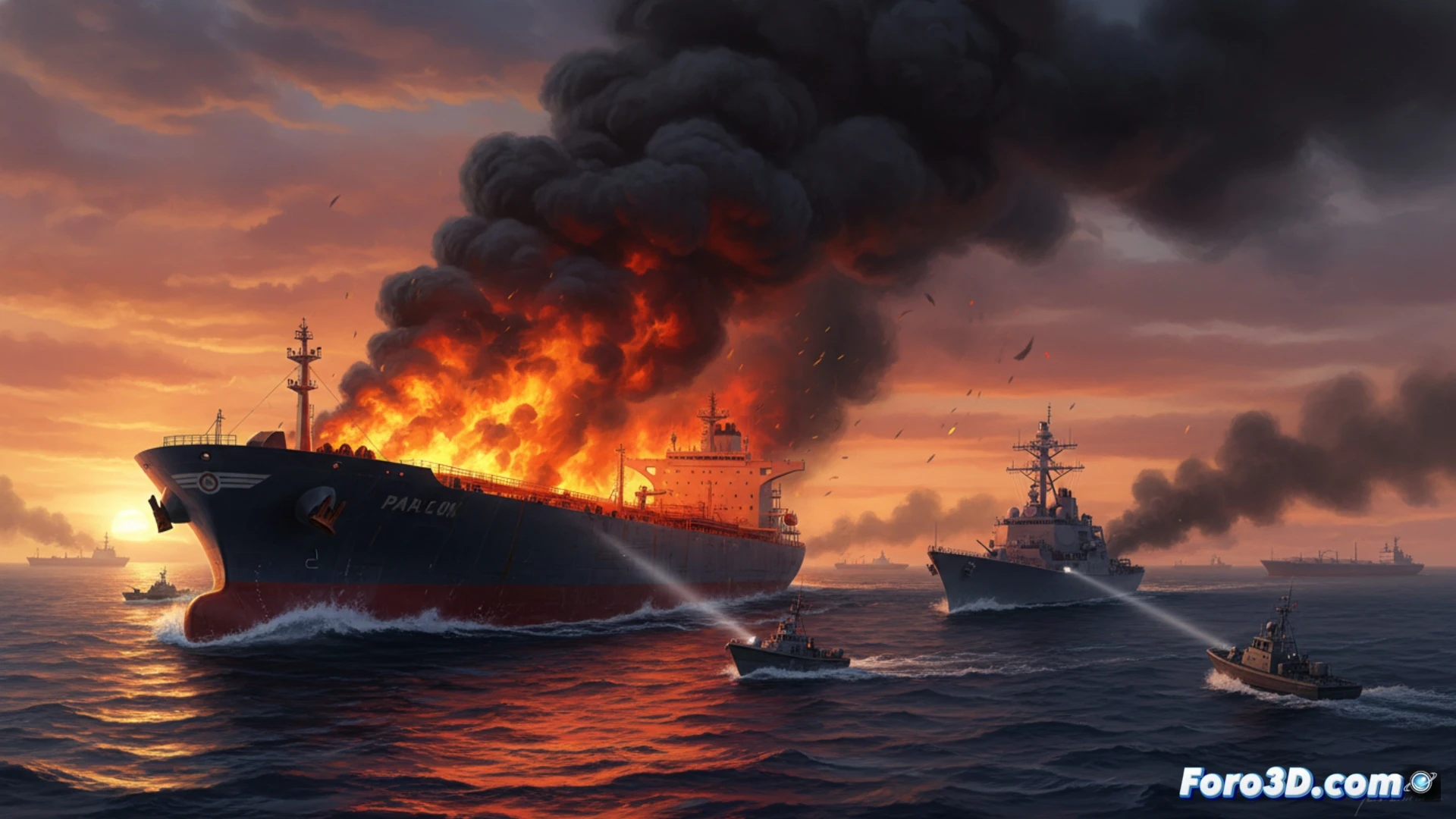
A tanker vessel flying the flag of Palau was attacked by US forces in the Gulf of Oman after disobeying orders. The incident caused a fire on board and the disappearance of several crew members. For citizens, this event raises the risk of international tensions that directly impact the price of oil and fuel.
How naval technology detects non-cooperative vessels 🛰️
Automatic Identification Systems (AIS) and Synthetic Aperture Radars (SAR) allow real-time tracking of ships. When a vessel like the Palau tanker turns off its AIS or ignores communications, naval forces resort to satellites and drones to monitor its route. This technology, though precise, does not prevent a ship from disobeying orders, leaving resolution in the hands of interdiction tactics.
The domino theory: from a burning ship to your empty wallet ⛽
If the price of crude oil rises due to this attack, we will soon see gasoline become more expensive. And as always, the consumer will foot the bill. Meanwhile, countries debate at the UN and financial speculators rub their hands together. The only thing burning faster than the ship is the gas station bill. Ironies of fate.