The arrival of the ASUS ProArt B850-Creator Wi-Fi Neo motherboard promises to be a turning point for those looking to build a powerful workstation without resorting to high-end boards. With native support for the new AMD Ryzen 9000 processors and high-frequency DDR5 memory, this model positions itself as a solid option for intensive workflows. However, its premium price and focus on stability over extreme overclocking make it a specialized tool, not a product for the mass consumer. 🖥️
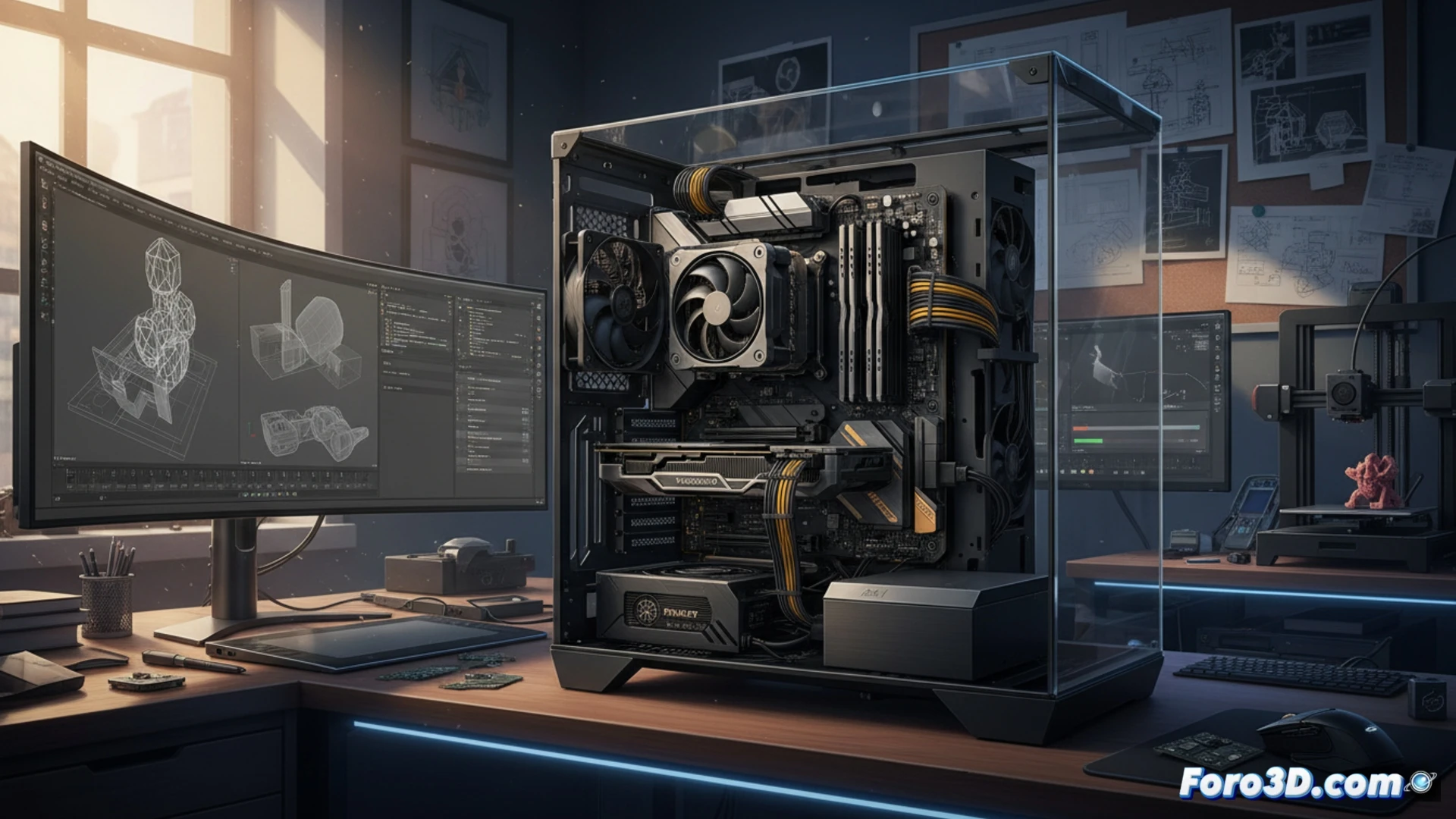
Technical Analysis: Connectivity and Performance for 3D Environments 🔧
For 3D modeling and rendering, the board offers an AM5 socket with a robust 16+2 phase VRM, capable of maintaining stable frequencies on high-core CPUs like the Ryzen 9 9950X during prolonged simulations. It includes PCIe 5.0 slots for the GPU, essential for handling complex meshes in real-time in applications like Blender or Autodesk Maya. Connectivity is its strong point: it features two USB4 ports (40 Gbps) for ultra-fast external storage, and dual-band Wi-Fi 7 for transferring heavy projects without latency. The inclusion of two M.2 slots with thermal heatsinks allows for RAID 0 setups for 4K texturing projects, reducing bottlenecks in asset reading.
User Profile and Market Alternatives 🎯
This board is not for the occasional gamer, but for the product design or animation professional who prioritizes system stability during hour-long renders. Its 24/7 continuous operation certification makes it ideal for home render farms. However, it directly competes with the ASUS ROG Crosshair series, which offers greater overclocking headroom at a similar price. For the modeler working with fluid simulations or dynamics, the ProArt B850 offers better passive thermal management but sacrifices aesthetic customization options. In conclusion, it is a smart investment if your priority is long-term reliability in critical workloads.
Considering that the ASUS ProArt B850-Creator Wi-Fi Neo uses the B850 chipset, designed for high-performance gaming, how does the absence of an X-series chipset (like the X870E) affect sustained performance in complex parametric workloads and multitasking rendering, compared to a high-end board for 3D workstations?
(PS: RAM is never enough, like coffees on a Monday morning)