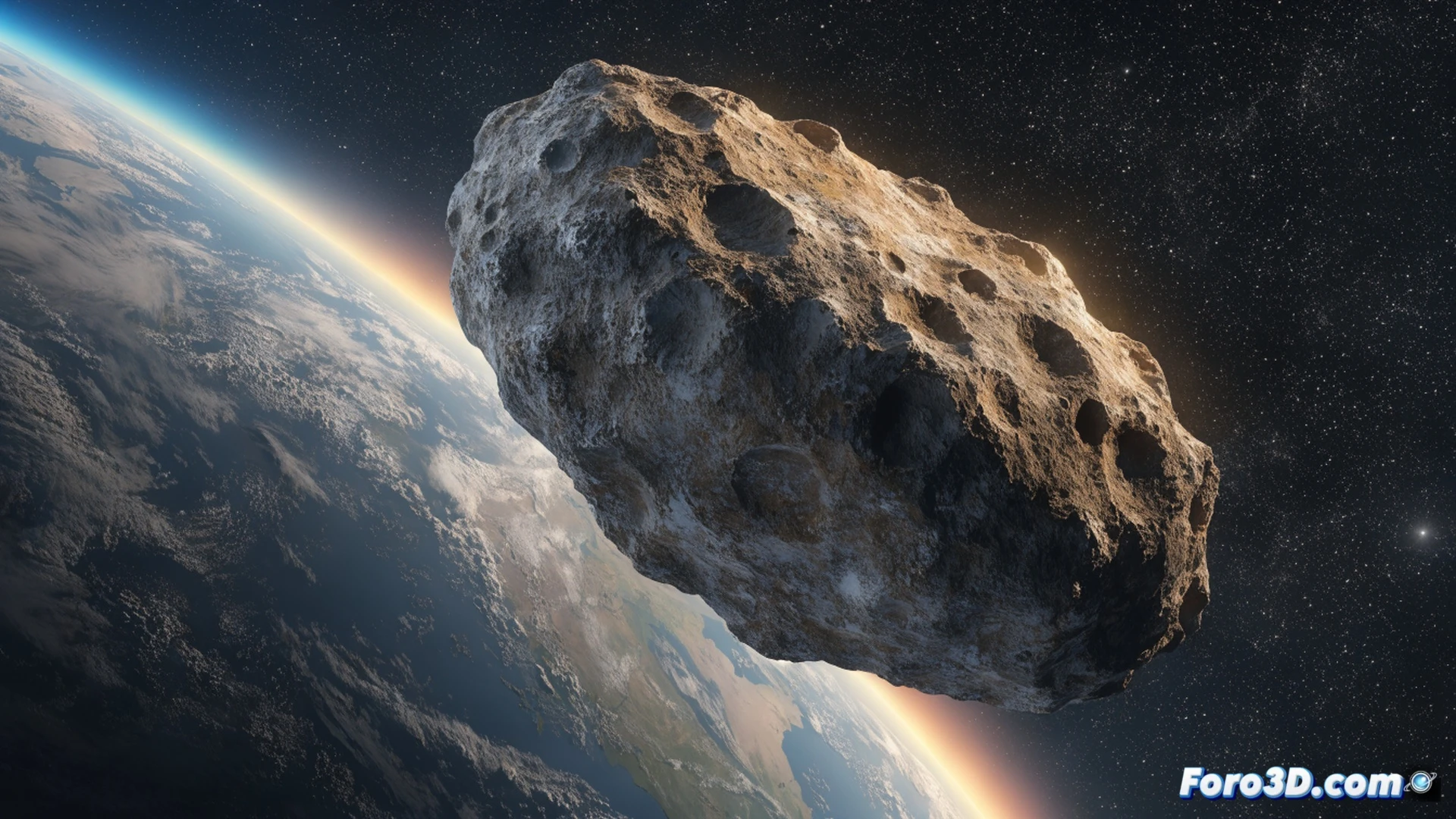
This Saturday, a sizable asteroid will approach within 2,560,000 kilometers of our planet, a distance six times greater than that which separates us from the Moon. Although invisible to the human eye, enthusiasts with small telescopes will be able to track its trajectory. The scientific community confirms there is no risk of impact, making the event safe and perfect for observation.
How to track the asteroid with basic equipment 🔭
To capture the asteroid's passage, a telescope with a 15 cm aperture or a good pair of astronomical binoculars will suffice. The space rock will move slowly against the background of stars, so it is advisable to use star map applications like Stellarium or SkySafari to locate it. It is recommended to point towards the constellation Leo during the early hours of Saturday. The object will reflect enough sunlight to be visible as a faint but distinguishable point.
The space rock and the panic that wasn't 🌠
Every time an asteroid passes close by, someone on social media asks if it's the end of the world. Relax, this rock has no intention of ruining our weekend. At 2.5 million kilometers away, it's farther than the last time you made plans with a friend who said see you in five minutes. So bring out the telescope, look up at the sky, and enjoy the show without preparing your will.