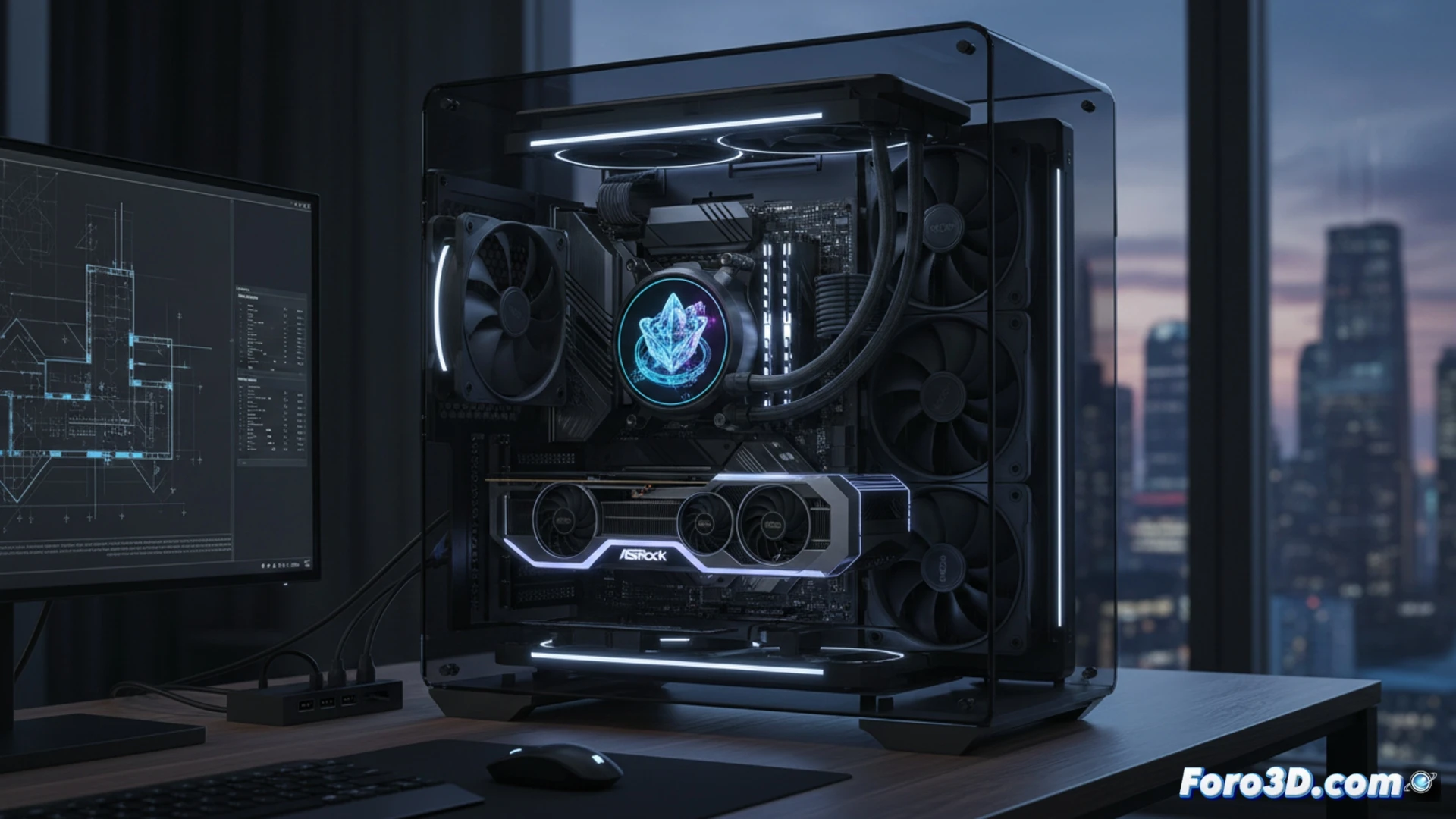
ASRock has unveiled a new 360mm AIO liquid cooling system that integrates an LCD screen capable of displaying 3D effects and includes additional ports for peripherals. This launch, aimed at high-performance computers, promises to improve thermal dissipation in systems dedicated to gaming and intensive work. For the average user, this translates into potentially quieter and more efficient systems, albeit at a higher cost. The innovation focuses on the niche of enthusiasts and professionals, not the general public.
Thermal and acoustic performance in 3D workflows 🔥
For a professional in 3D modeling or simulation, thermal management is critical. Modern CPUs and GPUs, when rendering complex scenes or running fluid simulations, generate heat spikes that a traditional air cooler may not handle without thermal throttling. This 360mm AIO from ASRock, with its triple-fan radiator, offers a superior heat exchange surface. The LCD screen, beyond being an aesthetic element, can display real-time core temperatures or workload, allowing the user to monitor the system without additional software. The inclusion of additional ports on the pump simplifies internal cabling, improving airflow inside the case. Compared to alternatives from Corsair or NZXT, the differentiating value lies in the integration of this 3D screen, although its impact on pure cooling performance will depend on the quality of the fans and the included thermal paste.
Cost-benefit ratio for the industry professional 💡
Acquiring this system should be evaluated from a productivity perspective. A system that maintains lower temperatures avoids throttling, which translates into shorter render times and longer component lifespan. However, the additional cost of an LCD screen and extra ports may not be justified if the budget is tight. For a studio operating with 24/7 workloads, investing in reliable cooling with integrated monitoring can be a long-term saving. For the freelancer or advanced hobbyist, a standard 360mm AIO without a screen offers similar thermal performance at a lower price. In summary, ASRock's proposal is solid for those seeking a quiet and monitorable workstation, but it is not a thermal revolution; it is an evolution in system ergonomics and control.
What specific advantages or challenges could an integrated 3D LCD screen have in a liquid cooling system for workstations dedicated to 3D modeling and rendering, compared to traditional 2D screens in this type of hardware?
(PS: If your computer is smoking when you open Blender, maybe you need more than a fan and faith)