Ikki Kajiwara and Tetsuya Chiba created a cultural icon in 1968 that portrays the harshness of social ascent. Joe Yabuki, an orphan from the slums, becomes a professional boxer. His story is not just about punches, but about the struggle of the Japanese lower class after the war. The manga and anime marked generations with their stark realism and famous ending, which left everyone wondering whether Joe survived or not. 🥊
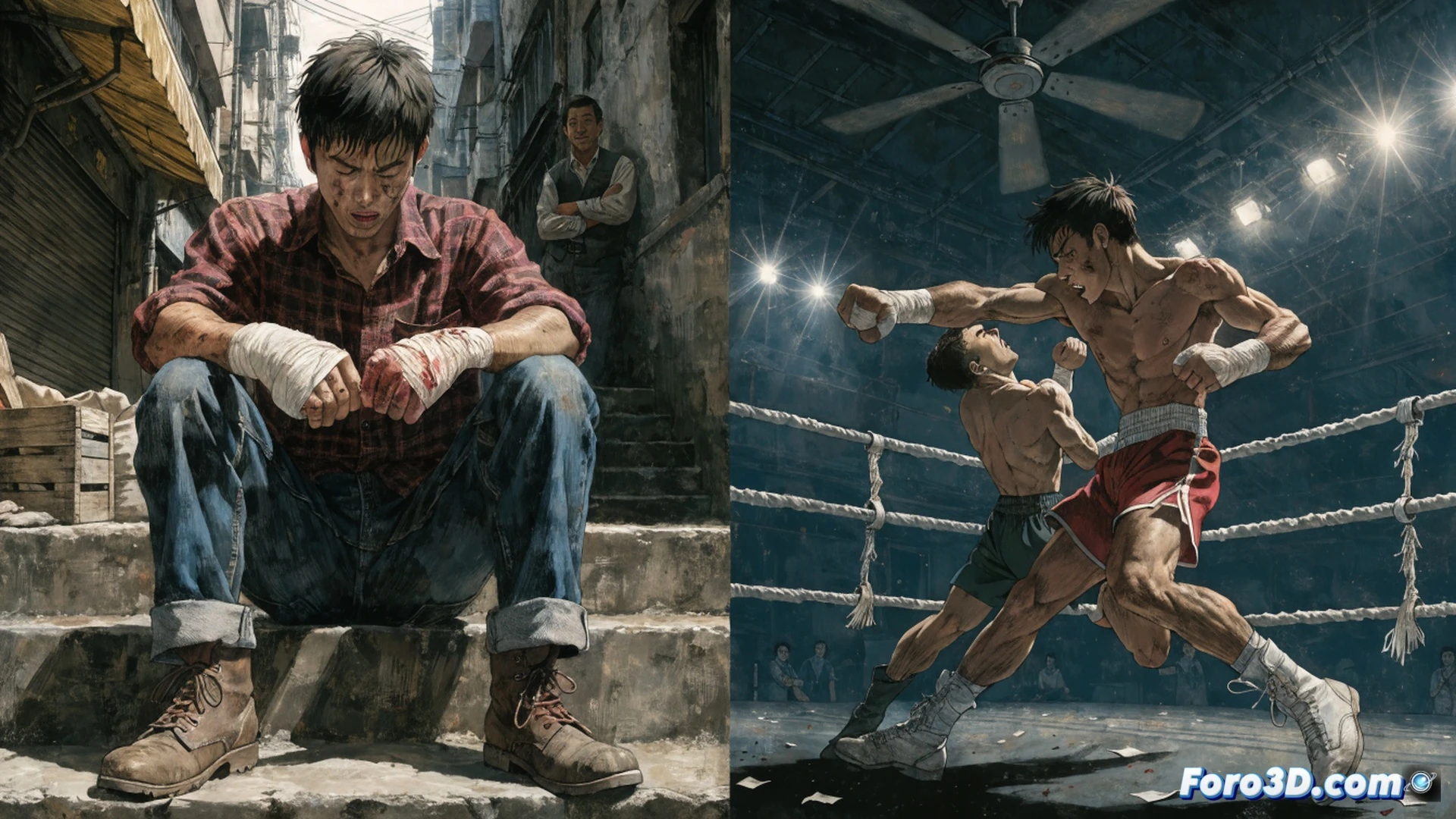
The Dempsey Roll technique and its evolution in the ring 🥊
The Dempsey Roll, a move that Joe perfects, is not fiction. It has roots in the real boxing of Jack Dempsey. It consists of a figure-eight swaying of the torso, generating power in each punch. In the series, Joe uses it as his ultimate weapon. Since then, professional boxers have studied its application. Although not a common move, its portrayal in Ashita no Joe influenced how punch mechanics are taught in some gyms in Japan.
Joe Yabuki and his secret diet of rice and bad attitude 🍚
Joe doesn't need protein powder or trendy shakes. His nutritional plan is simple: rice, some fish, and a lot of bad attitude. Instead of a trainer with an app, he has his old friend Nishi and a gym that looks like it's about to collapse. While modern boxers complain about gluten, Joe steps into the ring after a bowl of noodles and a street fight. His secret isn't the diet, but having nothing to lose.