A team of archaeologists has discovered Iron Age remains in Scotland with scrape marks inside a skull and sharpened limb bones. This finding suggests that ancient Britons practiced brain extraction as part of funerary rituals, revealing little-known practices of the local culture.
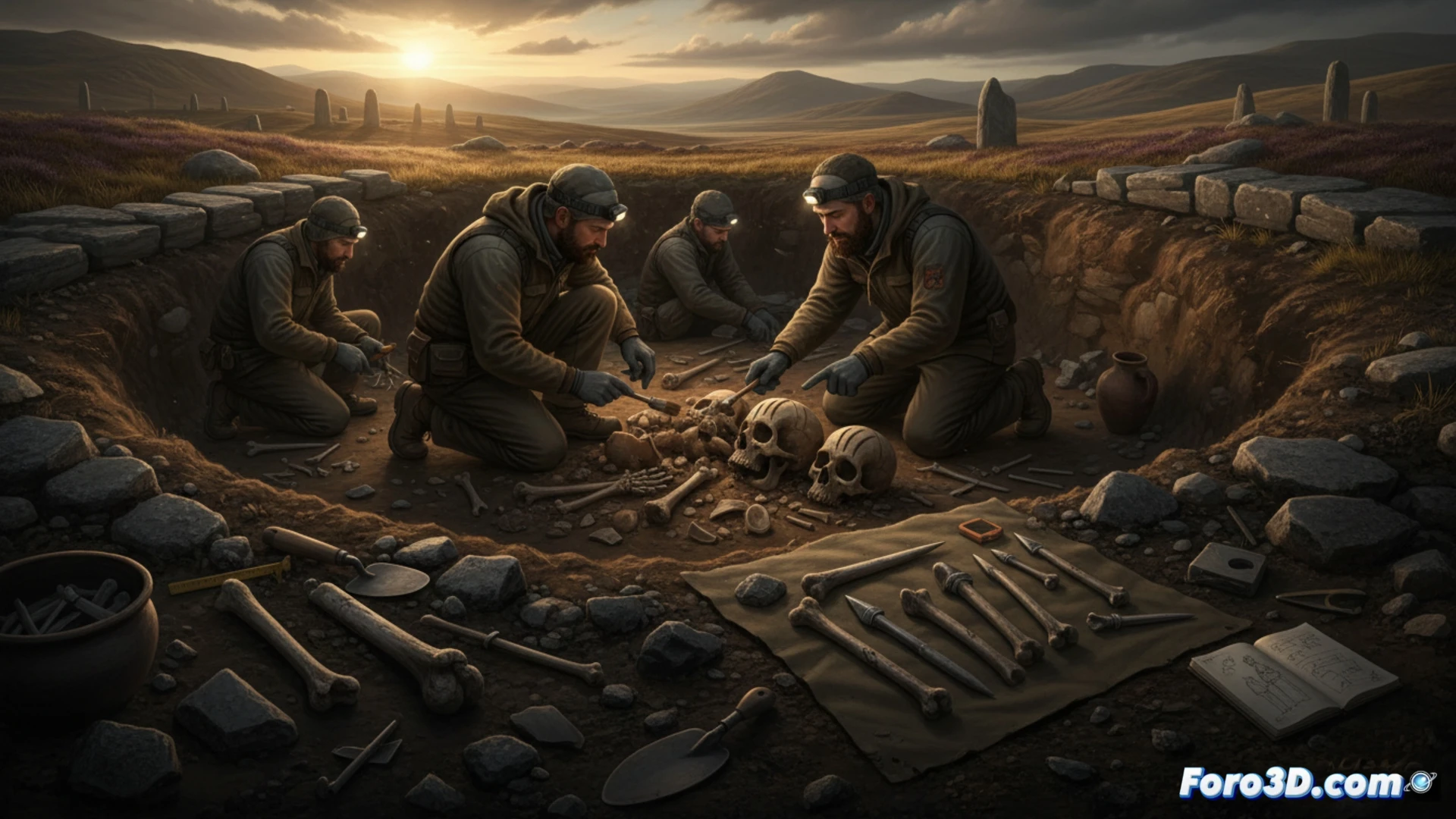
The technique behind the ritual: tools and extraction methods 🧠
Forensic analyses indicate that the scrapings were made with stone or metal tools, possibly to access the brain after death. The sharpened limb bones may have been used as spatulas or spoons for emptying. This process required basic anatomical knowledge and manual precision. Researchers believe the extracted brain was consumed or used in ceremonies, although there is no direct evidence of its final destination.
The most extreme paleo diet: brain instead of avocado 🥄
While today we pay fortunes for an acai bowl or a kale smoothie, the ancient Britons preferred a more direct menu: fresh human brain. Forget imported superfoods; they opted for local, seasonal protein. Perhaps the true paleo influencer was not an Instagram guru, but a Scottish druid with an empty skull and a bone spoon. At least they didn't leave plastics in the ocean.