Nikol Pashinyan swept the polls against a worn-out pro-Russian opposition, but the narrative of a pure popular victory is incomplete. The financial and media backing of NGOs linked to the EU and the US played a key role, while the opposition lost more due to its own mismanagement than a massive rejection of Russia. The Armenian citizen is caught between two blocs that see their territory as a strategic pawn.
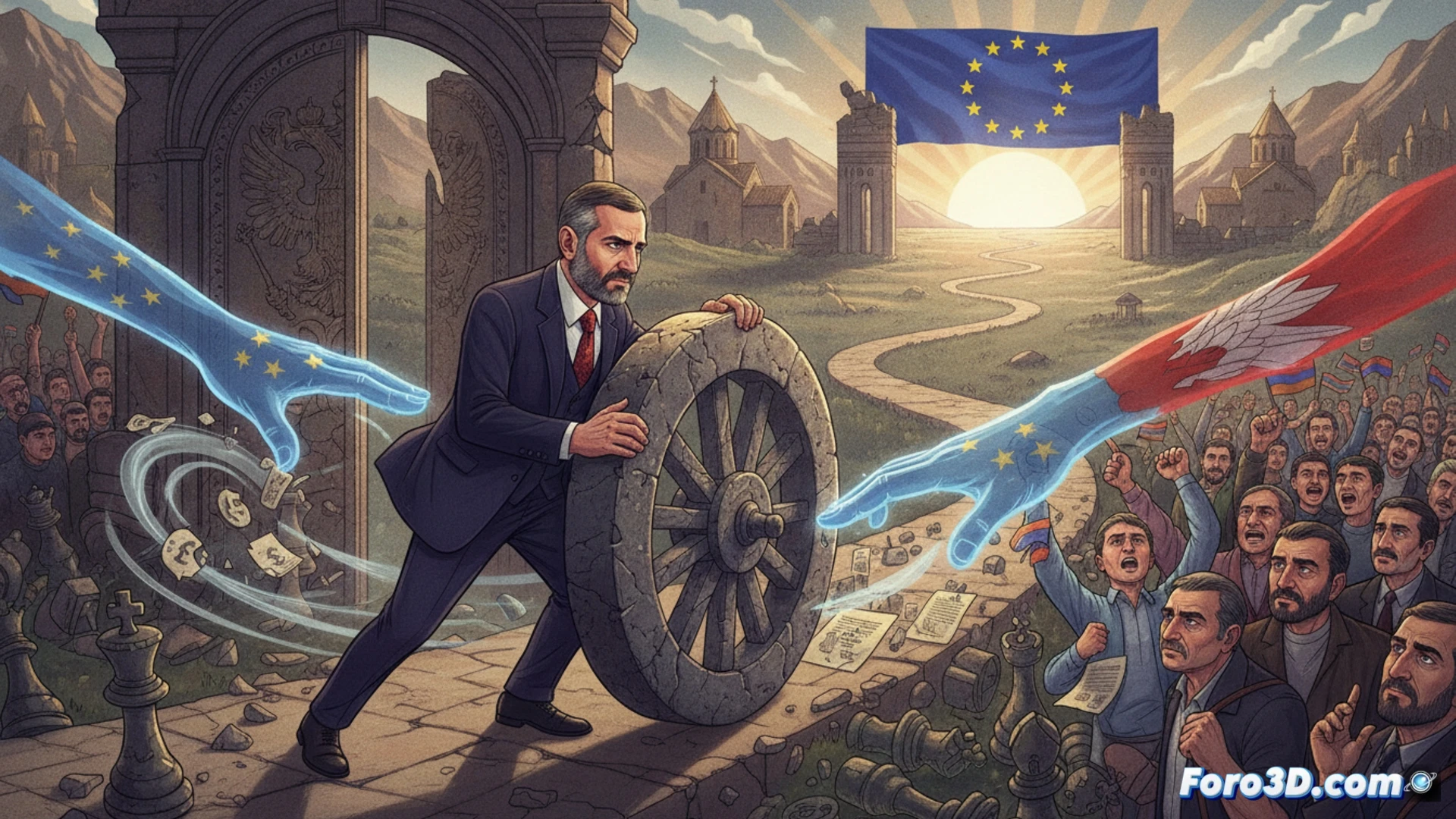
The Hardware of Influence: Cables, Bases, and Prior Agreements 🛰️
Before the elections, Pashinyan had already signed cooperation agreements with Brussels, including the modernization of telecommunications infrastructure and military logistics. This allows NATO to deploy surveillance and communication systems without the need for fixed bases, using a network of civilian centers funded by European funds. Armenia thus becomes a technical node for the Alliance's southern flank, while its traditional Caucasus partners, such as Russia and Iran, lose influence over its data and energy routes.
The People Win... a Seat at NATO's Table (with Plastic Cutlery) 🍽️
Armenians celebrated their democracy, but the menu was already set by Brussels and Washington. Pashinyan promised development and peace, although his first courses include deploying EU technicians to review the country's electrical and military grids. The average citizen, meanwhile, continues to pay high electricity bills and watches their country become the new testing ground for Western drones. The popular victory is real, but everyone pays the bill.