The recent collapse of a mobile phone tower has reopened the debate on the structural safety of these critical infrastructures. Through forensic 3D modeling, we can digitally reconstruct the tower prior to the incident and simulate the conditions that led to its failure. This analysis allows us to identify the weak points in the design and understand the exact sequence of the collapse, offering valuable lessons for disaster prevention engineering.
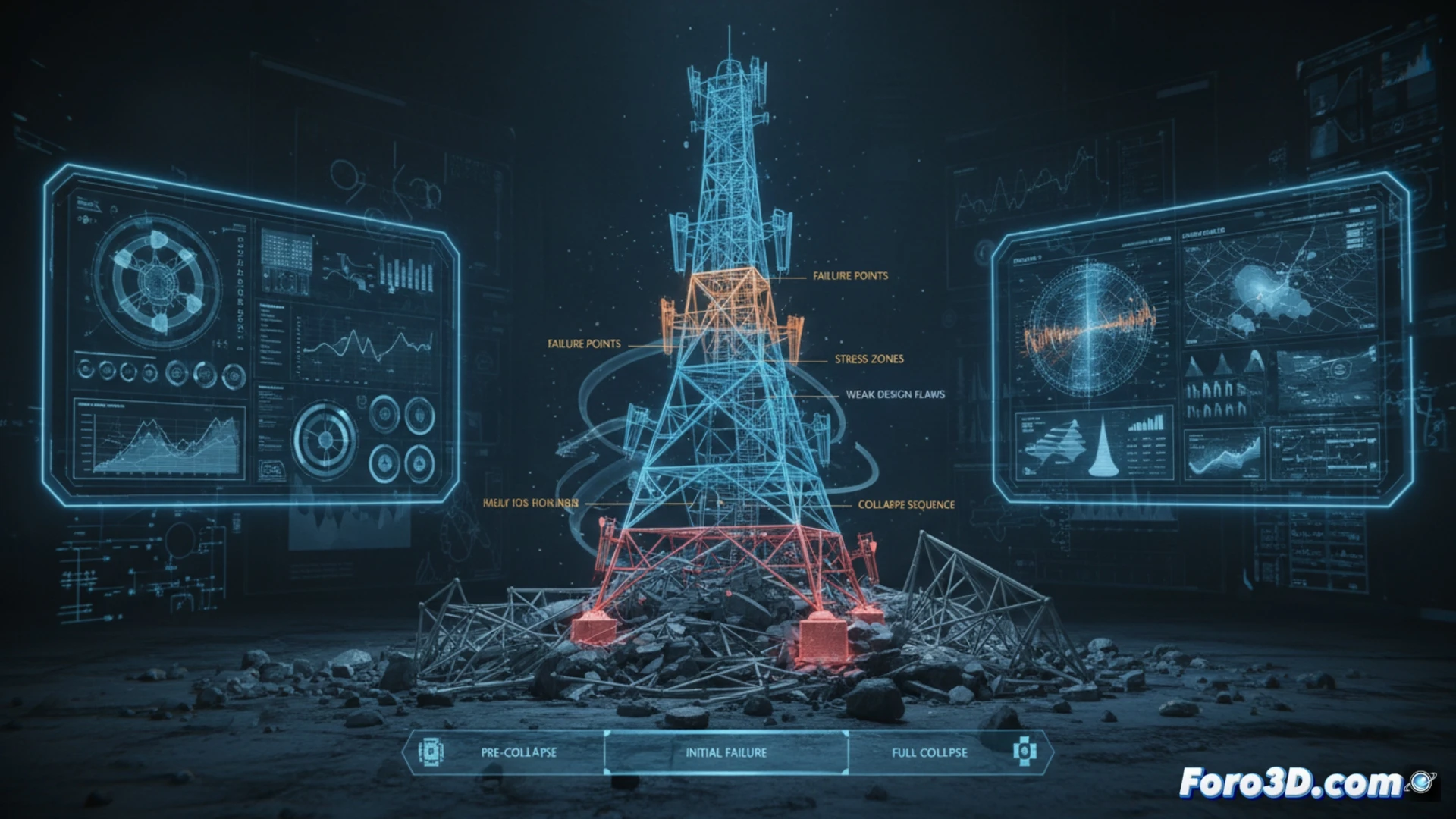
Virtual reconstruction and load simulation 🏗️
The process begins with the creation of a digital twin of the tower using data from original blueprints and site photographs. In the simulation software, we apply extreme wind loads, material fatigue from corrosion, and stresses on bolted joints. The results visualize a buckling failure mode in one of the main legs, cascading to the rest of the structure. The simulation reveals that corrosion at the base, undetected in previous inspections, reduced the steel's load-bearing cross-section by 40%, exceeding the safety limit established by current regulations.
Lessons for design and regulation 📐
This case demonstrates the need to incorporate predictive 3D modeling into the maintenance protocols of telecommunications towers. Current regulations, while requiring periodic inspections, do not include the simulation of advanced fatigue scenarios. I propose the implementation of IoT sensors at critical points and the creation of real-time updated finite element models. Only then can we anticipate structural failures and prevent a mobile tower from becoming a preventable catastrophe.
How can forensic 3D analysis using photogrammetry and finite element simulation determine whether the mobile tower collapse was caused by material fatigue, a foundation defect, or extreme weather conditions without the need for additional destructive testing.
(PS: Simulating disasters is fun until the computer crashes and you are the disaster.)