We analyze in 3D the features that make Mitchell Starc a fearsome bowler. His height of 1.96 m, combined with a flexible arm and a high release point, generates a steep downward angle. Added to this is an aggressive wrist snap that produces high-speed swing, frequently exceeding 150 km/h. We break down the physics behind his yorker and bouncer.
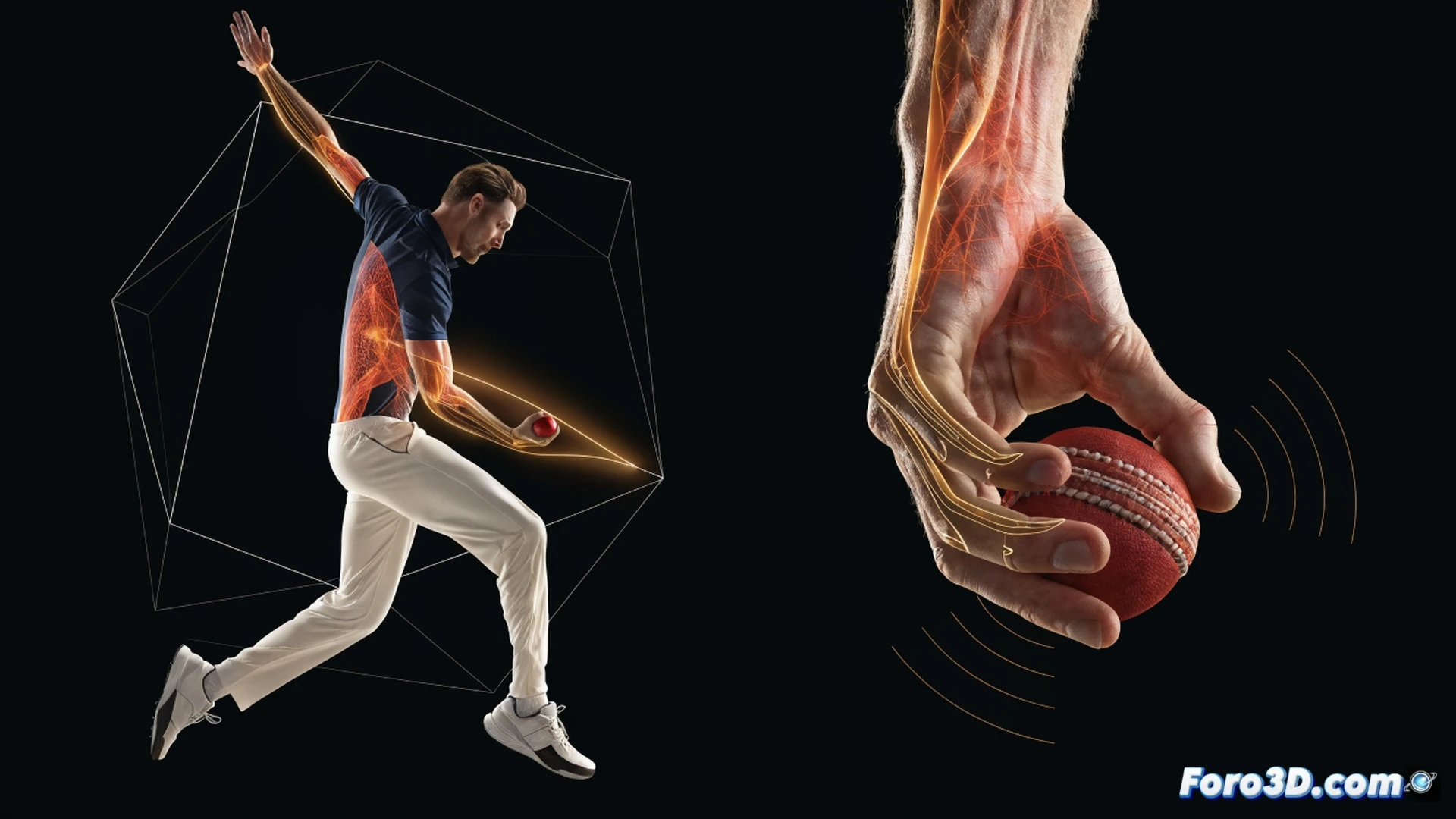
Kinematic modeling of the arm and wrist 🏏
In the 3D model, Starc's kinetic chain shows a pelvic rotation of 45 degrees before contact. His elbow reaches a hyperextension of 10 degrees, a risk factor but also a source of speed. The wrist snap generates an angular acceleration of 2,500 degrees/second, producing an unpredictable seam position. The simulation reveals that his delivery has a release point 15 cm higher than average, explaining the extra bounce.
The mystery of why he doesn't shatter into a thousand pieces 🤯
Science says his biomechanics should destroy his shoulder before age 30. But there he is, bowling yorkers at 150 km/h while the rest of us mortals get injured lifting a milk carton. The 3D model suggests his body is a statistical anomaly, a bug in the cricket matrix. Or maybe he just drinks a lot of milk. Engineers still don't understand how his skeleton hasn't filed a formal complaint.