English batsman Will Jacks has caught the attention of the T20 circuit for his ability to generate bat speed with compact movements. A three-dimensional analysis of his technique reveals how his wrist rotation and elbow angle allow him to hit the ball in zones that other players cannot reach. This study breaks down the biomechanical data that explains his effectiveness.
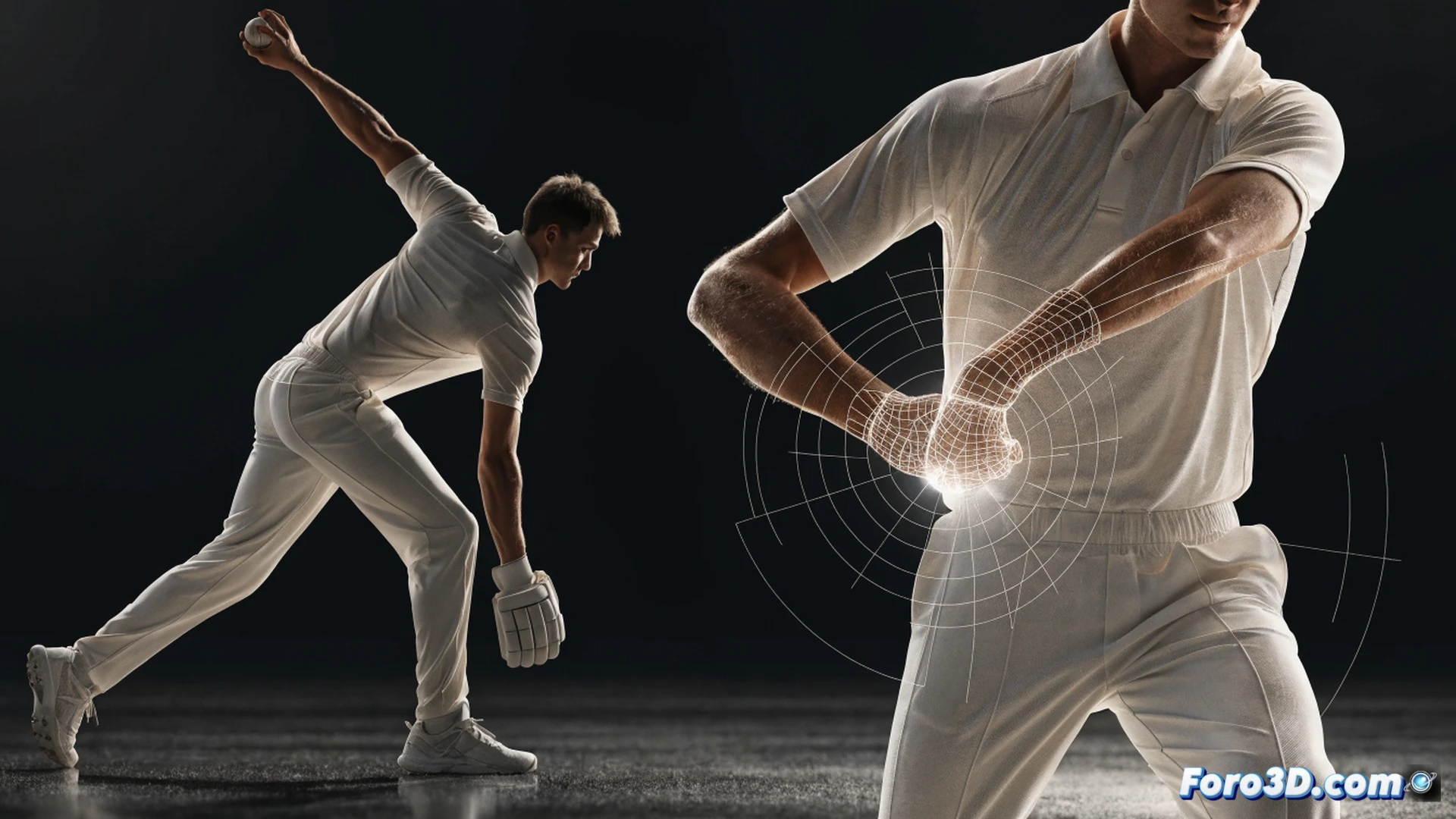
Biomechanics of the backlift: the role of the wrist angle 🏏
The 3D model shows that Jacks maintains a wrist angle of 145 degrees during the backlift, which optimizes energy transfer from the torso to the bat. Unlike batsmen who lift their elbow, he uses a more horizontal movement that reduces reaction time. Sensors capture that his weight shifts to the back foot 0.2 seconds before impact, allowing for a crisper, more directed shot towards the leg side.
The mystery of the leg that does not move 🤔
Analysts have noticed that Jacks barely bends his front knee when connecting drives. In the 3D model, his leg looks like a forgotten lamppost in the middle of the green. Engineers speculate that this reduces friction with the ground, although traditional coaches see it as a textbook error. Perhaps the secret is not in the leg, but in the fact that Jacks firmly believes that the grass is lava.