We analyze in 3D the tools that make Mitchell Robinson a differential defender in the NBA. His wingspan, timing, and lateral mobility allow him to protect the rim without needing to jump on every play. A center who turns the paint into a restricted area for opponents, with a recovery ability that surprises for his size.
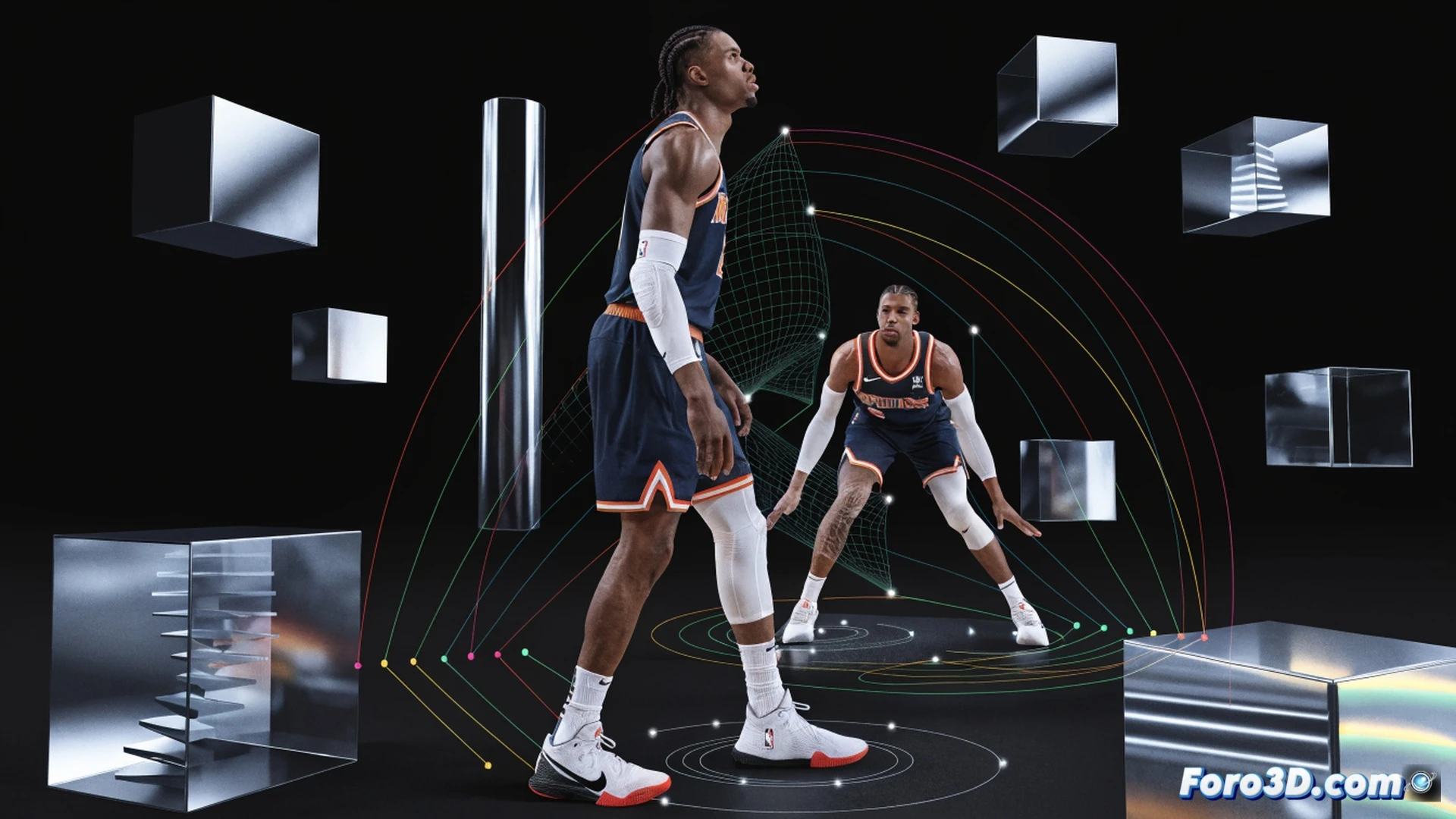
Biomechanics and game reading: the engine of his defensive impact 🏀
From a 3D analysis perspective, his success lies in the combination of a long stride and a low hip that allows him to change direction quickly. His jump angle is almost vertical, optimizing reach without losing reaction time. Additionally, his pass reading gives him an advantage in help defense, closing gaps that other centers don't even see. He is not a brute athlete, but a space calculator.
The art of not jumping (and still blocking everything) 🛡️
The best part of watching Robinson in 3D is realizing that sometimes he doesn't even need to lift his feet off the floor. While other centers fly like helicopters, he stretches out an arm that seems made of rubber and that's it, ball gone. He's like that friend who always avoids getting scolded by the teacher without moving from his chair. Pure efficiency, even if other players' highlights are flashier.