We analyze in 3D the special characteristics of cricketer Mark Chapman, a New Zealand left-handed batsman who combines quick footwork with an uncommon range of hitting. His ability to adjust the bat plane at the last second makes him a complex tactical resource for rival bowlers. This analysis breaks down the movements that define his style.
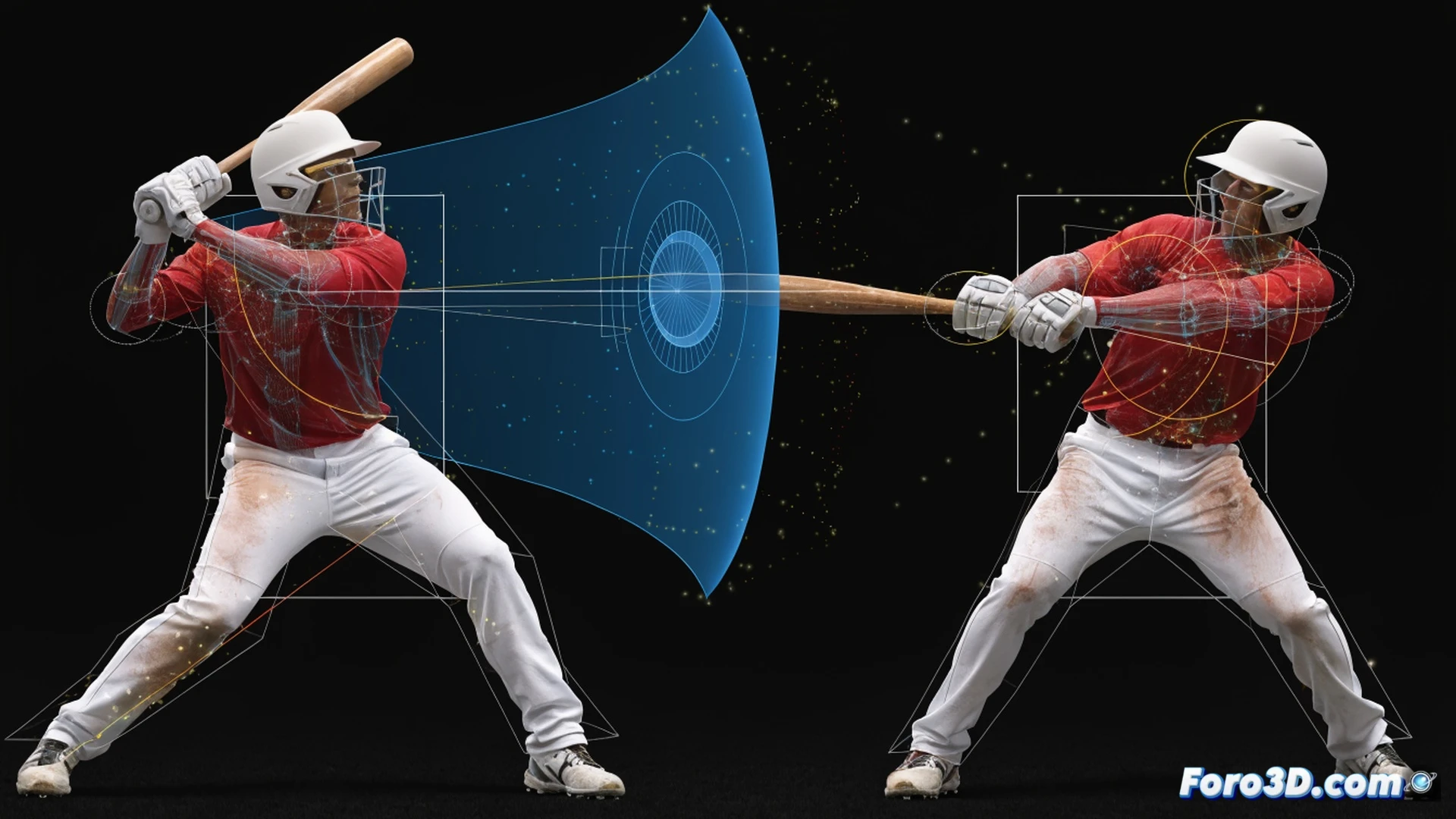
Batting Biomechanics: The Dynamic Adjustment Factor 🏏
The 3D model reveals that Chapman has a hip angle of 38 degrees at the moment of impact, a value that allows efficient weight transfer towards the front foot. His shoulder rotation reaches 110 degrees, higher than the average of 95 degrees in batsmen of his stature. This allows him to cover up to 15 additional centimeters of reach on deliveries outside the off stump. Kinematic analysis shows that the speed of his wrists in the follow-through generates a lifting effect on the ball that makes fielding reads difficult.
The Mystery of the Helmet That Never Falls Off 🪖
The most curious finding from the 3D scan was not his batting, but discovering that his helmet strap is adjusted with millimeter precision bordering on obsessive-compulsive. While other players sweat and readjust it every two overs, Chapman seems to have his helmet glued on with contact adhesive. The model even detected a 2-degree micro-rotation in his neck every time he receives a bouncer, as if the helmet had a life of its own and decided to dodge the blow for him.