The Wizards' shooting guard, Jordan Poole, deploys an offensive repertoire that defies conventional metrics. His game combines erratic ball handling with unwavering confidence to shoot from any position. We analyze his player profile in 3D, breaking down the variables that make him a case study for the modern NBA. 🏀
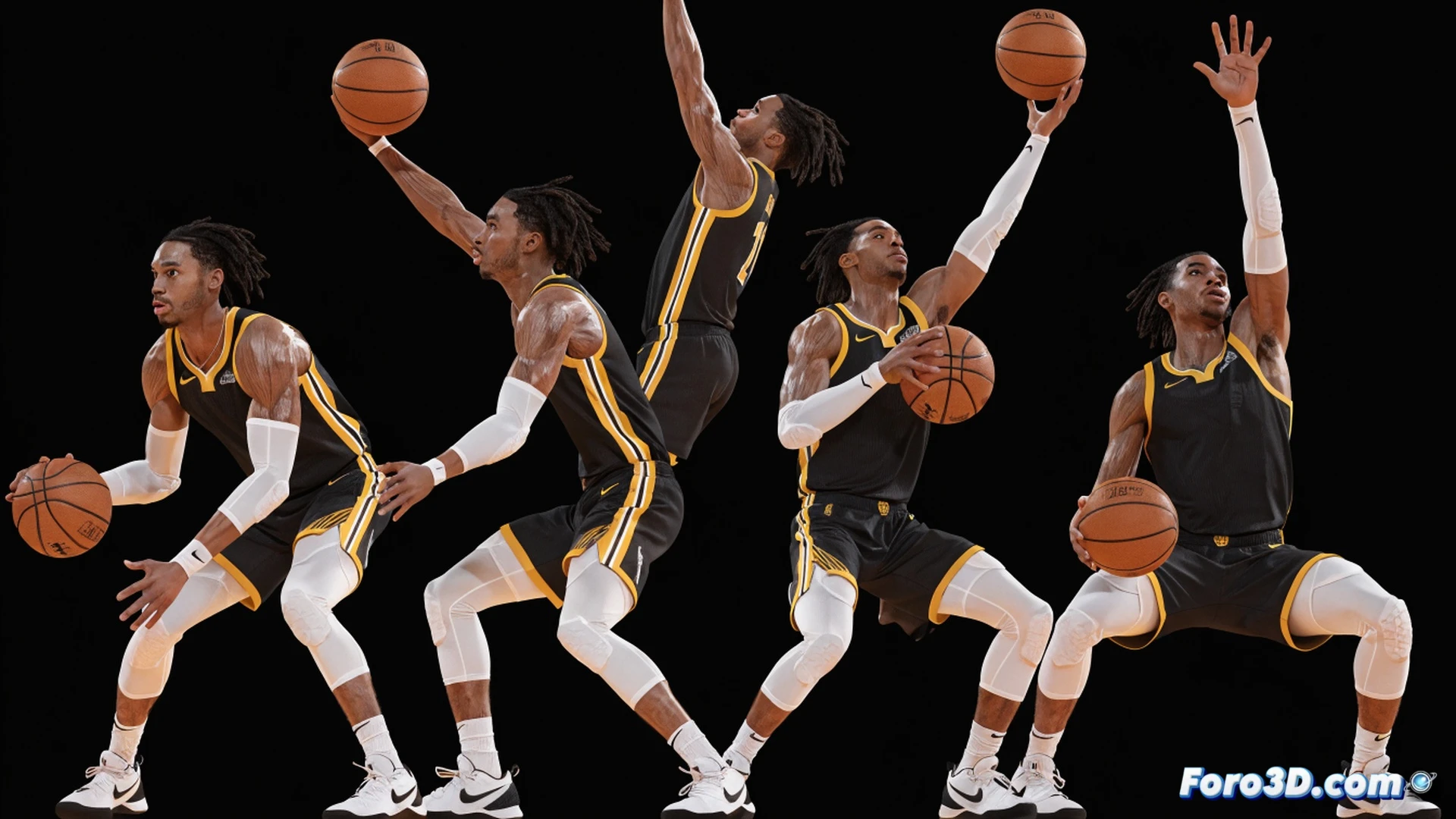
Kinematic profile: dissonance between rhythm and efficiency 🔄
From a biomechanical analysis perspective, Poole exhibits a notable disconnect between his dribbling speed and his shot release timing. His step cadence generates unpredictable shooting angles, which statistically translates into high variance in accuracy. Tracking systems show a tendency to force transition shots with a low assist rate, reflecting an intensive use of offensive resources without a defined game structure.
The NBA's random mode 🎲
Watching Jordan Poole on the court is like playing Russian roulette with a twenty-sided die. One day he nails a logo three with a defender in his face; the next, he throws a pass directly into the stands while doing a dance move. His game raises more questions than a quantum physics exam, but at least the entertainment is guaranteed, even if it's for the opposing bench.