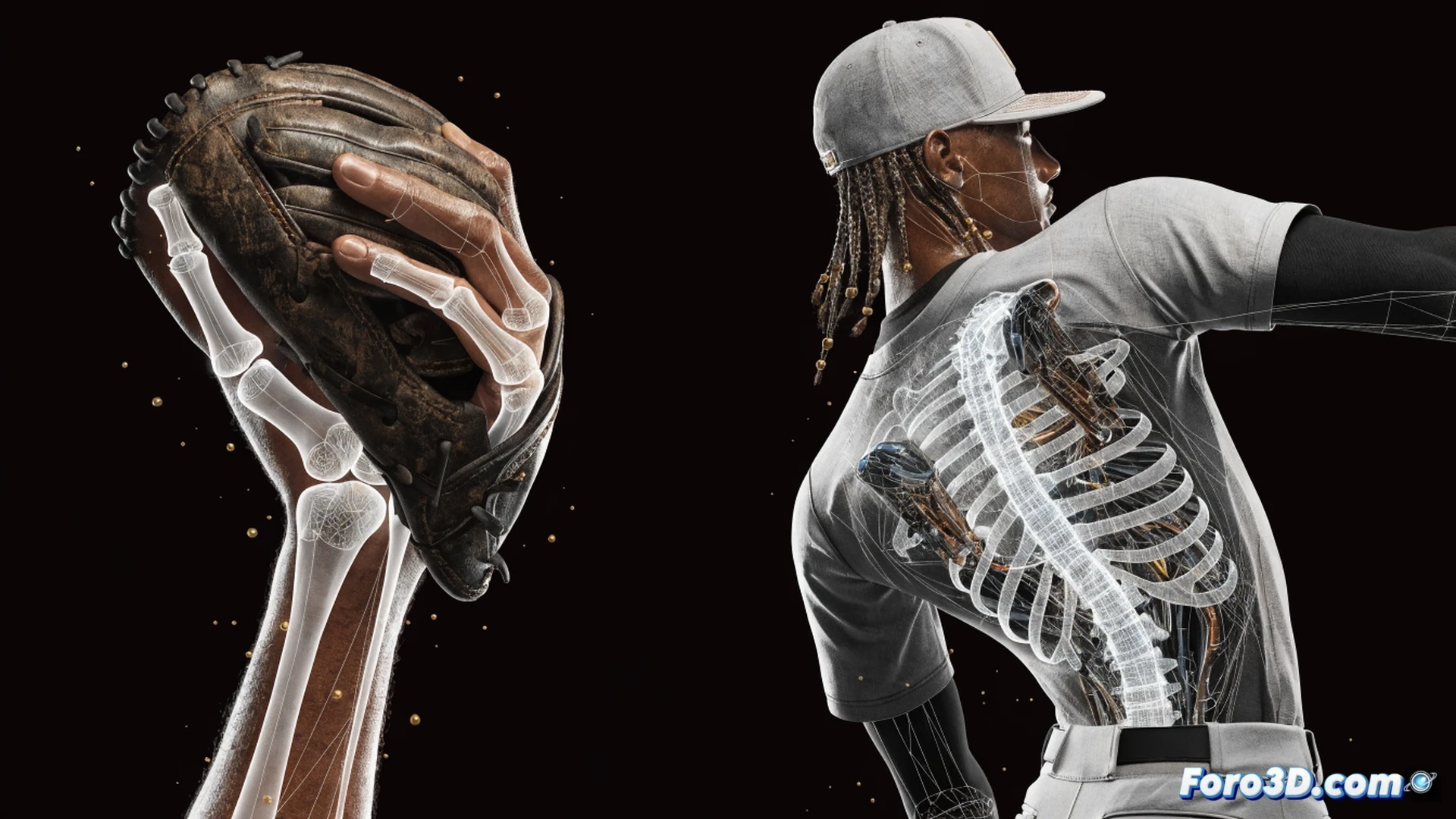
We explore in 3D the movements that make Xavier Bartlett special. We are not talking about his standard delivery, but those small gestures that make the difference. From the angle of his wrist to the twist of his hip, every millimeter counts to generate that unpredictable effect that baffles batters.
The technology behind his differential biomechanics 🏗️
Three-dimensional modeling reveals that Bartlett does not force his arm, but rather takes advantage of a shoulder lag to generate extra speed. Motion capture shows 15% more trunk rotation than average. This, combined with a slightly delayed release point, creates a trajectory change that sensors detect as a controlled anomaly. It is not magic; it is physics applied with precision.
When your body is a problem for engineers 🤯
Technicians rub their hands together with Bartlett, because his movements are a headache for simulations. While they try to replicate his gesture in software, the player goes out onto the field and bowls as if nothing is wrong. The training AI crashes when processing his irregular cadence. In the end, the only thing that works is telling him: Xavier, just bowl the ball. And he does it, leaving everyone speechless.