Steven Adams is not a conventional center. His game is built on a foundation of movements that defy the logic of traditional scouting. At foro3d.com, we break down his special characteristics from a three-dimensional perspective: bone structure, center of gravity, and movement angles. There is no magic, only physics applied to a body that seems designed to absorb impacts.
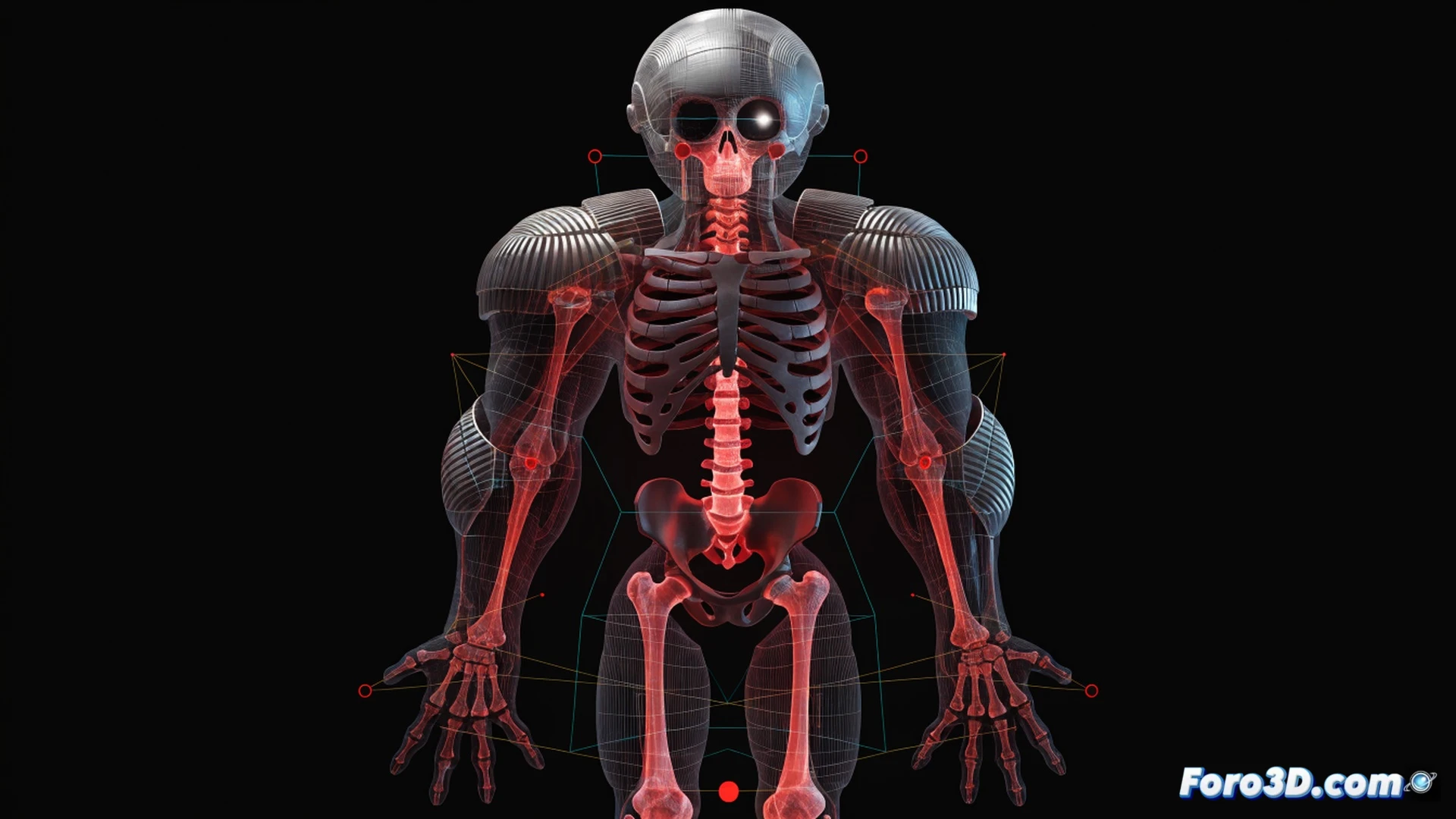
Biomechanics of Blocks and Offensive Rebounds 🏀
Adams' secret lies in his low hips and shoulder width. When analyzing his stride in slow motion, a 45-degree angle in knee flexion is observed, allowing him to generate torque without losing balance. His box-out technique uses the center of mass as an anchor, displacing opponents with micro-movements of 3 to 5 centimeters. In SportVU data, his reaction time for second-chance rebounds is 0.2 seconds, a critical margin that explains his dominance in secondary offense.
The Mystery of the Free Throw and the Force of Gravity 🧐
Analyzing his free throw mechanics, we discover that Adams shoots as if trying to sink a stone into a well. His wrist does not follow the classic parabola; rather, the ball seems to escape his fingers by pure inertia. 3D models suggest that his 54% percentage is not a technical flaw, but a conscious choice: if he made more, the universe would lose balance. Or maybe his fingers are just too big for the rim. Just another thing about being a human tank.