Michael Porter Jr. is a case study for any 3D analyst. His bone structure and shooting mechanics defy NBA standards. Standing at 2.08 meters tall with a considerable wingspan, his jump shot is nearly unstoppable. But what truly stands out is how he manages joint load following his back injuries. We analyze his strengths and weaknesses in depth from a technical and biomechanical perspective.
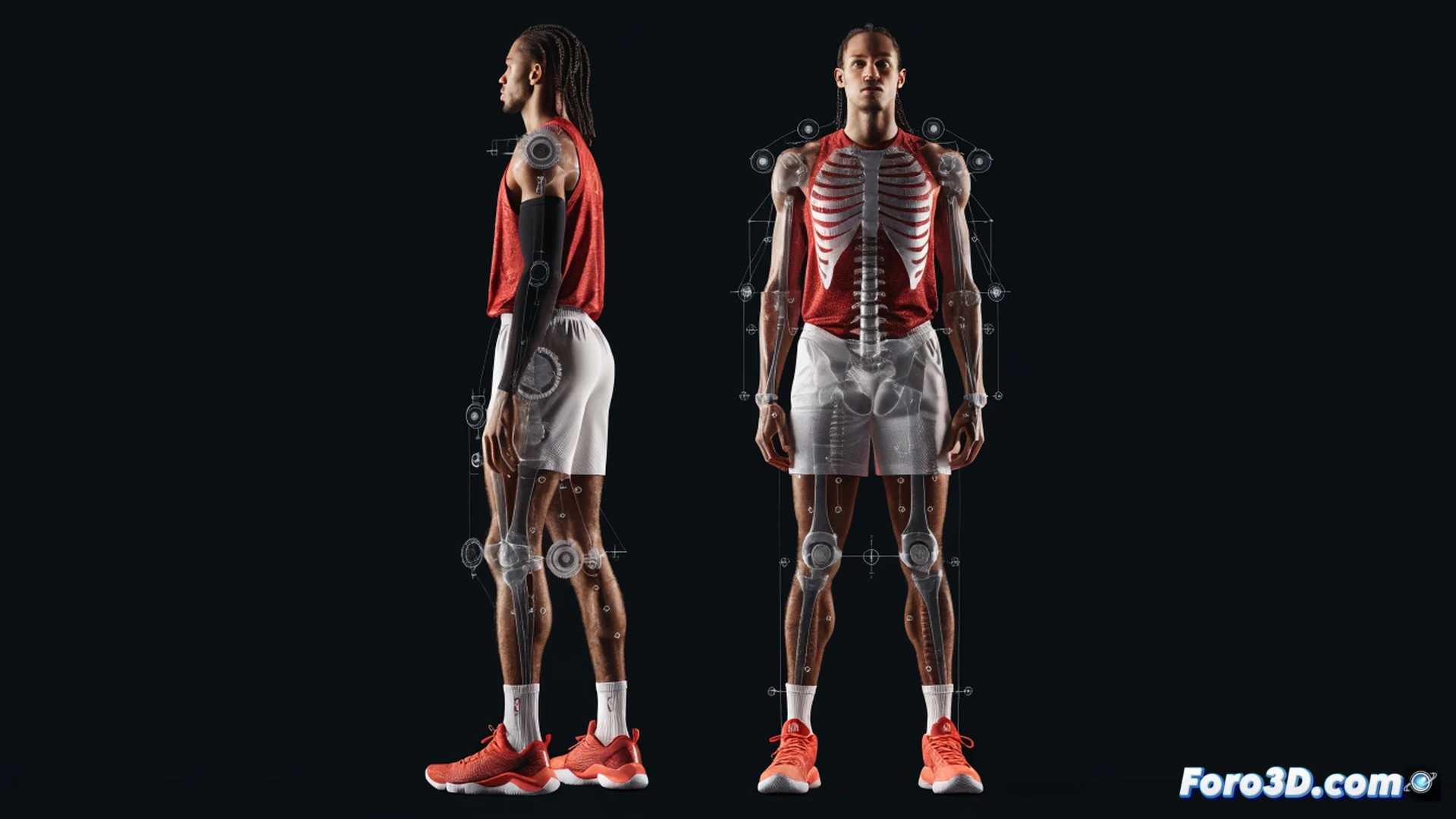
Shooting Biomechanics: 3D Postural Adjustments 🏀
From a three-dimensional model, Porter Jr.'s mechanics reveal precise data. His ball release point is exceptionally high, exceeding 2.60 meters, which reduces the defensive angle. However, his base of support is narrower than recommended, causing a slight lateral tilt in the torso. This deviation, although compensated by his shoulder strength, increases stress on the lower back. Motion capture sensors show that his right hip rotates 12 degrees less than his left, a key insight for understanding his consistency in movement shots.
The Mystery of the Back That Won't Quit 🤯
If his back were a car, it would have been to the shop more times than a 90s Fiat. Porter Jr. has undergone two lumbar disc surgeries, something that for any other player would be synonymous with early retirement. But here we are, watching him jump as if his spine were made of rubber. Doctors must be baffled: either he has a pact with a chiropractor from another planet, or his vertebrae are made of recycled titanium. Meanwhile, he keeps shooting threes like it's nothing.