In the world of basketball, certain players stand out for their physique; others, for their technique. Kyle Kuzma, forward for the Washington Wizards, presents a combination of factors that make him a case study for 3D analysis. His wingspan and movement angles offer concrete data on how he executes jump shots with an unusually high release point, a characteristic that challenges traditional biomechanical models for players of his height.
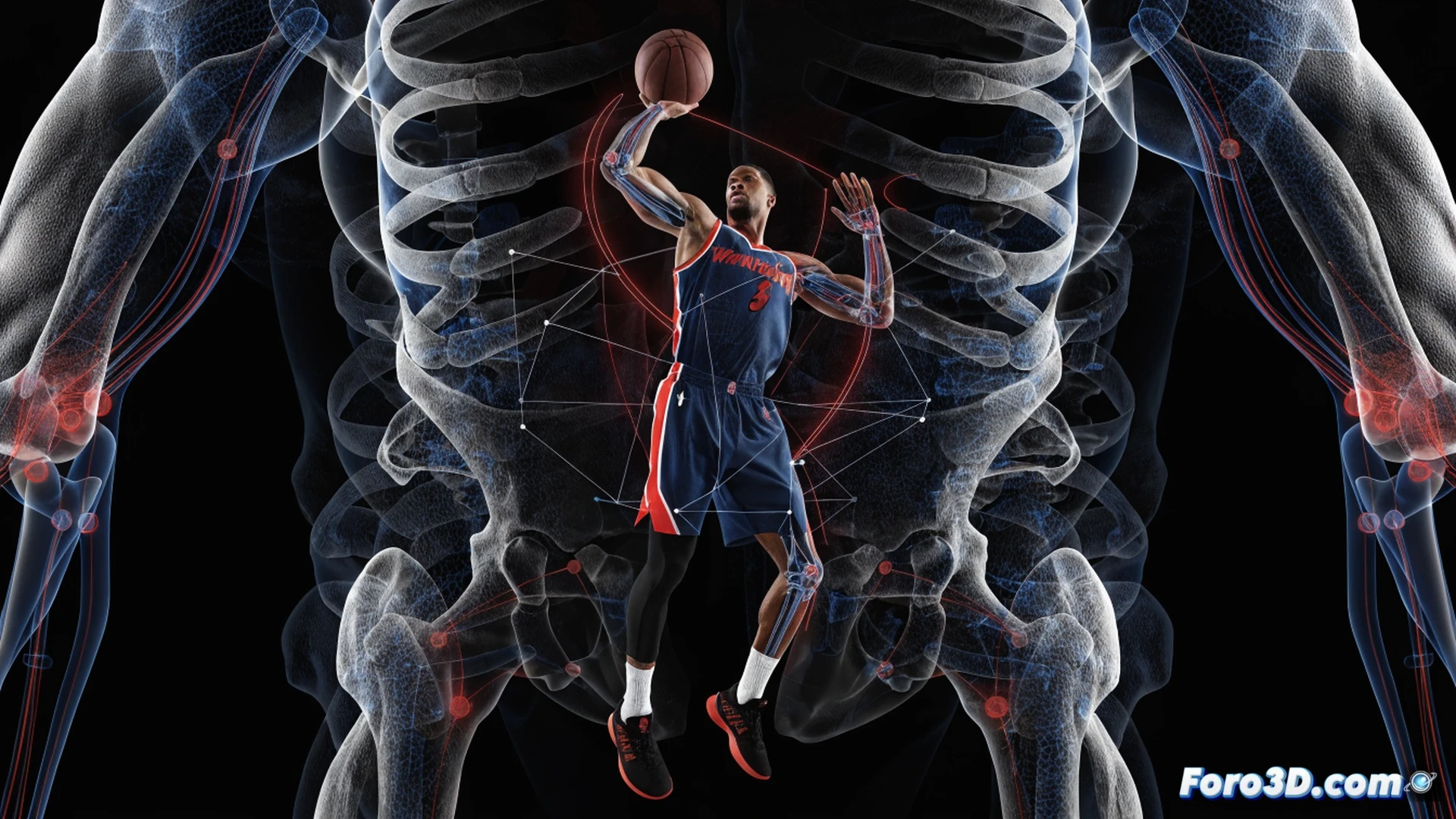
Kinematic modeling of the jump shot 🏀
By breaking down his mechanics in a 3D environment, it is observed that Kuzma generates an elbow angle close to 90 degrees during the elevation phase, allowing for a shot with a higher arc. The rotation of his wrist, captured through motion sensors, shows a consistent snap that minimizes lateral deviation. However, his base of support in transition is narrow, which reduces stability under defensive pressure. This technical profile explains his efficiency in catch-and-shoot situations and his difficulties with moving shots.
The mystery of airplane mode defense 🤷♂️
If we analyze him on defense, Kuzma's 3D model looks like that of a man trying to dance with two left feet. His lateral movements have a cadence similar to a GPS recalculating the route every two seconds. Often, his arms extend in opposite directions, as if he were waving at two friends in different stands. It's a visual spectacle: his body seems to understand the concept of stealing the ball, but his brain hasn't yet approved the instruction manual.