Ausar Thompson is not an ordinary basketball player. His athletic profile, with an extraordinary wingspan and exceptional vertical explosiveness, makes him a case study for three-dimensional analysis. At Foro3D, we break down his movement patterns and those small biomechanical quirks that make him special on the court, without falling into exaggeration.
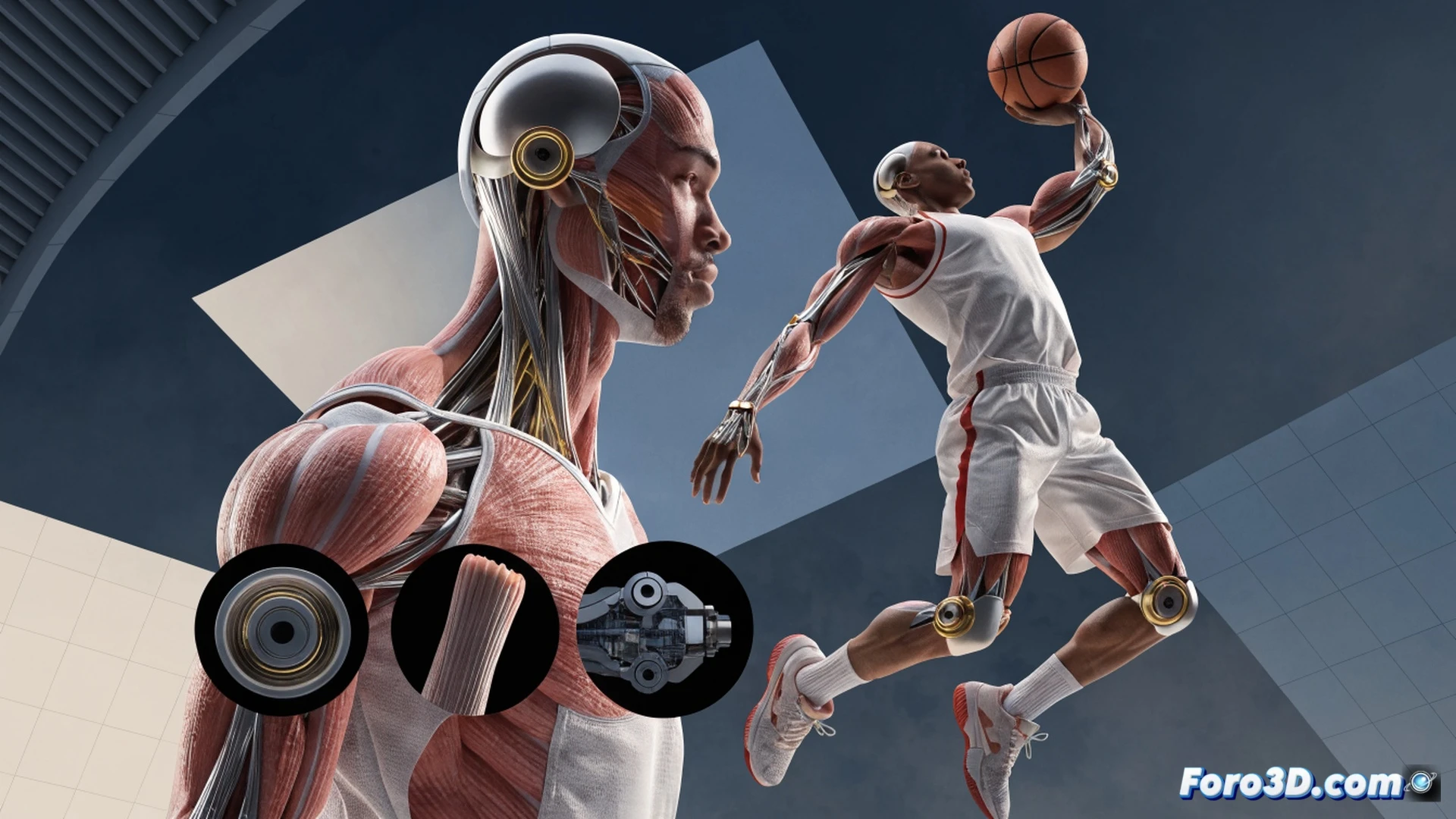
Kinetic mapping and takeoff angles in his jump 🏀
When observing his vertical jump in 3D slow motion, a nearly perfect takeoff angle of 78 degrees is detected in offensive transition. His center of gravity shifts with an efficiency that minimizes horizontal energy loss. However, his lateral stride shows a slight asymmetry in the right hip, a trait that, far from being a flaw, allows him to change direction without fully braking. He is a biomechanical engine with slightly off-center parts.
Ausar, the brother who actually knows how to fold clothes 🧦
While his twin Amen grabs headlines for his impossible dunks, Ausar focuses on doing weird things, like stealing balls with the back of his head or landing on one foot after a three-pointer. According to 3D models, his joints have an anti-gravity software that no one else has installed. If his body were a car, it would have square wheels, but it would win every race. He is the biomechanical mystery that scouting reports don't know how to sell.