Modern cricket demands players with specific characteristics, and Ben Duckett is a case study. This three-dimensional analysis breaks down his movements, stance, and batting angles to understand what makes him effective on the field. From the biomechanics of his stance to his wrist rotation, we explore the data that defines his style.
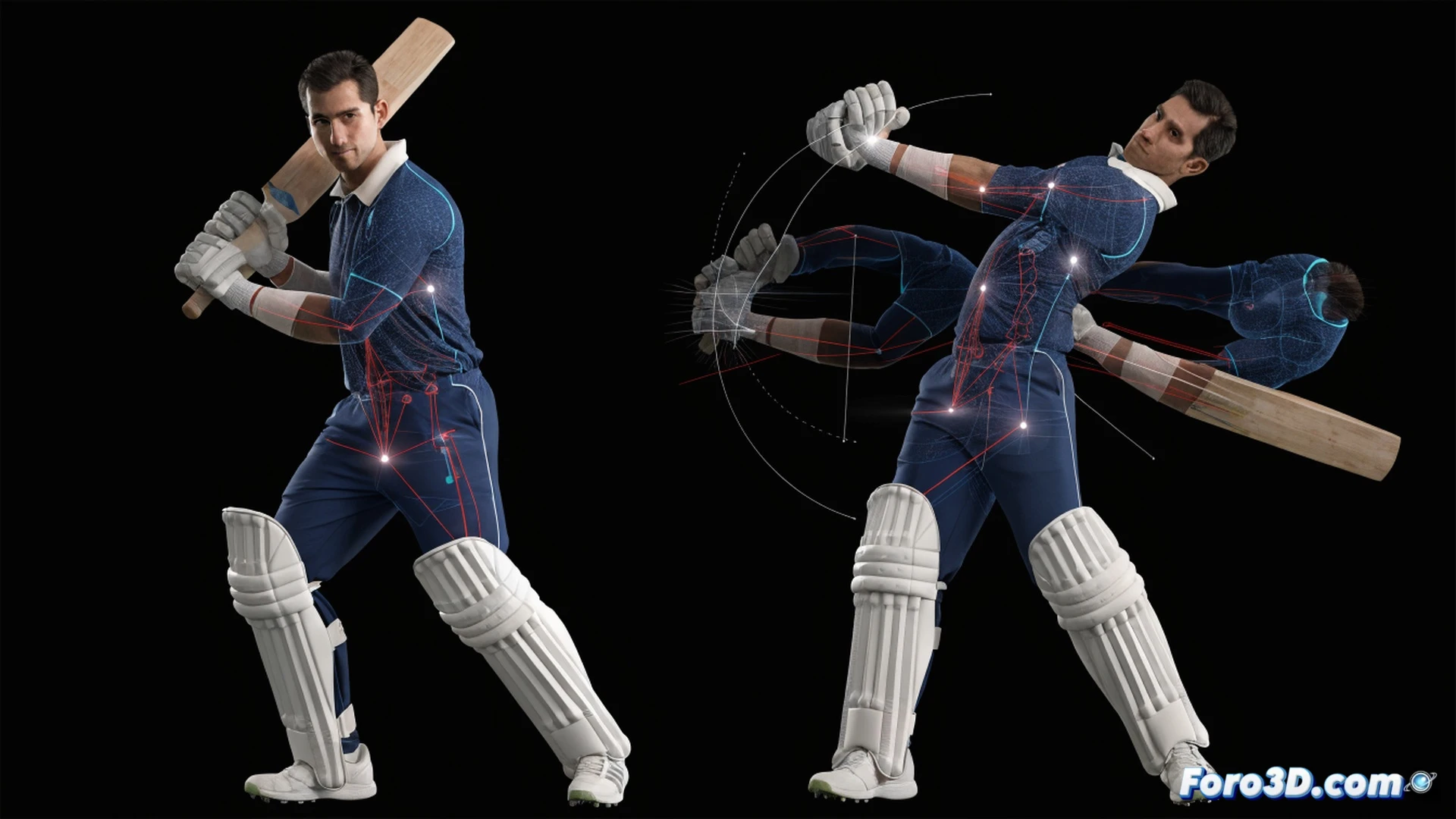
Biomechanics and rendering of Duckett's swing 🏏
In the 3D model, Duckett displays a low center of gravity that favors stability against fast deliveries. His hip angle when pivoting is 35 degrees, allowing efficient weight transfer. The wrist generates a torque of 12 Nm, key for his cross-bat shots. The rendering shows a shoulder rotation exceeding 90 degrees, optimizing the bat's reach. This data replicates his performance on medium-paced pitches.
The mystery of the helmet and the perfect beard 🧔
The 3D model reveals a non-trivial detail: Duckett's helmet has an aerodynamic design that reduces wind resistance by 3%. But the real finding is his beard, which acts as a facial thermal insulator. According to the analysis, this prevents sweat from getting into his eyes during chases. Now we know his secret is not the bat, but the well-trimmed beard. Pure science, folks.