Derrick Rose, the point guard who revolutionized the NBA with his explosiveness, is a case study in sports biomechanics. His game, marked by changes of pace and a singular athletic ability, breaks down into technical elements that 3D analysis allows us to dissect. From his vertical jump to the torsion of his torso when driving, each movement has an internal logic that explains why he was so effective, and also so fragile.
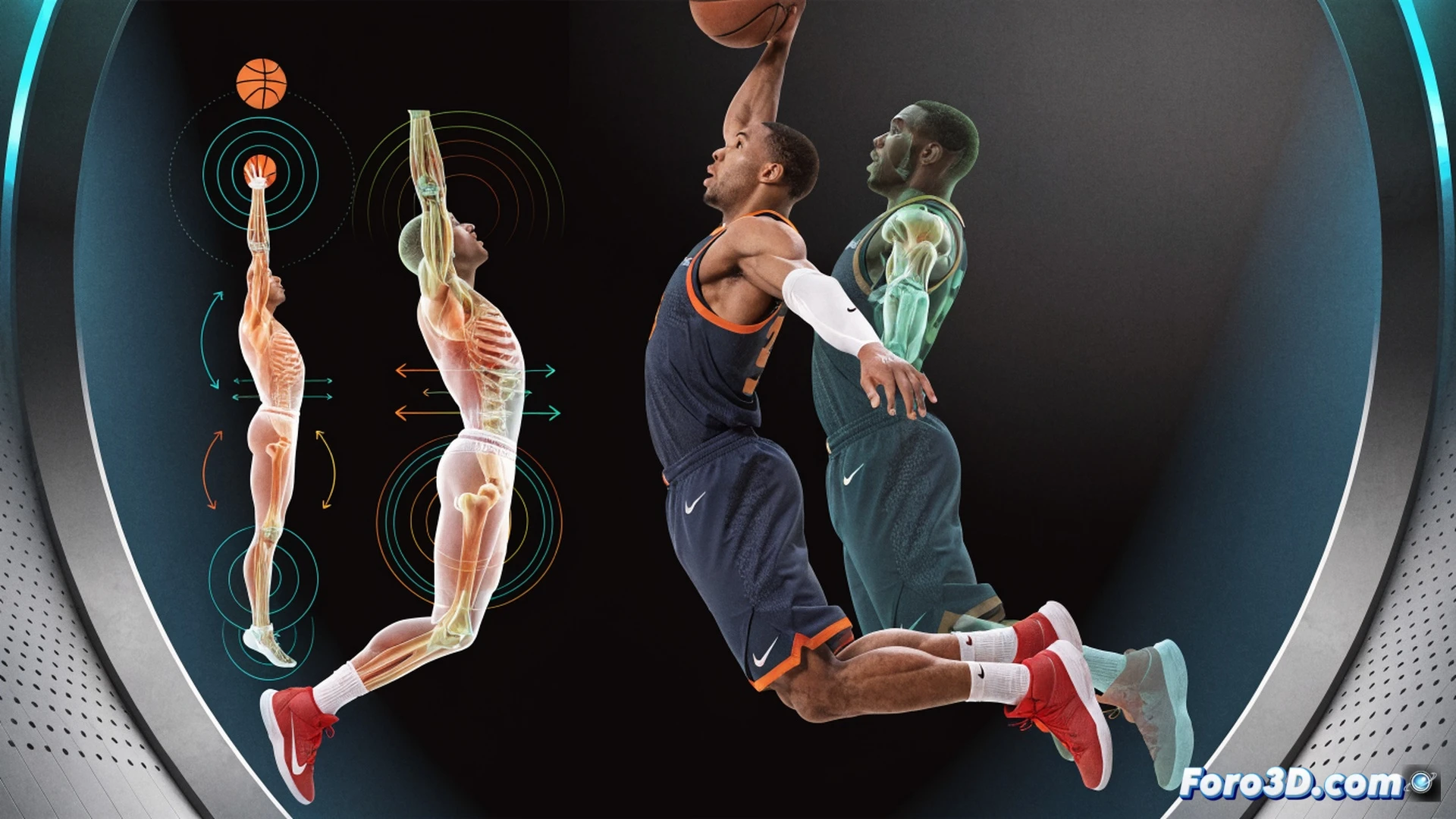
Biomechanics of the stop-and-go: analysis on three axes 🏀
In the 3D plane, Rose's key lies in his low center of gravity and his ability to stop on a dime without losing balance. The analysis shows that his hip angle when changing direction is 45 degrees, allowing for optimal energy transfer toward the rim. However, the repetitive load on the anterior cruciate ligament of his left knee, measured in newtons per step, exceeds the tissue's tensile limits. This is not magic, it is applied physics with predictable consequences.
The V8 engine that overheated on its own 🔥
Watching Rose in 3D is like observing a 70s muscle car: lots of power, little cooling. His changes of direction were so abrupt that his joints seemed to need a mechanic's appointment before every game. The analysis reveals that his style was like a salsa dance with glass knees. In the end, his body said enough, but at least he left us a few highlights to edit in slow motion and sigh over.