Bradley Beal is not just a guard with a soft touch; his game is a manual of applied biomechanics. In this 3D analysis, we break down his signature moves: the quick elevation on the jump shot and his ability to change pace without losing balance. We observe how his low center of gravity allows him to protect the ball on drives, a detail that digital models capture with millimeter precision.
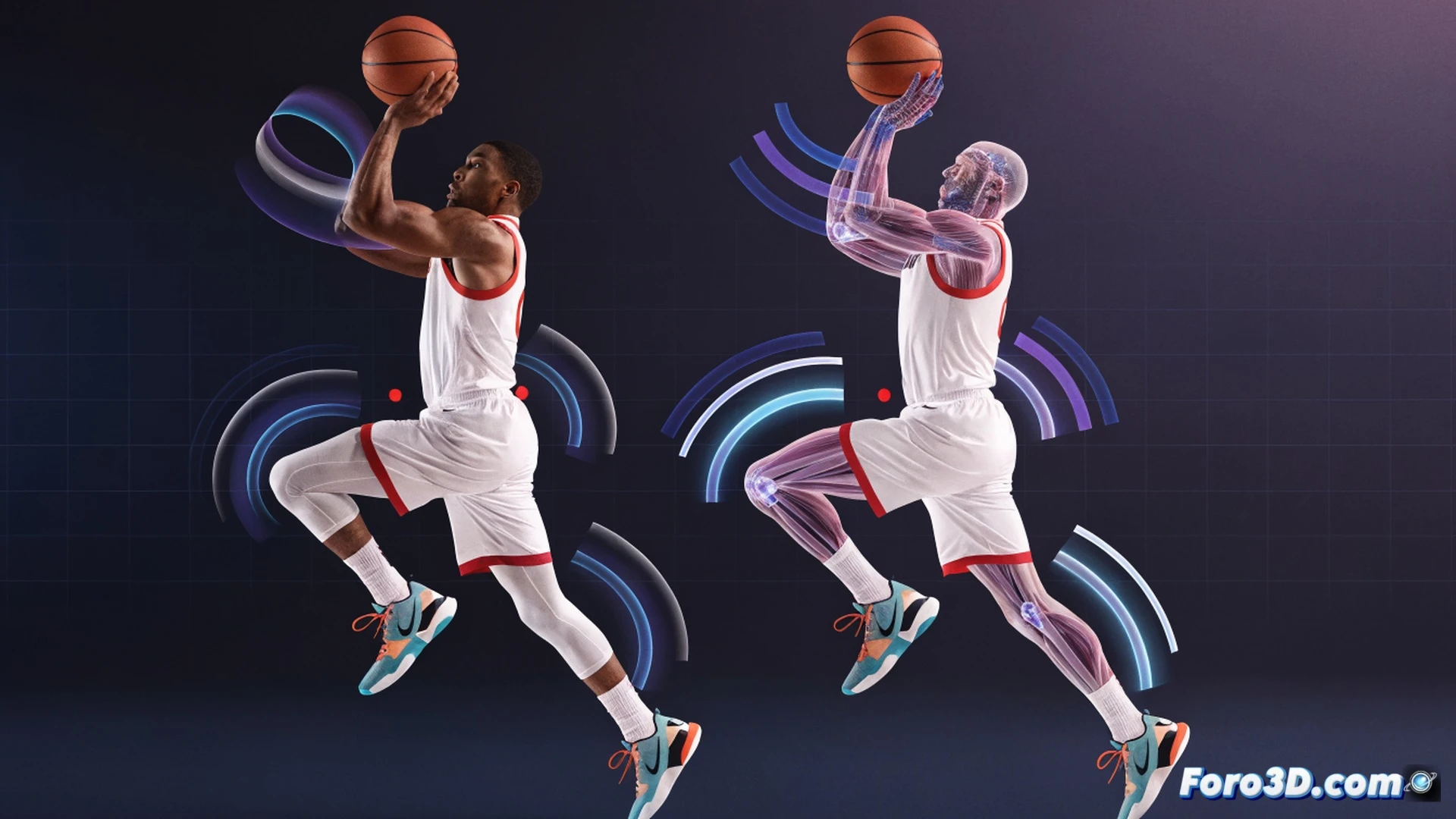
Biomechanics of the three-pointer: wrist angle and jump 🏀
The secret to his efficiency from beyond the arc lies in the synchronization between the vertical jump and elbow extension. In the 3D recreations, it is evident that Beal maintains a constant wrist angle of 90 degrees during the release phase, which reduces ball dispersion. Additionally, his release time is just 0.4 seconds, a fact confirmed by motion sensors and explaining why defenders rarely block his shot.
Beal's defense: an unsolved mystery 🤔
If the 3D model of his offense is an engineering masterpiece, his defense is more like abstract art. The graphics show that he sometimes seems to move in slow motion, as if calculating the ball's trajectory while the opponent has already scored. Coaches say it's a lack of intensity; data suggests his brain prioritizes energy conservation. An artificial intelligence algorithm would define it as battery saver mode activated.