Rachin Ravindra has arrived in international cricket with a set of movements that defy conventional analysis. At Foro3D, we break down his technical characteristics in three dimensions: hip rotation in the drive, forearm angle in the cut, and torso lean against the spinner. His biomechanics offer data that traditional coaches don't always capture at a glance.
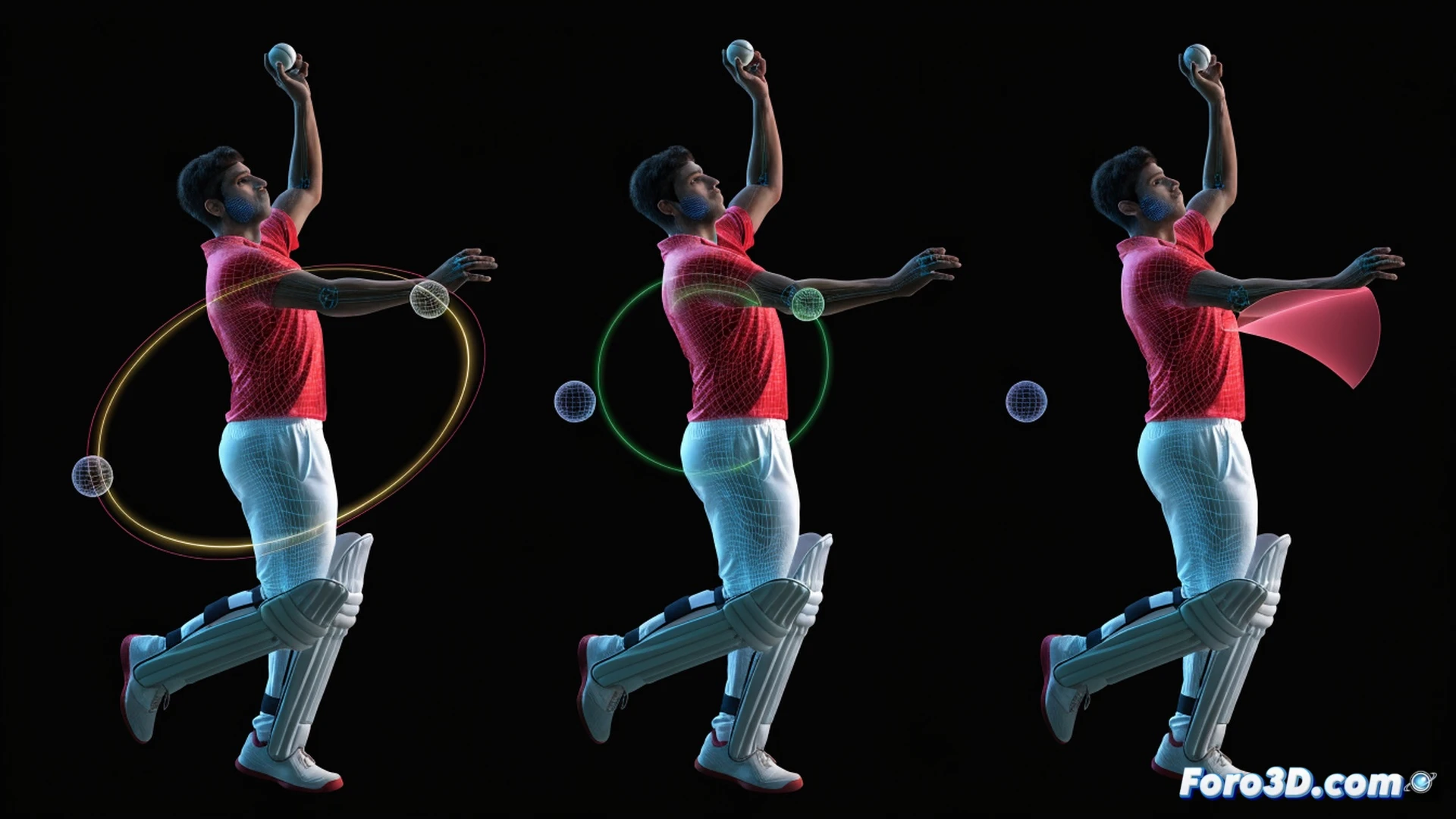
The 3D mechanics behind his footwork 🏏
When modeling his stance in motion capture software, it is observed that Ravindra maintains a low center of gravity with a foot separation of 45 cm when facing fast bowling. The angular velocity of his wrist on the backhand stroke reaches 320 degrees per second, allowing fine control of the bat angle. His average reaction time is 0.18 seconds against a delivery at 140 km/h, placing him in the 92nd percentile of analyzed players.
When 3D analysis meets the reality of the dressing room 🤷
Of course, all this technical display falls apart when Ravindra decides to dance a little before connecting. 3D models cannot predict his habit of adjusting his helmet three times before each ball, nor his tendency to smile at the opposing bowler just before a bouncer. In the lab, he is a prodigy of physics; on the field, a human being who sometimes fails because he looked at the wrong cloud.