Austin Reaves has gone from an undrafted free agent to a key piece for the Lakers. His game isn't based on extraordinary athleticism, but on a fine reading of spaces and precise technical execution. We analyze his special characteristics in 3D to understand how this guard manages to stand out in the NBA with resources that seem limited but prove lethal. 🏀
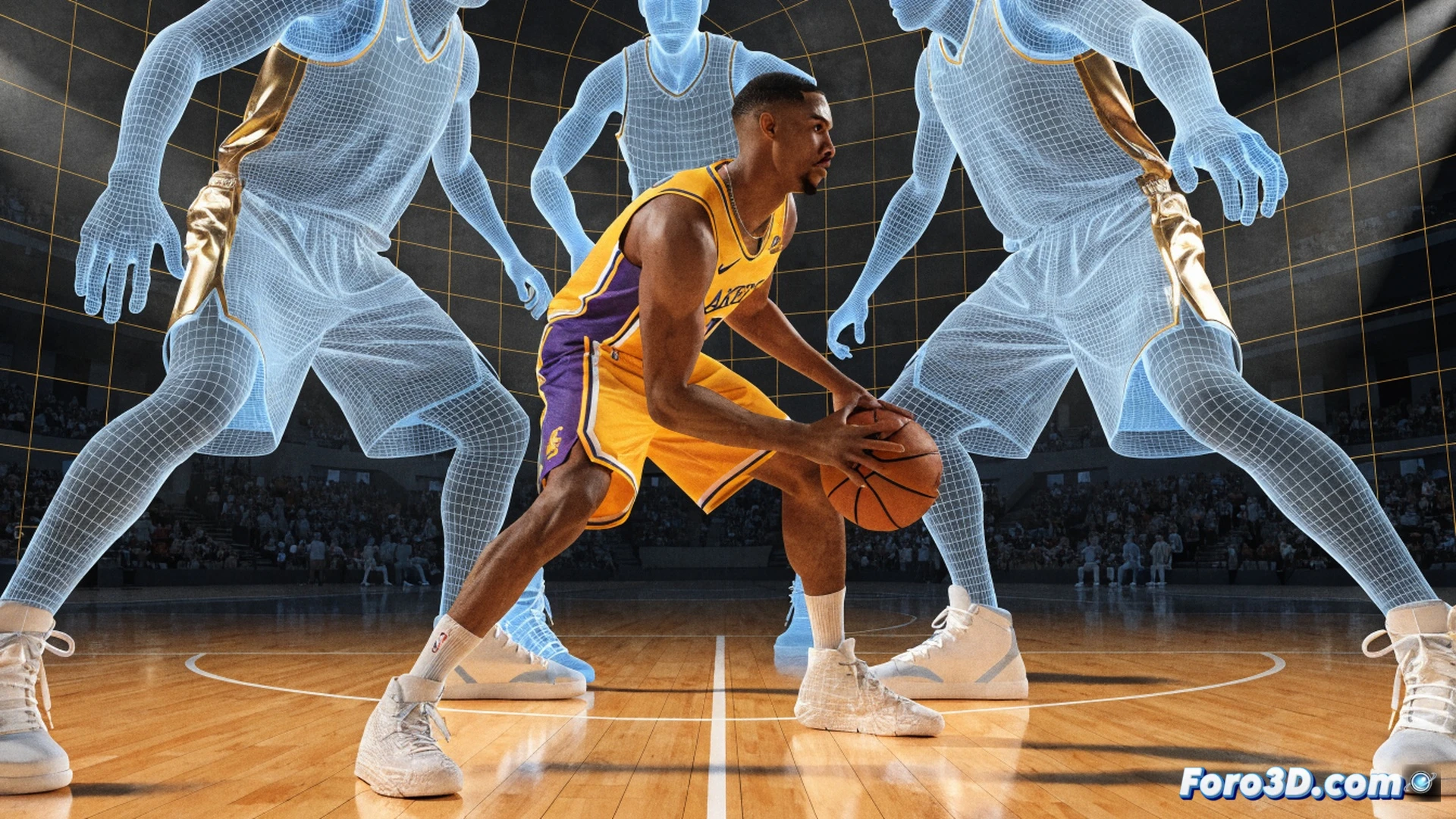
The technical microscope: arms, feet, and decision-making 🔬
From a biomechanical analysis, Reaves compensates for his lack of wingspan with a low center of gravity and short stopping steps. His three-pointer, with a high release point and quick release, is optimized in pick and roll situations. The key lies in his ability to read defenses and use his body to create passing angles. In 3D, you can see how his movement cadence deceives defenders, generating spaces that don't exist for other players with his physical profile.
The art of looking slow while everyone else runs 🐢
Watching Reaves in slow motion is like observing a grandfather dodging obstacles in a park. But when you speed up the clip, the guy is already celebrating the basket. His speed isn't explosive; it's deceptive. He's the player who arrives late to the party but takes the best piece of cake. Analysts call it efficiency; we call it the syndrome of the player who moves like he's hungover and still drains a three-pointer in your face.