Modern cricket demands players who break the mold, and Andre Russell embodies that disruption. This three-dimensional analysis breaks down his movements on the field: the torque of his torso while batting, the biomechanics of his fast bowling, and the acceleration in his sprints. He is not a superhuman, but his muscle structure and joint angles generate power that defies conventional statistics.
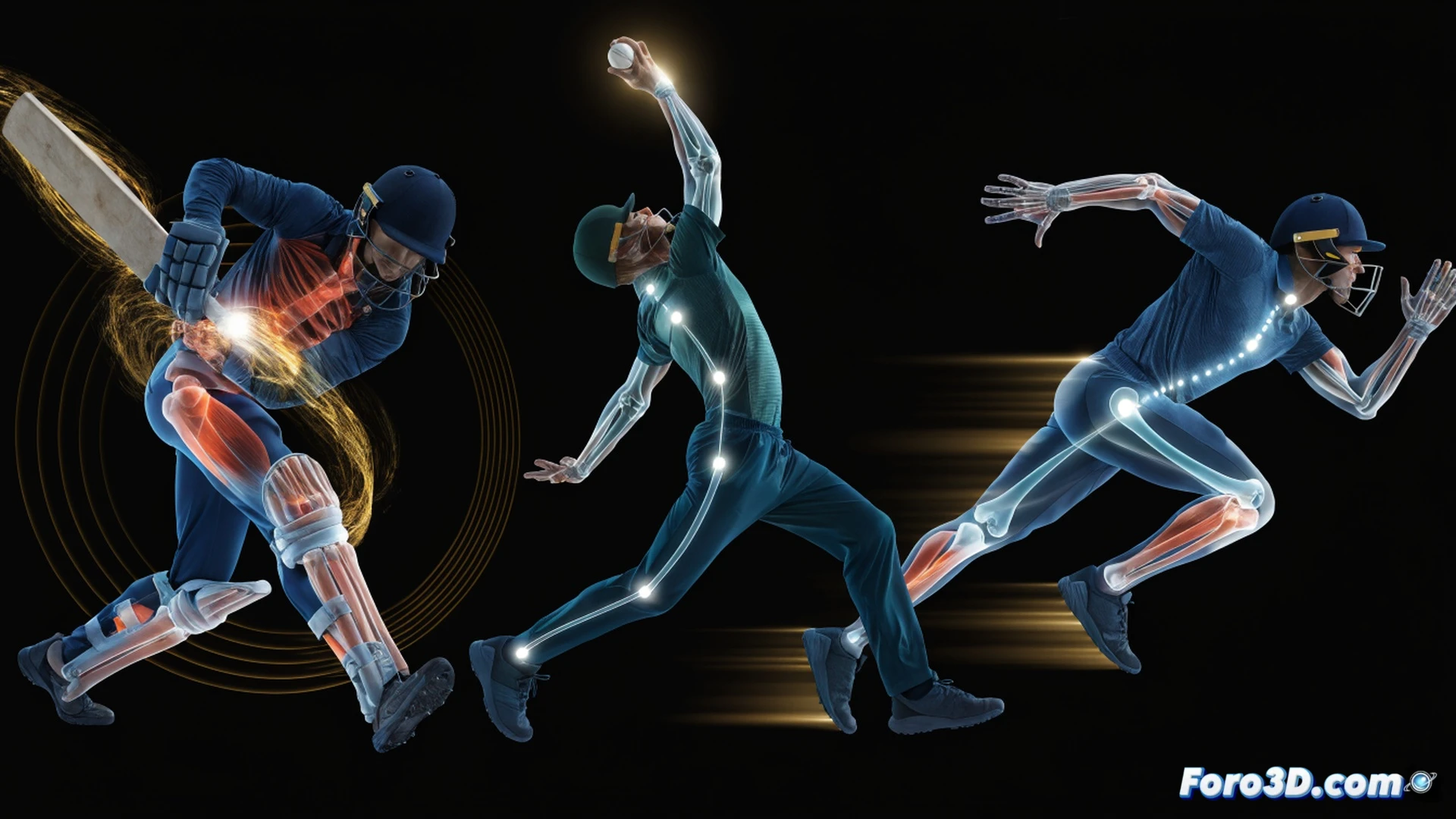
3D Biomechanics: The Physics Behind the Swing 🏏
Using motion capture and volumetric modeling, three key phases in his swing are identified: the load with hip rotation at 45 degrees, the weight transfer to the front foot with a force of 2.5 times his body mass, and the impact where bat speed reaches 90 mph. His wrist angle at contact is 15 degrees, optimizing ball lift. This data allows certain patterns to be replicated in virtual reality-assisted training, though without his natural explosiveness.
Russell and His Secret: Protein Shake or Pure Testosterone? 💪
3D models reveal that his center of gravity is 3 cm lower than the average batsman, explaining his stability when striking. But when asked about his routine, he only says: I eat rice and chicken. Forum engineers speculate that his real secret is an internal combustion engine disguised under his uniform. Or maybe the air in Jamaica has higher octane.